Why You’ll Love This French Macarons Swiss Method
If you’ve ever felt intimidated by making delicate French pastries, this French Macarons Swiss Method recipe will change your perspective. This approachable technique brings professional-quality results right to your home kitchen without the complexity of traditional methods. Perfect for both beginners and experienced bakers, Swiss meringue macarons offer consistent results that will impress friends and family alike.Benefits of the Swiss Method
- Ease of preparation: The Swiss method balances simplicity with reliability. Unlike the French method that uses raw egg whites or the Italian method requiring hot sugar syrup, this approach gently heats egg whites and sugar together until the sugar dissolves completely. This creates a stable meringue foundation that’s easier to work with and less prone to failure. With clear steps and forgiving technique, you’ll feel confident creating these beautiful treats even on your first attempt.
- Health benefits: When you make macarons at home using this method, you control the ingredients, resulting in a cleaner treat. Almond flour provides healthy fats, protein, fiber, and essential nutrients like vitamin E and magnesium. Egg whites contribute high-quality protein with minimal calories. By avoiding preservatives and artificial colors common in store-bought versions, you’re creating a more wholesome indulgence perfect for special occasions or satisfying afternoon treats.
- Versatility: This Swiss meringue recipe adapts beautifully to various dietary needs and flavor preferences. Whether you’re looking to create naturally sweetened versions, experiment with unique flavor combinations, or accommodate specific dietary requirements, this method provides a stable foundation. The shells maintain their structure while complementing virtually any filling from classic buttercream to fruit ganache or even dairy-free alternatives. This adaptability makes them perfect for themed parties, holiday celebrations, or everyday indulgences.
- Distinctive flavor: The Swiss method produces macarons with a perfectly crisp exterior, slightly chewy interior, and those coveted “feet” that distinguish professional-quality confections. The gentle heating process intensifies the vanilla’s natural sweetness while creating a stable structure that showcases pure, unadulterated flavors. Unlike methods that can leave a raw egg taste or require overwhelming amounts of sugar to compensate for instability, this technique delivers delicate, balanced sweetness that lets your chosen flavors shine through beautifully.
Jump to:
- Why You’ll Love This French Macarons Swiss Method
- Benefits of the Swiss Method
- Essential Ingredients for French Macarons Swiss Method
- Main Ingredients
- For the Filling
- Special Dietary Options
- How to Prepare the Perfect French Macarons Swiss Method: Step-by-Step Guide
- First Step: Preparation and mise en place
- Second Step: Creating the Swiss meringue
- Third Step: Creating the macaronage
- Fourth Step: Piping the macarons
- Final Step: Baking and assembling
- Dietary Substitutions to Customize Your French Macarons Swiss Method
- Protein and Main Component Alternatives
- Vegetable, Sauce, and Seasoning Modifications
- Mastering French Macarons Swiss Method: Advanced Tips and Variations
- Pro Cooking Techniques
- Flavor Variations
- Popular Flavor Combinations
- Presentation Tips
- Make-ahead Options
- How to Store French Macarons Swiss Method: Best Practices
- Refrigeration
- Freezing
- Reheating
- Meal Prep Considerations
- FAQs: Frequently Asked Questions About French Macarons Swiss Method
- What is the Swiss method for French macarons?
- How do you make Swiss meringue for macarons?
- What are the main differences between Swiss, French, and Italian macaron methods?
- What common mistakes happen with Swiss method macarons and how to fix them?
- How long do Swiss method French macarons last and how to store them?
- French Macarons Swiss Method
- Ingredients
- Instructions
- Last Step:
- Notes
- Nutrition
- Did you make this recipe?
Essential Ingredients for French Macarons Swiss Method
Creating the perfect Swiss macarons requires precision with measurements and high-quality ingredients. Each component plays a crucial role in achieving those delicate, characteristic cookies with their distinctive smooth tops and ruffled feet.Main Ingredients
- 200g Almond flour – Provides the nutty foundation and delicate structure. Finely ground almonds create the smooth texture essential for perfect macarons.
- 200g Powdered sugar – Adds sweetness without grittiness. The fine texture dissolves completely during mixing, ensuring smooth, crack-free shells.
- 150g Egg whites (approximately 4-5 large) – Create the meringue structure when whipped. Aged egg whites (2-5 days old) work best as they lose some moisture, creating more stable macarons. Egg whites offer an excellent protein source with minimal calories.
- 150g Granulated sugar – Stabilizes the meringue when heated with egg whites. Using a scale ensures accuracy, which is crucial for consistent results.
- 1/4 teaspoon Cream of tartar – Stabilizes the meringue, helping it reach stiff peaks and maintain structure during baking.
- 1 teaspoon Vanilla extract or vanilla bean paste – Adds depth and complexity to the flavor. For colored macarons, this is also when you’d add gel food coloring.
For the Filling
- 200g Butter, softened – Creates the base for buttercream filling.
- 300g Powdered sugar – Sweetens the buttercream to the desired consistency.
- 2-3 tablespoons Heavy cream or milk – Adjusts the filling consistency for easy piping.
- Flavoring of choice – Options include melted chocolate, fruit puree, extracts, or jams to customize your filling.
Special Dietary Options
| Dietary Need | Substitutions |
|---|---|
| Vegan | Replace egg whites with aquafaba (chickpea liquid), use vegan butter for filling, and ensure powdered sugar is bone-char free. |
| Gluten-free | Traditional macarons are naturally gluten-free when using pure almond flour. Verify all ingredients are certified gluten-free. |
| Low-calorie | Replace buttercream filling with lighter options like Greek cream cheese frosting, fruit curds, or light chocolate ganache made with reduced-fat milk. |
How to Prepare the Perfect French Macarons Swiss Method: Step-by-Step Guide
Creating bakery-quality Swiss meringue macarons at home is entirely possible with this detailed guide. Follow each step carefully, and you’ll be rewarded with beautiful, delicious cookies that rival any professional bakery.First Step: Preparation and mise en place
Before beginning, gather all your equipment and ingredients. For this Swiss macaron recipe, you’ll need a digital kitchen scale (essential for accuracy), a fine-mesh sieve, a stand mixer with whisk attachment, a large piping bag with a round tip (about 1/4 inch), and at least two baking sheets lined with parchment paper or silicone mats. Sift together the almond flour and powdered sugar into a large bowl. This step is crucial for achieving smooth macaron shells without lumps or bumps. Discard any large pieces that won’t pass through the sieve. Set this mixture aside. Separate your egg whites carefully, ensuring no yolk remains as even a tiny amount can prevent proper whipping. Weigh your egg whites to achieve exactly 150g, then let them come to room temperature in a clean bowl.Second Step: Creating the Swiss meringue
Place the egg whites and granulated sugar in the heatproof bowl of your stand mixer. Set this bowl over a saucepan of gently simmering water, creating a double boiler. Whisk constantly by hand until the sugar has completely dissolved and the mixture reaches 160°F (71°C) when checked with a digital thermometer. You can test this by rubbing a small amount between your fingers it should feel completely smooth without any sugar grit. Once at temperature, immediately transfer the bowl to your stand mixer fitted with the whisk attachment. Add the cream of tartar, then begin whipping on medium-low speed. Gradually increase to medium-high and continue whipping until the meringue forms stiff peaks and the bowl feels cool to the touch (about 10-12 minutes). This cooling process is essential for maintaining stability. Add vanilla and any gel food coloring during the final minute of whipping. The meringue should appear glossy, thick, and hold a firm peak when the whisk is lifted.Third Step: Creating the macaronage
Add about one-third of the meringue to the sifted almond flour and powdered sugar mixture. Using a silicone spatula, fold gently but thoroughly to combine. This initial addition helps lighten the dry ingredients. Add the remaining meringue in two more batches, folding after each addition. The final folding stage requires attention to achieve the perfect consistency. Continue folding, scraping the sides and bottom of the bowl, until the batter flows slowly from the spatula in a continuous ribbon. When you draw the figure 8 with the batter, the ribbon should smoothly blend back into the mixture without breaking. This process, called macaronage, typically requires about 40-50 complete folds. Under-mixed batter will create lumpy macarons with peaked tops, while over-mixed batter will spread too much and result in flat, cracked cookies.Fourth Step: Piping the macarons
Transfer the batter to your piping bag fitted with a round tip. Hold the bag perpendicular to the baking sheet, about 1/2 inch above the surface. Apply steady pressure to pipe small rounds (about 1.5 inches in diameter), then quickly twist and lift the bag to finish each shape. For uniform macarons, trace circles on your parchment paper as a guide before piping. Once all batter is piped, firmly tap the baking sheets against the counter 2-3 times. This helps release any air bubbles trapped in the batter. You may see small bubbles rise to the surface if so, use a toothpick to gently pop them. Let the piped macarons sit at room temperature until they form a dry skin on the surface. This usually takes 30-60 minutes depending on humidity. You’ll know they’re ready when you lightly touch the surface and no batter sticks to your finger.Final Step: Baking and assembling
Preheat your oven to 300°F (150°C). Bake the macarons for 12-15 minutes, one sheet at a time. To prevent browning, you can place an empty baking sheet on the rack above the macarons. They’re done when they don’t wiggle when gently touched. Allow them to cool completely on the baking sheet before attempting to remove them this prevents them from sticking or breaking. While the shells cool, prepare your filling. For a simple buttercream, beat softened butter until light and fluffy, then gradually add powdered sugar followed by cream and your chosen flavoring. Pipe a small circle of filling onto the flat side of one shell, then gently press another shell on top to create a sandwich. For the best flavor and texture, let the filled macarons mature in the refrigerator for 24 hours before serving. This resting period allows the shells to soften slightly and the flavors to meld together beautifully.
Dietary Substitutions to Customize Your French Macarons Swiss Method
Protein and Main Component Alternatives
For those following a vegan diet or with egg allergies, aquafaba (the liquid from canned chickpeas) serves as an excellent egg white replacement in this French macaron recipe. Use the same weight as the egg whites (150g), but reduce the granulated sugar slightly to 130g, as aquafaba doesn’t need as much sugar to stabilize. The process remains the same heat the aquafaba and sugar over the double boiler until the sugar dissolves, then whip to stiff peaks. Results may be slightly less crisp than traditional macarons but still delicious. If you’re looking to reduce calories or incorporate different proteins, consider replacing some almond flour with other nut flours like hazelnut, pistachio, or cashew. These alternatives maintain the structure while adding unique flavor profiles. For nut-free options, finely ground sunflower seeds can work, though they may green slightly when baked due to a reaction with baking soda (avoid including baking soda if using sunflower seeds). Seed flours have a slightly different texture but still create beautiful macarons.Vegetable, Sauce, and Seasoning Modifications
While traditional macarons don’t typically include vegetables, creative bakers have successfully incorporated vegetable powders for natural coloring and subtle flavors. Beetroot powder adds a beautiful pink hue and earthy sweetness, matcha powder creates vibrant green shells with a delicate tea flavor, and carrot or pumpkin powders can create seasonal variations with warm autumn colors. Use these powders sparingly (1-2 teaspoons) as they can affect the texture if used in large quantities. The fillings offer endless possibilities for customization beyond traditional buttercream. For a lighter option, try a whipped ganache made with white or dark chocolate and cream. Fruit-based fillings like lemon curd, raspberry compote, or passion fruit curd add bright acidity that balances the sweet shells. Savory variations might include herb-infused creams, goat cheese fillings with honey and herbs, or even cream cheese with lox for a brunch-worthy twist. When experimenting with new flavors, begin with small batches to test the combination before committing to a full recipe. For natural color variations, consider adding fruit powders, freeze-dried fruit ground to a powder, or even matcha and cocoa. These natural options provide beautiful colors without artificial dyes, though the colors may be more muted than gel food coloring options. Remember that darker colors in the batter will brown more in the oven, so adjust your baking time accordingly.Mastering French Macarons Swiss Method: Advanced Tips and Variations
Pro Cooking Techniques
Experienced bakers know that humidity affects macarons more than almost any other cookie. On particularly humid days, consider using the Italian method instead, or reduce the moisture in your recipe by decreasing the egg whites slightly or adding a tablespoon more almond flour. Another professional technique is to age your egg whites for 2-5 days before using them. Simply separate the whites and store them in the refrigerator, bringing them to room temperature before using. This process allows them to lose some excess moisture, creating a more stable meringue. For the smoothest possible tops, some bakers recommend running a sieve over the piped macarons to dust them with a fine layer of powdered sugar before the resting period. This technique helps smooth out any tiny imperfections and creates a more professional appearance. Additionally, rotating your baking sheet halfway through the baking time ensures even heat distribution, helping all your macarons develop evenly.Flavor Variations
Once you’ve mastered the basic technique, experiment with flavor infusions in the meringue itself. Infuse your granulated sugar with dried lavender, Earl Grey tea leaves, or spices like cinnamon or cardamom by storing them together for a week before using. The sugar will absorb the aromatic compounds, creating subtly flavored shells. Another approach is to add extracts or emulsions directly to the meringue during the final minute of whipping almond, pistachio, or coconut extracts work wonderfully.Popular Flavor Combinations
- Raspberry shells with dark chocolate ganache filling
- Pistachio shells with rose-infused buttercream
- Lemon shells with blueberry compote filling
- Chocolate shells with peppermint buttercream
- Salted caramel shells with chocolate ganache
Presentation Tips
For an elegant presentation, consider varying the sizes of your macarons to create a visual display. Pipe small macarons (about 1 inch) for bite-sized treats, medium ones (1.5-2 inches) for standard servings, and large ones (3 inches) as impressive dessert centers. When plating, arrange them by color gradient for a stunning effect or create towers of alternating flavors. For special occasions, you can paint designs on the shells using food coloring and a clean brush before baking simple dots, stripes, or hearts add a personalized touch.Make-ahead Options
Macarons are excellent for advance preparation. Unfilled shells can be made up to one week ahead if stored properly in an airtight container at room temperature. You can also freeze unfilled shells for up to a month place them in a single layer on a baking sheet to freeze initially, then transfer to a freezer-safe container. For even more efficiency, consider batching your macaron production. Make several batches of shells at once, then store them and fill with different combinations throughout the week. This approach is perfect for busy entertainers who want homemade treats without starting from scratch each time.How to Store French Macarons Swiss Method: Best Practices
Proper storage is essential to maintaining the delicate texture and flavor of your Swiss meringue macarons. Unlike many cookies, macarons actually improve with a short aging period, but require specific conditions to maintain their quality over time.Refrigeration
For short-term storage (up to one week), keep your filled macarons in an airtight container in the refrigerator. The humidity control of your fridge helps maintain the characteristic texture a crisp shell with a slightly chewy interior. Before serving, bring them to room temperature for about 15-20 minutes. This step allows the flavors to fully develop and the texture to return to its ideal state. Avoid storing macarons in the refrigerator door, as temperature fluctuations there can cause condensation that makes the shells soggy.Freezing
For longer storage, freezing is your best option. Unfilled macaron shells freeze exceptionally well for up to a month. Flash freeze them first by placing the baking sheet with piped shells directly in the freezer for about an hour, then transfer the frozen shells to a freezer-safe container or bag, separating layers with parchment paper. This prevents them from sticking together. Filled macarons can also be frozen, though the filling texture may change slightly depending on the ingredients used. For the best results, fill frozen macarons just before serving rather than freezing them already assembled.Reheating
If your refrigerated or frozen macarons have lost some of their crispness, you can refresh them in a 300°F oven for 3-4 minutes. This brief warming helps restore the crisp shell without affecting the filling. Allow them to cool completely before serving. Never use a microwave to reheat macarons, as this creates uneven heating and can make the texture rubbery rather than crisp.Meal Prep Considerations
For efficient batch cooking, consider preparing multiple macaron flavors in one session. Make a large batch of plain shells, then divide the batter before adding different colors or flavorings. Similarly, prepare several fillings simultaneously to maximize your time investment. When storing for meal prep purposes, clearly label containers with the flavor and date to ensure you use them at their best quality. Macarons make an excellent addition to dessert trays, party platters, or even as homemade gifts when presented in attractive boxes with clear labels.
FAQs: Frequently Asked Questions About French Macarons Swiss Method
What is the Swiss method for French macarons?
How do you make Swiss meringue for macarons?
What are the main differences between Swiss, French, and Italian macaron methods?
What common mistakes happen with Swiss method macarons and how to fix them?
How long do Swiss method French macarons last and how to store them?
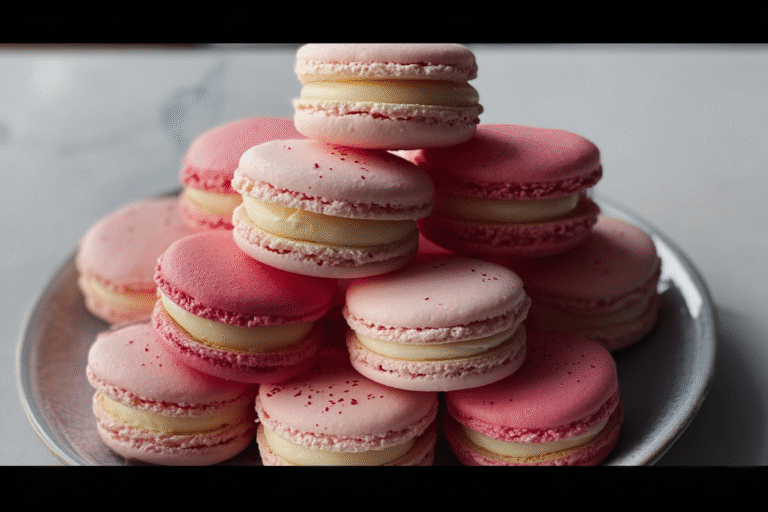
French Macarons Swiss Method
🧁 Swiss meringue method creates ultra-stable, glossy shells with perfect feet, sandwiching silky fillings for pro-level macarons at home.
🍬 Foolproof technique minimizes failures, yielding delicate, chewy delights ideal for celebrations, tea parties, or sweet practice!
- Total Time: 25 hours
- Yield: 30 macarons
Ingredients
– 200g almond flour
– 200g powdered sugar
– 150g egg whites (approximately 4-5 large)
– 150g granulated sugar
– 1/4 teaspoon cream of tartar
– 1 teaspoon vanilla extract or vanilla bean paste
– 200g butter, softened
– 300g powdered sugar
– 2-3 tablespoons heavy cream or milk
– flavoring of choice
Instructions
1-First Step: Preparation and mise en place Before beginning, gather all your equipment and ingredients. For this Swiss macaron recipe, you’ll need a digital kitchen scale (essential for accuracy), a fine-mesh sieve, a stand mixer with whisk attachment, a large piping bag with a round tip (about 1/4 inch), and at least two baking sheets lined with parchment paper or silicone mats. Sift together the almond flour and powdered sugar into a large bowl. This step is crucial for achieving smooth macaron shells without lumps or bumps. Discard any large pieces that won’t pass through the sieve. Set this mixture aside. Separate your egg whites carefully, ensuring no yolk remains as even a tiny amount can prevent proper whipping. Weigh your egg whites to achieve exactly 150g, then let them come to room temperature in a clean bowl.
2-Second Step: Creating the Swiss meringue Place the egg whites and granulated sugar in the heatproof bowl of your stand mixer. Set this bowl over a saucepan of gently simmering water, creating a double boiler. Whisk constantly by hand until the sugar has completely dissolved and the mixture reaches 160°F (71°C) when checked with a digital thermometer. You can test this by rubbing a small amount between your fingers it should feel completely smooth without any sugar grit. Once at temperature, immediately transfer the bowl to your stand mixer fitted with the whisk attachment. Add the cream of tartar, then begin whipping on medium-low speed. Gradually increase to medium-high and continue whipping until the meringue forms stiff peaks and the bowl feels cool to the touch (about 10-12 minutes). This cooling process is essential for maintaining stability. Add vanilla and any gel food coloring during the final minute of whipping. The meringue should appear glossy, thick, and hold a firm peak when the whisk is lifted.
3-Third Step: Creating the macaronage Add about one-third of the meringue to the sifted almond flour and powdered sugar mixture. Using a silicone spatula, fold gently but thoroughly to combine. This initial addition helps lighten the dry ingredients. Add the remaining meringue in two more batches, folding after each addition. The final folding stage requires attention to achieve the perfect consistency. Continue folding, scraping the sides and bottom of the bowl, until the batter flows slowly from the spatula in a continuous ribbon. When you draw the figure 8 with the batter, the ribbon should smoothly blend back into the mixture without breaking. This process, called macaronage, typically requires about 40-50 complete folds. Under-mixed batter will create lumpy macarons with peaked tops, while over-mixed batter will spread too much and result in flat, cracked cookies.
4-Fourth Step: Piping the macarons Transfer the batter to your piping bag fitted with a round tip. Hold the bag perpendicular to the baking sheet, about 1/2 inch above the surface. Apply steady pressure to pipe small rounds (about 1.5 inches in diameter), then quickly twist and lift the bag to finish each shape. For uniform macarons, trace circles on your parchment paper as a guide before piping. Once all batter is piped, firmly tap the baking sheets against the counter 2-3 times. This helps release any air bubbles trapped in the batter. You may see small bubbles rise to the surface if so, use a toothpick to gently pop them. Let the piped macarons sit at room temperature until they form a dry skin on the surface. This usually takes 30-60 minutes depending on humidity. You’ll know they’re ready when you lightly touch the surface and no batter sticks to your finger.
5-Final Step: Baking and assembling Preheat your oven to 300°F (150°C). Bake the macarons for 12-15 minutes, one sheet at a time. To prevent browning, you can place an empty baking sheet on the rack above the macarons. They’re done when they don’t wiggle when gently touched. Allow them to cool completely on the baking sheet before attempting to remove them this prevents them from sticking or breaking. While the shells cool, prepare your filling. For a simple buttercream, beat softened butter until light and fluffy, then gradually add powdered sugar followed by cream and your chosen flavoring. Pipe a small circle of filling onto the flat side of one shell, then gently press another shell on top to create a sandwich. For the best flavor and texture, let the filled macarons mature in the refrigerator for 24 hours before serving. This resting period allows the shells to soften slightly and the flavors to meld together beautifully.
Last Step:
Please leave a rating and comment letting us know how you liked this recipe! This helps our business to thrive and continue providing free, high-quality recipes for you.Notes
🌡️ Accurate thermometer essential for safe, stable Swiss meringue.
💨 Wipe bowl and tools with vinegar before egg whites for max volume.
🧈 Butter must be soft but cool for smooth, non-runny buttercream.
- Prep Time: 45 minutes
- Rest & Mature Time: 24 hours
- Cook Time: 15 minutes
- Category: Dessert
- Method: Baking
- Cuisine: French
- Diet: Vegetarian, Gluten-Free
Nutrition
- Serving Size: 1 macaron
- Calories: 100 kcal
- Sugar: 10g
- Sodium: 20mg
- Fat: 7g
- Saturated Fat: 3g
- Unsaturated Fat: 3g
- Trans Fat: 0g
- Carbohydrates: 10g
- Fiber: 1g
- Protein: 2g
- Cholesterol: 15mg