Why You’ll Love This Asian Chopped Salad
This Asian Chopped Salad recipe brings together fresh, crisp vegetables with a tangy, savory dressing that will become a favorite in your meal rotation. The combination of textures and flavors creates a satisfying dish that works perfectly as a light lunch or a hearty side to complement your main course.
- Ease of preparation: This salad comes together in just 20 minutes with minimal cooking required. The ingredients can be prepped ahead of time, making it an excellent option for busy weeknights when you want something nutritious without spending hours in the kitchen.
- Health benefits: Packed with nutrient-dense vegetables like napa cabbage, carrots, and bell peppers, this salad provides a wealth of vitamins, minerals, and fiber. The homemade sesame ginger dressing uses wholesome ingredients without preservatives found in store-bought versions.
- Versatility: This recipe adapts beautifully to different dietary needs. It’s easily made vegan by skipping chicken or using plant-based protein alternatives. The base salad also works well with various proteins like grilled salmon, shrimp, or tofu.
- Distinctive flavor: The combination of sesame oil, soy sauce, rice vinegar, and fresh ginger creates a restaurant-quality dressing that perfectly balances salty, sweet, and tangy notes. The crunch from toasted nuts and fresh vegetables adds satisfying texture in every bite.
Jump to:
- Why You’ll Love This Asian Chopped Salad
- Essential Ingredients for Asian Chopped Salad
- Main Ingredients
- Sesame Ginger Dressing Ingredients
- Special Dietary Options
- Vegan
- Gluten-free
- Low-calorie
- How to Prepare the Perfect Asian Chopped Salad: Step-by-Step Guide
- First Step: Prepare the Vegetables
- Second Step: Cook the Chicken
- Third Step: Make the Sesame Ginger Dressing
- Fourth Step: Assemble the Salad
- Final Step: Garnish and Serve
- Protein and Main Component Alternatives
- Vegetable, Sauce, and Seasoning Modifications
- Mastering Asian Chopped Salad: Advanced Tips and Variations
- Pro Cooking Techniques
- Flavor Variations
- Presentation Tips
- Make-Ahead Options
- How to Store Asian Chopped Salad: Best Practices
- Refrigeration
- Freezing
- Reheating
- Meal Prep Considerations
- FAQs: Frequently Asked Questions About Asian Chopped Salad
- Asian Chopped Salad
- Ingredients
- Instructions
- Last Step:
- Notes
- Nutrition
- Did you make this recipe?
Essential Ingredients for Asian Chopped Salad
The magic of this Asian Chopped Salad lies in its carefully selected ingredients. Each component plays a crucial role in creating the perfect balance of flavors and textures. Here’s everything you’ll need to make this delicious salad:
Main Ingredients
- 4 cups napa cabbage, thinly sliced – Forms the crunchy base of the salad with mild, sweet flavor
- 2 cups red cabbage, thinly sliced – Adds vibrant color and extra crunch
- 1 cup carrots, julienned or grated – Provides natural sweetness and bright orange color
- 1 cup bell peppers, thinly sliced (mix of colors) – Adds sweetness, crunch, and visual appeal
- 1 cup edamame, shelled and cooked – Offers plant-based protein and a buttery texture
- 1 cup snap peas, trimmed and halved – Contributes fresh crunch and garden flavor
- 2 green onions, thinly sliced – Adds mild onion flavor and bright green color
- ½ cup fresh cilantro, chopped – Provides herbaceous freshness and authentic Asian flavor
- ½ cup roasted almonds, roughly chopped – Delivers satisfying crunch and healthy fats
- 2 tablespoons sesame seeds – Adds nutty flavor and beautiful garnish
- 2 cups cooked chicken breast, shredded – Provides lean protein to make it a complete meal
Sesame Ginger Dressing Ingredients
- 3 tablespoons soy sauce – Creates the savory umami base
- 2 tablespoons rice vinegar – Adds brightness and balances richness
- 1 tablespoon sesame oil – Provides distinctive nutty flavor
- 1 tablespoon honey or maple syrup – Adds subtle sweetness to balance salty components
- 1 teaspoon fresh ginger, grated – Contributes spicy, aromatic warmth
- 1 clove garlic, minced – Adds depth and savory complexity
- 1 teaspoon Dijon mustard – Helps emulsify the dressing for better consistency
- ¼ cup olive oil or vegetable oil – Creates smooth, pourable consistency
Special Dietary Options
Vegan
- Substitute: Replace chicken with crispy tofu, tempeh, or additional edamame
- Dressing: Use maple syrup instead of honey and ensure soy sauce is vegan-friendly (or use tamari)
Gluten-free
- Soy sauce substitute: Use tamari or coconut aminos in place of regular soy sauce
- Mustard check: Verify that your Dijon mustard is certified gluten-free
Low-calorie
- Reduce nuts: Use ¼ cup of almonds instead of ½ cup
- Dressing adjustment: Reduce oil to 2 tablespoons and increase vinegar slightly
- Sweetener: Use stevia or monk fruit sweetener instead of honey
How to Prepare the Perfect Asian Chopped Salad: Step-by-Step Guide
Creating this flavorful Asian Chopped Salad is straightforward when you follow these clear steps. The process involves preparing the fresh vegetables, making the homemade dressing, and combining everything for a beautiful presentation. Let’s walk through each step to ensure your salad turns out perfectly every time.
First Step: Prepare the Vegetables
Start by thoroughly washing all vegetables under cool running water. Pat them dry with clean kitchen towels or paper towels, as excess water will dilute the dressing. Using a sharp knife, remove the tough core from both the napa cabbage and red cabbage, then slice them into thin strips. For the most uniform results, stack several leaves at a time and slice through the stack. The thinner you slice the cabbage, the better the texture will be.
Next, prepare the carrots by peeling them and either julienning them into thin matchsticks or using a box grater to create long strands. The julienne cut provides a more elegant presentation, while grating is quicker and still delicious. For the bell peppers, remove the stems and seeds, then slice them into thin strips. Try to use a variety of colors like red, yellow, and orange to make the salad visually appealing.
Trim the ends from the snap peas and cut them in half diagonally for an attractive presentation. Thinly slice the green onions, separating the white and light green parts from the dark green tops. You can use both parts, but save some of the darker green slices for garnish. Roughly chop the fresh cilantro, removing any thick stems. Finally, chop the roasted almonds into pieces that are small enough to eat comfortably but still provide a satisfying crunch.
Second Step: Cook the Chicken
If you don’t have pre-cooked chicken, you’ll need to prepare it now. You can either bake, grill, or poach chicken breasts for this salad. For baking, season two chicken breasts with salt and pepper, then bake at 375°F for about 20-25 minutes until they reach an internal temperature of 165°F. Let the chicken rest for 5 minutes before shredding it with two forks or slicing it into thin strips.
Alternatively, you can use perfectly baked chicken breast that you’ve prepared earlier in the week as part of your meal prep. Using leftovers makes this recipe even quicker to assemble. If you prefer a different protein, you could also use grilled teriyaki salmon or even shrimp for a seafood variation. Whatever protein you choose, aim for about 2 cups of cooked, shredded or sliced meat to create a satisfying meal.
Third Step: Make the Sesame Ginger Dressing
The homemade dressing is what truly makes this Asian Chopped Salad special. In a small bowl or jar, combine the soy sauce, rice vinegar, sesame oil, honey or maple syrup, grated fresh ginger, minced garlic, and Dijon mustard. Whisk these ingredients together thoroughly until the honey is completely dissolved and the mixture is well combined.
While continuing to whisk, slowly drizzle in the olive oil or vegetable oil. Adding the oil gradually helps create an emulsion, resulting in a creamy, cohesive dressing rather than separated ingredients. Continue whisking until all the oil is incorporated and the dressing has thickened slightly. Taste the dressing and adjust the seasonings as needed. You might want a little more honey for sweetness, additional rice vinegar for brightness, or extra ginger for more spice.
If you prefer a smoother dressing, you can combine all ingredients in a blender and blend until smooth. This method also helps distribute the ginger and garlic more evenly throughout the dressing. Store any leftover dressing in an airtight container in the refrigerator for up to one week. Before using again, give it a good shake or whisk as the ingredients may separate slightly when chilled.
Fourth Step: Assemble the Salad
In a large mixing bowl, combine the prepared napa cabbage, red cabbage, carrots, bell peppers, edamame, snap peas, green onions, and most of the cilantro (reserving some for garnish). Gently toss the vegetables together to distribute them evenly throughout the bowl. Be careful not to mash or bruise the vegetables, as maintaining their crisp texture is important for the best eating experience.
Add the shredded or sliced chicken to the bowl, distributing it evenly among the vegetables. Drizzle about two-thirds of the dressing over the salad. Using salad tongs or two large spoons, gently toss everything together until all ingredients are lightly coated with the dressing. Add more dressing as needed to reach your preferred level of coverage. You may not need all the dressing, depending on your personal taste preferences.
Once the salad is dressed and thoroughly mixed, transfer it to a large serving bowl or platter. This not only looks more appealing for serving but also prevents excess dressing from pooling at the bottom of the mixing bowl. Arrange the salad in a way that highlights the colorful ingredients, creating an inviting presentation that will make everyone eager to dig in.
Final Step: Garnish and Serve
Complete your Asian Chopped Salad with the finishing touches that add both flavor and visual appeal. Sprinkle the chopped almonds over the top of the salad, concentrating them slightly in the center but ensuring they’re distributed across the surface so every serving gets some crunch. Similarly, sprinkle the sesame seeds over the salad, creating a beautiful contrast against the colorful vegetables.
Scatter the reserved fresh cilantro over the top as a final garnish. The bright green color provides a lovely contrast and fresh herbal aroma that signals the delicious flavors to come. If you sliced extra green onion tops, you can add those now as well for an additional pop of color and mild onion flavor.
Serve the salad immediately while the vegetables are still crisp and the almonds retain their crunch. This Asian Chopped Salad makes an excellent main course for a light lunch or a substantial side dish alongside grilled meats or fish. The combination of protein, healthy fats, and fiber makes it a satisfying meal that will keep you energized for hours.
Protein and Main Component Alternatives
While the recipe calls for chicken breast, this Asian Chopped Salad works wonderfully with various proteins to suit different tastes and dietary needs. General Tso’s chicken can add a spicy, sweet element that complements the tangy dressing. Simply prepare the chicken according to your preferred recipe, cut it into bite-sized pieces, and add it to the salad in place of plain shredded chicken.
For seafood lovers, garlic lemon butter shrimp makes an excellent protein option. The citrus notes harmonize beautifully with the sesame ginger dressing, while the buttery texture contrasts nicely with the crisp vegetables. Use about 1 pound of medium shrimp, cleaned and cooked, then roughly chopped before adding to the salad.
Vegetarian options abound for this versatile salad. Crispy tofu cubes, marinated in a mixture of soy sauce and sesame oil before being pan-fried until golden, provide a satisfying plant-based protein. Tempeh, steamed and cubed, offers a nutty flavor and firm texture that holds up well in the salad. For a simpler approach, simply increase the amount of edamame to 2 cups and add roasted chickpeas for extra protein and crunch.
Beef enthusiasts might enjoy thinly sliced flank steak, marinated in a bit of soy sauce and garlic before being quickly seared to medium-rare and sliced against the grain. The rich beef flavor pairs exceptionally well with the tangy Asian dressing. Pork loin, cooked and shredded similar to the chicken, provides a slightly sweeter meat option that harmonizes with the honey in the dressing.
Vegetable, Sauce, and Seasoning Modifications
The beauty of this Asian Chopped Salad lies in its adaptability to seasonal ingredients and personal preferences. During summer months, add thinly sliced cucumber for extra freshness and hydration. Grated zucchini can also work well, adding moisture without overpowering other flavors. In the fall and winter, try adding thinly sliced Brussels sprouts or shredded kale for heartier greens that stand up well to the robust dressing.
For those who enjoy spicy food, incorporate thinly sliced jalapeño or serrano peppers into the vegetable mix. You might also add a teaspoon of Sriracha or chili garlic sauce to the dressing for a spicy kick. Conversely, if you prefer milder flavors, reduce the amount of ginger and garlic in the dressing or omit the red cabbage, which has a slightly peppery bite.
Crunchy vegetables like water chestnuts, jicama, or radishes can replace or supplement the carrots and bell peppers. These options add varied textures and subtle flavor differences that keep the salad interesting. For a sweeter variation, add thin slices of mango or mandarin orange segments. The fruit sweetness balances the salty elements of the dressing and adds bright tropical notes.
The dressing itself offers many customization opportunities. For a creamier version, add a tablespoon of mayonnaise or plain Greek yogurt to the base. Those avoiding soy can substitute coconut aminos for the soy sauce, creating a slightly sweeter but equally delicious dressing. If you don’t have rice vinegar, apple cider vinegar or white wine vinegar makes acceptable substitutes, though they will slightly alter the flavor profile.
Experiment with different nuts and seeds in place of or in addition to the almonds. Cashews, peanuts, or pecans all work beautifully with Asian flavors. Pumpkin seeds or sunflower seeds add nutritional value and a different kind of crunch. Consider toasting your nuts and seeds in a dry pan for 2-3 minutes before adding them to the salad, as this intensifies their natural flavors significantly.
Mastering Asian Chopped Salad: Advanced Tips and Variations
Once you’ve mastered the basic Asian Chopped Salad recipe, these advanced techniques and creative variations will help you take this dish to the next level. These tips come from years of experimenting with different ingredients and methods to create the most flavorful and satisfying salad possible.
Pro Cooking Techniques
One game-changing technique is to salt your cabbage before assembling the salad. Place the sliced napa and red cabbage in a colander, sprinkle with ½ teaspoon of salt, and let it sit for 15-20 minutes. Then rinse thoroughly under cold water and squeeze dry. This process removes excess moisture from the cabbage, resulting in a crisper texture and preventing the salad from becoming watery after dressing.
For maximum flavor infusion, prepare your dressing at least an hour before serving to allow the flavors to meld. The garlic and ginger will mellow slightly while their aromatic compounds infuse the oil and vinegar. If time permits, refrigerate the dressing overnight for even more developed flavor.
When chopping vegetables, aim for uniform sizing to ensure every bite contains a balanced mix of ingredients. A mandoline slicer can help achieve consistent thin cuts, especially for cabbage and carrots. However, always use the safety guard to protect your fingers, as mandoline blades are extremely sharp.
Flavor Variations
Transform this Asian Chopped Salad into a Thai-inspired version by adding shredded green papaya or mango, chopped peanuts instead of almonds, and a dressing that includes lime juice, fish sauce, and a pinch of cayenne. This variation is particularly refreshing during hot weather and pairs wonderfully with grilled seafood.
For a Korean-inspired twist, incorporate kimchi into the vegetable mix and use a gochujang-based dressing. The fermented kimchi adds probiotics and a complex tangy-spicy flavor that elevates the entire dish. Top with sesame seeds and perhaps some nori strips for authentic flair.
Create a Japanese-inspired version by adding julienned daikon radish, shredded carrot, and cucumber. Use a dressing made with rice vinegar, a small amount of miso paste, and a dash of mirin. Top with pickled ginger and perhaps some crispy tempura flakes for texture contrast.
Presentation Tips
For special occasions, serve individual portions in wide-rimmed bowls rather than one large serving bowl. Arrange each component in separate sections around the edge of the bowl, with the chicken in the center and dressing drizzled artistically over the top. This deconstructed presentation looks elegant and allows guests to customize each bite according to their preferences.
Consider serving the dressing on the side, especially if you’re preparing this salad for a gathering. This prevents the vegetables from becoming soggy and allows people to control how much dressing they prefer. A small cruet or jar with a pour spout makes an attractive serving vessel for the dressing.
For added color contrast, use a variety of edible flowers as garnish. Nasturtiums, pansies, or chive blossoms add visual appeal and subtle flavors that complement the Asian ingredients. Just be sure any flowers you use are labeled as edible and have been grown without pesticides.
Make-Ahead Options
This Asian Chopped Salad is excellent for meal prep when assembled strategically. Prepare all vegetables and store them in separate airtight containers in the refrigerator. The hard vegetables like cabbage and carrots will stay fresh for 4-5 days, while more delicate vegetables like bell peppers and snap peas are best used within 2-3 days.
Store the dressing separately in a jar with a tight-fitting lid. It will keep well for up to a week in the refrigerator. When ready to eat, simply combine your desired portion of vegetables with protein, add dressing to taste, and top with nuts and seeds. This method ensures your salad stays fresh and crisp throughout the week.
For the crispiest almonds, toast them right before serving rather than storing them pre-toasted. Raw nuts will stay fresh much longer than toasted ones and only take 2-3 minutes in a dry pan over medium heat to become perfectly golden and fragrant.
How to Store Asian Chopped Salad: Best Practices
Proper storage of your Asian Chopped Salad ensures maximum freshness and food safety. Follow these guidelines to keep your salad tasting delicious whether you’re saving leftovers or planning ahead for busy weeknights.
Refrigeration
Store undressed Asian Chopped Salad in an airtight container in the refrigerator for up to 3-4 days. The hard vegetables like cabbage and carrots will maintain their crunch well, while more delicate vegetables like bell peppers may soften slightly after a couple of days. For best results, store different components separately if possible, keeping the nuts, seeds, and dressing in their own containers.
If you’ve already dressed the salad, it’s best consumed within 24 hours. The acid in the dressing will gradually break down the vegetables, causing them to release water and become soggy. To refresh slightly dressed leftovers, drain off any excess liquid at the bottom of the container and add a handful of fresh, crunchy vegetables before serving.
Freezing
Generally, this Asian Chopped Salad does not freeze well due to its high water content and crisp texture requirements. Freezing will cause the vegetables to become limp and watery upon thawing. However, you can freeze individual components separately for future use. Blanched edamame, cooked chicken, and the prepared dressing all freeze well for up to 3 months.
If you want to prepare components ahead, freeze the cooked chicken in portion-sized bags or containers. The dressing can be frozen in ice cube trays for easy portioning later. Thaw both in the refrigerator overnight before combining with fresh vegetables for a quick meal.
Reheating
This salad is intended to be served cold and does not require reheating. In fact, heating would compromise the crisp texture of the vegetables and alter the flavor profile significantly. If you prefer warm salad components, consider lightly stir-frying the chicken and vegetables separately before combining them with the cold dressing. This creates an interesting temperature contrast while maintaining some crunch in the vegetables.
For meal prep, pack the salad components in separate containers with the dressing in a small leak-proof container. Keep everything refrigerated until ready to eat, then combine and toss immediately before serving. This method provides the closest experience to freshly made salad.
Meal Prep Considerations
When batch cooking this Asian Chopped Salad for meal prep, consider creating a “salad bar” style setup in your refrigerator. Use large glass containers with separate compartments or multiple smaller containers to store vegetables, proteins, nuts, and dressing individually. This approach allows you to customize each day’s portion based on your preferences while keeping everything fresh.
Pre-portion your salad components into individual containers for grab-and-go convenience. Place the heaviest, sturdiest vegetables at the bottom of the container, layering more delicate ingredients on top. Store nuts and seeds in a separate small bag or container within the larger one to prevent them from becoming soggy. Add the dressing immediately before eating.

FAQs: Frequently Asked Questions About Asian Chopped Salad
Print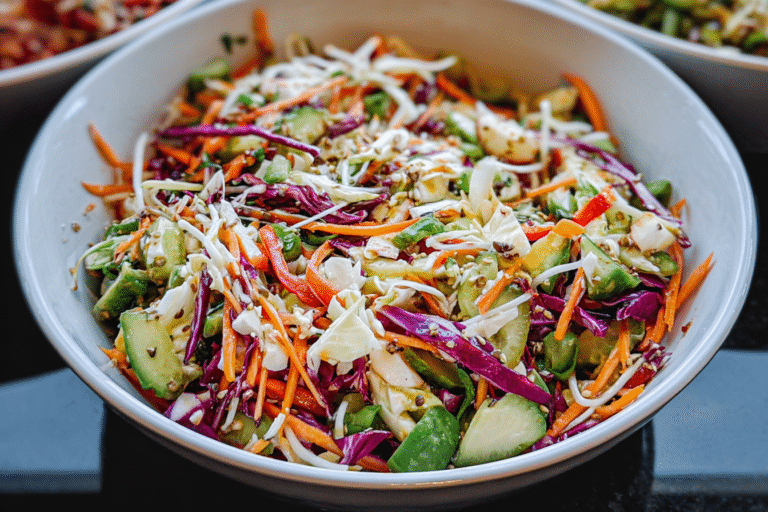
Asian Chopped Salad
🥗 Crisp Napa cabbage, edamame, and bell peppers pack fiber and antioxidants for a refreshing, gut-healthy boost.
🌿 Zesty sesame-ginger dressing adds authentic Asian flair, making this easy salad a quick, crunchy side for any meal!
- Total Time: 15 minutes
- Yield: 4 servings
Ingredients
– 4 cups napa cabbage, thinly sliced for crunchy base with mild, sweet flavor
– 2 cups red cabbage, thinly sliced for vibrant color and extra crunch
– 1 cup carrots, julienned or grated for natural sweetness and bright orange color
– 1 cup bell peppers, thinly sliced (mix of colors) for sweetness, crunch, and visual appeal
– 1 cup edamame, shelled and cooked for plant-based protein and buttery texture
– 1 cup snap peas, trimmed and halved for fresh crunch and garden flavor
– 2 green onions, thinly sliced for mild onion flavor and bright green color
– ½ cup fresh cilantro, chopped for herbaceous freshness and authentic Asian flavor
– ½ cup roasted almonds, roughly chopped for satisfying crunch and healthy fats
– 2 tablespoons sesame seeds for nutty flavor and beautiful garnish
– 2 cups cooked chicken breast, shredded for lean protein to make it a complete meal
– 3 tablespoons soy sauce for savory umami base
– 2 tablespoons rice vinegar for brightness and balances richness
– 1 tablespoon sesame oil for distinctive nutty flavor
– 1 tablespoon honey or maple syrup for subtle sweetness to balance salty components
– 1 teaspoon fresh ginger, grated for spicy, aromatic warmth
– 1 clove garlic, minced for depth and savory complexity
– 1 teaspoon Dijon mustard for emulsifying the dressing for better consistency
– ¼ cup olive oil or vegetable oil for smooth, pourable consistency
Instructions
1-First Step: Prepare the Vegetables
Start by thoroughly washing all vegetables under cool running water. Pat them dry with clean kitchen towels or paper towels, as excess water will dilute the dressing. Using a sharp knife, remove the tough core from both the napa cabbage and red cabbage, then slice them into thin strips. For the most uniform results, stack several leaves at a time and slice through the stack. The thinner you slice the cabbage, the better the texture will be.
Next, prepare the carrots by peeling them and either julienning them into thin matchsticks or using a box grater to create long strands. The julienne cut provides a more elegant presentation, while grating is quicker and still delicious. For the bell peppers, remove the stems and seeds, then slice them into thin strips. Try to use a variety of colors like red, yellow, and orange to make the salad visually appealing.
Trim the ends from the snap peas and cut them in half diagonally for an attractive presentation. Thinly slice the green onions, separating the white and light green parts from the dark green tops. You can use both parts, but save some of the darker green slices for garnish. Roughly chop the fresh cilantro, removing any thick stems. Finally, chop the roasted almonds into pieces that are small enough to eat comfortably but still provide a satisfying crunch.
2-Second Step: Cook the Chicken
If you don’t have pre-cooked chicken, you’ll need to prepare it now. You can either bake, grill, or poach chicken breasts for this salad. For baking, season two chicken breasts with salt and pepper, then bake at 375°F for about 20-25 minutes until they reach an internal temperature of 165°F. Let the chicken rest for 5 minutes before shredding it with two forks or slicing it into thin strips.
Alternatively, you can use perfectly baked chicken breast that you’ve prepared earlier in the week as part of your meal prep. Using leftovers makes this recipe even quicker to assemble. If you prefer a different protein, you could also use grilled teriyaki salmon or even shrimp for a seafood variation. Whatever protein you choose, aim for about 2 cups of cooked, shredded or sliced meat to create a satisfying meal.
3-Third Step: Make the Sesame Ginger Dressing
The homemade dressing is what truly makes this Asian Chopped Salad special. In a small bowl or jar, combine the soy sauce, rice vinegar, sesame oil, honey or maple syrup, grated fresh ginger, minced garlic, and Dijon mustard. Whisk these ingredients together thoroughly until the honey is completely dissolved and the mixture is well combined.
While continuing to whisk, slowly drizzle in the olive oil or vegetable oil. Adding the oil gradually helps create an emulsion, resulting in a creamy, cohesive dressing rather than separated ingredients. Continue whisking until all the oil is incorporated and the dressing has thickened slightly. Taste the dressing and adjust the seasonings as needed. You might want a little more honey for sweetness, additional rice vinegar for brightness, or extra ginger for more spice.
If you prefer a smoother dressing, you can combine all ingredients in a blender and blend until smooth. This method also helps distribute the ginger and garlic more evenly throughout the dressing. Store any leftover dressing in an airtight container in the refrigerator for up to one week. Before using again, give it a good shake or whisk as the ingredients may separate slightly when chilled.
4-Fourth Step: Assemble the Salad
In a large mixing bowl, combine the prepared napa cabbage, red cabbage, carrots, bell peppers, edamame, snap peas, green onions, and most of the cilantro (reserving some for garnish). Gently toss the vegetables together to distribute them evenly throughout the bowl. Be careful not to mash or bruise the vegetables, as maintaining their crisp texture is important for the best eating experience.
Add the shredded or sliced chicken to the bowl, distributing it evenly among the vegetables. Drizzle about two-thirds of the dressing over the salad. Using salad tongs or two large spoons, gently toss everything together until all ingredients are lightly coated with the dressing. Add more dressing as needed to reach your preferred level of coverage. You may not need all the dressing, depending on your personal taste preferences.
Once the salad is dressed and thoroughly mixed, transfer it to a large serving bowl or platter. This not only looks more appealing for serving but also prevents excess dressing from pooling at the bottom of the mixing bowl. Arrange the salad in a way that highlights the colorful ingredients, creating an inviting presentation that will make everyone eager to dig in.
5-Final Step: Garnish and Serve
Complete your Asian Chopped Salad with the finishing touches that add both flavor and visual appeal. Sprinkle the chopped almonds over the top of the salad, concentrating them slightly in the center but ensuring they’re distributed across the surface so every serving gets some crunch. Similarly, sprinkle the sesame seeds over the salad, creating a beautiful contrast against the colorful vegetables.
Scatter the reserved fresh cilantro over the top as a final garnish. The bright green color provides a lovely contrast and fresh herbal aroma that signals the delicious flavors to come. If you sliced extra green onion tops, you can add those now as well for an additional pop of color and mild onion flavor.
Serve the salad immediately while the vegetables are still crisp and the almonds retain their crunch. This Asian Chopped Salad makes an excellent main course for a light lunch or a substantial side dish alongside grilled meats or fish. The combination of protein, healthy fats, and fiber makes it a satisfying meal that will keep you energized for hours.
Last Step:
Please leave a rating and comment letting us know how you liked this recipe! This helps our business to thrive and continue providing free, high-quality recipes for you.Notes
🥬 Finely chop ingredients for the perfect bite-sized texture in every forkful.
🔄 Prepare veggies ahead and store dressing separately to prevent sogginess.
🌰 Toast almonds and sesame seeds lightly for enhanced nutty flavor.
- Prep Time: 15 minutes
- Cook Time: 0 minutes
- Category: Salad
- Method: No Cook
- Cuisine: Asian
- Diet: Vegan, Gluten-Free
Nutrition
- Serving Size: 2 cups
- Calories: 260 kcal
- Sugar: 10g
- Sodium: 520mg
- Fat: 16g
- Saturated Fat: 2g
- Unsaturated Fat: 13g
- Trans Fat: 0g
- Carbohydrates: 24g
- Fiber: 6g
- Protein: 8g
- Cholesterol: 0mg