Why You’ll Love This Banh Canh Cua
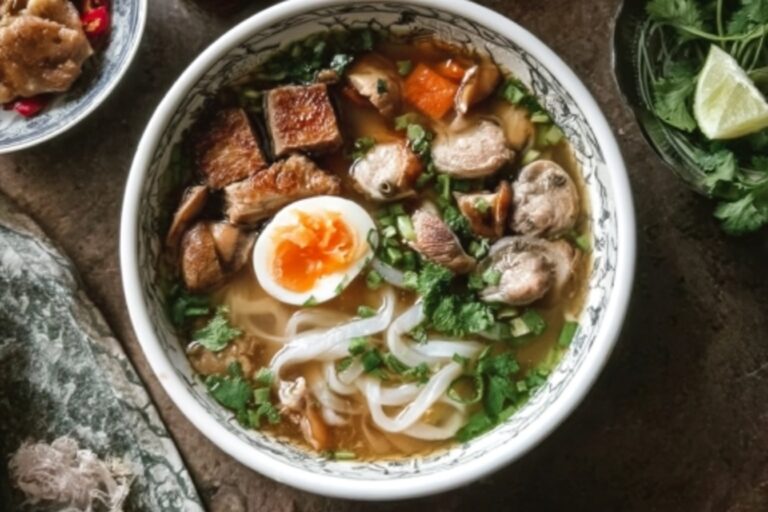
Banh Canh Cua is a Vietnamese crab tapioca noodle soup that feels fancy but cooks like home food. You get a rich seafood broth, thick and slippery tapioca noodles, and fresh herbs that make every bowl taste bright and comforting.
- Ease of preparation: Once the broth base is going, the rest is straightforward assembly. Even busy cooks can follow the steps without special techniques.
- Health benefits: Crab adds protein and minerals, while fresh herbs and vegetables bring fiber and micronutrients. If you’re mindful about sodium, this recipe still lets you control seasoning at the table.
- Versatility: Swap toppings based on what you find at the market. You can also adjust spice, swap noodle types, or choose different pork cuts.
- Distinctive flavor: The sweet, savory broth from crab plus the gently chewy tapioca noodles is the signature combination you’ll crave again.
Jump to:
- Why You’ll Love This Banh Canh Cua
- Essential Ingredients for Banh Canh Cua
- Main Components (Broth, Toppings, Prawn Balls, Noodles)
- Ingredients List (with precise measurements)
- Special Dietary Options
- How to Prepare the Perfect Banh Canh Cua: Step-by-Step Guide
- Prep and Cooking Flow
- Make the Prawn Balls
- Add Crab and Thicken the Broth
- Boil Noodles and Serve
- Protein and Main Component Alternatives
- Swap Ideas for the Main Protein
- Noodle Alternatives (Keep Texture in Mind)
- Vegetable, Sauce, and Seasoning Modifications
- Vegetable Flexibility
- Seasoning Adjustments
- Serving Sauce Ideas
- Mastering Banh Canh Cua: Advanced Tips and Variations
- Pro Cooking Techniques
- Flavor Variations to Try
- Make-Ahead Options (Busy Days)
- How to Store Banh Canh Cua: Best Practices
- Refrigeration (Short-Term)
- Freezing (Long-Term)
- Reheating Tips
- Meal Prep Considerations
- FAQs: Frequently Asked Questions About Banh Canh Cua
- What is banh canh cua?
- What kind of crab is best for banh canh cua?
- How do I keep banh canh noodles from sticking together?
- What can I substitute for potato starch in banh canh cua noodles?
- How do I make the crab broth for banh canh cua?
- Banh Canh Cua
- Ingredients
- Instructions
- Last Step:
- Notes
- Nutrition
- Did you make this recipe?
Essential Ingredients for Banh Canh Cua
Here’s everything you need for Banh Canh Cua, including the crab-rich broth, toppings, prawn balls, noodles, and garnishes.
Main Components (Broth, Toppings, Prawn Balls, Noodles)
- Banh Canh Cua is a Vietnamese crab tapioca noodle soup with rich seafood broth, thick tapioca noodles, fresh crab, and herbs.
Ingredients List (with precise measurements)
- 10 liters stock – base for the seafood broth
- 800 g peeled daikon – soft, slightly sweet vegetable for depth
- 400 g peeled jicama – crisp root that becomes tender in soup
- 30 g dried squid – grilled for concentrated seafood flavor
- 70 g dehydrated scallops – adds deep umami
- 500 g frozen crab meat – sweet crab flavor in every spoonful
- 2 tbsp annatto seeds – infuses red color and aroma
- 1 tbsp oil (for annatto seeds) – medium for blooming annatto
- 70 g rock sugar – balances saltiness with gentle sweetness
- 6 tbsp salt – core seasoning for the broth
- ½ cup fish sauce – savory Vietnamese umami
- 1 ½ tbsp chicken bouillon powder – boosts savory depth
- ½ cup potato starch – thickens the broth for that classic banh canh feel
- ¼ cup water – to mix with potato starch
- 1 pork hoc (cut into pieces) – savory pork topping (use as called for)
- 1 or more crabs – for additional crab topping (optional but classic)
- optional blood jelly – traditional topping for extra chew and texture
- 20 fresh prawns (peeled and deveined) – forms the prawn balls
- 1 red shallot (finely chopped) – aromatic flavor inside prawn balls
- 3 cloves garlic (finely chopped) – savory backbone for aromatics
- 1 sprig spring onion (finely chopped) – fresh onion aroma
- 1 tbsp oil (for frying aromatics) – browns aromatics before blending
- ¼ tsp salt – seasoning for prawn paste
- ½ tsp sugar – balances prawn seasoning
- 1 tsp chicken bouillon powder – savory depth for prawn balls
- ½ tsp pepper – gentle warmth and aroma
- ½ tsp fish sauce – Vietnamese umami for prawn paste
- cooking oil for frying – needed to fry prawn balls
- 2 kg Banh Canh tapioca noodles – thick chewy noodles
- coriander (finely chopped) – fresh herb garnish
- spring onion (finely chopped) – bright onion bite
- fried onions – crispy topping for contrast
- pepper – finish at the table
- lime juice – adds freshness and balances richness
Special Dietary Options
- Vegan: This specific Banh Canh Cua recipe is not vegan because it uses crab meat, dried squid, dehydrated scallops, fish sauce, and chicken bouillon powder. For a vegan version, consider using a mushroom and seaweed broth base and plant-based “prawn” balls, but it will be a different dish.
- Gluten-free: The dish is typically gluten-free if you use pure tapioca noodles and gluten-free fish sauce and bouillon powder. Always check labels.
- Low-calorie: To lighten it, serve smaller noodle portions and add more vegetables. You can also reduce crabs/pork amount while keeping the broth flavorful.
If you love cozy noodle soups, this can be a great next step for your weeknight rotation too.
Quick note on texture: Thick, slippery tapioca noodles and a gently thickened broth are the heart of banh canh. Don’t skip the potato starch slurry.
How to Prepare the Perfect Banh Canh Cua: Step-by-Step Guide
This guide walks you through how to make banh canh cua recipe with clear steps, timing, and the exact order that helps the flavors build.
Prep and Cooking Flow
- First Step: Set up your mise en place. Cut and peel vegetables if needed, portion out crab meat (or plan to add crab), and measure seasonings. Keep your potato starch and water ready for thickening later.
- Second Step: In a large pot, cook pork hoc in 10 liters stock over low-medium heat. Let it simmer gently so the pork flavor melts into the broth.
- Third Step: Grill 30 g dried squid for about 1 to 2 minutes until fragrant, then add to the broth. Follow with 800 g peeled daikon, 400 g peeled jicama, and 70 g dehydrated scallops.
- Fourth Step: Simmer for 40 minutes until the vegetables are soft. Then remove the pork hoc and reserve it for serving.
- Fifth Step: Infuse 2 tbsp annatto seeds in 1 tbsp oil over low heat until the oil turns red. Strain the oil and stir it into the broth.
- Sixth Step: Season the broth with 6 tbsp salt, 70 g rock sugar, ½ cup fish sauce, and 1 ½ tbsp chicken bouillon powder. Stir well and taste carefully.
Make the Prawn Balls
- First Step: Fry aromatics: heat 1 tbsp oil and fry 1 red shallot, 3 garlic cloves, and 1 spring onion sprig until browned. Cool completely.
- Second Step: Blend into a paste: combine aromatics with 20 fresh prawns, ¼ tsp salt, ½ tsp sugar, 1 tsp chicken bouillon powder, ½ tsp pepper, and ½ tsp fish sauce.
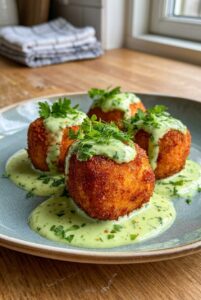
- Third Step: Form balls about 2 cm each. Fry in cooking oil until golden, then drain.
- Fourth Step: Add prawn balls to the broth so they warm through and soak up flavor.
Add Crab and Thicken the Broth
- First Step: Stir in 500 g frozen crab meat and cook for 15 minutes until done. Reserve any whole crabs or extra crab toppings separately if you’re using them.
- Second Step: Thicken the broth: mix ½ cup potato starch with ¼ cup water into a slurry. Stir it in slowly over low heat until the broth turns silky and slightly thick.
Boil Noodles and Serve
- First Step: Boil 2 kg banh canh tapioca noodles for 3 to 5 minutes, depending on thickness. Drain well.
- Second Step: Serve noodles in bowls. Top each bowl with reserved pork hoc, prawn balls, and crab. Add blood jelly if using.
- Third Step: Ladle hot broth over the noodles. Finish with coriander, spring onion, fried onions, pepper, and squeeze lime juice right before eating.
- Final Step: Taste and adjust with extra lime or pepper as you like. This is one of those soups where table customization is part of the fun.
For more Vietnamese crab noodle inspiration, check out this guide to see how other cooks build their broth and toppings.
Protein and Main Component Alternatives
If you can’t find everything exactly as listed, you can still keep the spirit of the dish. The most important part is that you maintain a sweet-savory seafood broth, plus chewy tapioca noodles and a lightly thickened base.
Swap Ideas for the Main Protein
- Pork hoc alternatives: Substitute with other pork cuts, or use crab claws for a stronger seafood-forward bowl.
- Crab meat alternatives: If frozen crab meat isn’t available, you can use other seafood that cooks quickly, but the sweetness may change.
- Prawn ball alternatives: If you want a different texture, try adjusting the prawn mixture seasoning. For availability, you can also use other shellfish, but keep the same paste method.
Noodle Alternatives (Keep Texture in Mind)
- Potato starch vs corn starch: The soup’s thickness is tied to the slurry. If you run out of potato starch, substitute corn starch 1:1.
- Gluten-free option: Use pure tapioca noodles and check that your seasonings contain no hidden gluten.
Vegetable, Sauce, and Seasoning Modifications
Vegetables and seasonings let you make crab noodle soup match your preferences. You can keep the structure of the recipe and still customize flavor.
Vegetable Flexibility
- Chargrill for depth: Chargrill daikon and jicama with their skins, then peel and add. This gives a deeper, slightly smoky note.
- Change the veggie mix: If you want more variety, add extra root vegetables after 20 minutes of simmering so they soften evenly.
Seasoning Adjustments
| Flavor goal | What to adjust | How |
|---|---|---|
| Sweeter broth | Rock sugar | Add a small pinch at the end and taste |
| Saltier taste | Salt and fish sauce | Adjust carefully since fish sauce is strong |
| More seafood aroma | Dried squid or scallops | Use the same amounts, but don’t over-simmer |
| Thicker mouthfeel | Potato starch slurry | Add slowly over low heat until silky |
Serving Sauce Ideas
Classic vietnamese noodle soup style includes finishing flavors at the table. Pepper and lime juice brighten the bowl, while fried onions add crunch.
Tip: If you’re serving family members who prefer different salt levels, keep the soup slightly balanced and offer extra lime and pepper on the side.
Mastering Banh Canh Cua: Advanced Tips and Variations
Once you nail the basics, you can make authentic vietnamese banh canh cua taste even more “restaurant.” These tips help with texture, flavor, and timing.
Pro Cooking Techniques
- Fresh crab matters: Fresh crab yields sweeter, more flavorful broth. If you can, choose fresh and cook to develop flavor.
- Better prawn ball texture: Slam the prawn paste on a surface before forming balls. This helps the mixture bind and keeps texture springy.
- Prevent sticking: Drizzle a little oil on drained noodles to prevent clumping, especially if you’re waiting to assemble bowls.
- Chargrill root vegetables: For deeper flavor, chargrill daikon and jicama with skins, then peel and add for tenderness.
- Ingredient sourcing: Source tapioca noodles, dried squid, scallops, coriander, and spring onion from Asian markets. Opt for frozen crab meat from seafood markets.
Flavor Variations to Try
- Adjust prawn seasoning: If the broth tastes saltier, reduce prawn salt slightly next time. If it tastes flat, add a small pinch of sugar to balance.
- Extra crab topping: Use crab claws or additional crab pieces for a more dramatic seafood-heavy bowl.
- Blood jelly option: If you love chewy textures, add it. If you’re new, start with a small portion per bowl.
Make-Ahead Options (Busy Days)
- Broth: Make ahead and refrigerate. Skim any excess fat when chilled if desired.
- Prawn balls: Fry ahead and keep warm or reheat briefly. Add them to broth when assembling.
- Noodles: Cook close to serving time for best texture. If you must hold them, toss with oil and store briefly.
Timeline reference: Prep time about 40 minutes, cook time about 2 hours, stock time about 3 hours 30 minutes. Total time is roughly 6 hours 10 minutes. This recipe serves about 10.
How to Store Banh Canh Cua: Best Practices
Storing banh canh cua well helps you keep the noodles and broth tasty for later. The key is protecting noodle texture and reheating gently.
Refrigeration (Short-Term)
- Cool soup quickly, then store in airtight containers.
- Keep noodles and broth together for the best flavor, but expect noodles to soften over time.
- Eat within 2 to 3 days for best quality.
Freezing (Long-Term)
- For freezing, consider storing broth separately from noodles and toppings.
- Freeze broth for up to 1 to 2 months.
- Thaw in the refrigerator overnight.
Reheating Tips
- Reheat broth on low heat so it thickens smoothly again.
- If noodles are clumped, rinse quickly under hot water and drain, then add to bowls.
- Prawn balls and crab meat should be heated until just warm throughout.
Meal Prep Considerations
- Store garnishes separately (coriander, spring onion, fried onions) so they stay fresh and crisp.
- Rebuild bowls right before serving for maximum “slurpy” texture.
Reminder: Tapioca noodles can keep absorbing broth as they sit. If you’re planning leftovers, store broth and noodles separately when possible.

FAQs: Frequently Asked Questions About Banh Canh Cua
What is banh canh cua?
What kind of crab is best for banh canh cua?
How do I keep banh canh noodles from sticking together?
What can I substitute for potato starch in banh canh cua noodles?
How do I make the crab broth for banh canh cua?
Banh Canh Cua
🦀 Dive into rich Vietnamese crab noodle soup with slippery tapioca noodles and seafood-packed broth – ultimate comfort with fresh herbs and umami depth!
🍜 Massive batch for gatherings, simmered to perfection for tender crab and prawns, healthy protein boost customizable with lime and chili!
- Total Time: 6 hours 10 minutes
- Yield: 10 servings
Ingredients
– 10 liters stock base for the seafood broth
– 800 g peeled daikon soft, slightly sweet vegetable for depth
– 400 g peeled jicama crisp root that becomes tender in soup
– 30 g dried squid grilled for concentrated seafood flavor
– 70 g dehydrated scallops adds deep umami
– 500 g frozen crab meat sweet crab flavor in every spoonful
– 2 tbsp annatto seeds infuses red color and aroma
– 1 tbsp oil (for annatto seeds) medium for blooming annatto
– 70 g rock sugar balances saltiness with gentle sweetness
– 6 tbsp salt core seasoning for the broth
– ½ cup fish sauce savory Vietnamese umami
– 1 ½ tbsp chicken bouillon powder boosts savory depth
– ½ cup potato starch thickens the broth for that classic banh canh feel
– ¼ cup water to mix with potato starch
– 1 pork hoc (cut into pieces) savory pork topping (use as called for)
– 1 or more crabs for additional crab topping (optional but classic)
– optional blood jelly traditional topping for extra chew and texture
– 20 fresh prawns (peeled and deveined) forms the prawn balls
– 1 red shallot (finely chopped) aromatic flavor inside prawn balls
– 3 cloves garlic (finely chopped) savory backbone for aromatics
– 1 sprig spring onion (finely chopped) fresh onion aroma
– 1 tbsp oil (for frying aromatics) browns aromatics before blending
– ¼ tsp salt seasoning for prawn paste
– ½ tsp sugar balances prawn seasoning
– 1 tsp chicken bouillon powder savory depth for prawn balls
– ½ tsp pepper gentle warmth and aroma
– ½ tsp fish sauce Vietnamese umami for prawn paste
– cooking oil for frying needed to fry prawn balls
– 2 kg Banh Canh tapioca noodles thick chewy noodles
– coriander (finely chopped) fresh herb garnish
– spring onion (finely chopped) bright onion bite
– fried onions crispy topping for contrast
– pepper finish at the table
– lime juice adds freshness and balances richness
Instructions
1-First Step: Set up your mise en place. Cut and peel vegetables if needed, portion out crab meat (or plan to add crab), and measure seasonings. Keep your potato starch and water ready for thickening later.
2-Second Step: In a large pot, cook pork hoc in 10 liters stock over low-medium heat. Let it simmer gently so the pork flavor melts into the broth.
3-Third Step: Grill 30 g dried squid for about 1 to 2 minutes until fragrant, then add to the broth. Follow with 800 g peeled daikon, 400 g peeled jicama, and 70 g dehydrated scallops.
4-Fourth Step: Simmer for 40 minutes until the vegetables are soft. Then remove the pork hoc and reserve it for serving.
5-Fifth Step: Infuse 2 tbsp annatto seeds in 1 tbsp oil over low heat until the oil turns red. Strain the oil and stir it into the broth.
6-Sixth Step: Season the broth with 6 tbsp salt, 70 g rock sugar, ½ cup fish sauce, and 1 ½ tbsp chicken bouillon powder. Stir well and taste carefully.
7-First Step: Fry aromatics: heat 1 tbsp oil and fry 1 red shallot, 3 garlic cloves, and 1 spring onion sprig until browned. Cool completely.
8-Second Step: Blend into a paste: combine aromatics with 20 fresh prawns, ¼ tsp salt, ½ tsp sugar, 1 tsp chicken bouillon powder, ½ tsp pepper, and ½ tsp fish sauce.
9-Third Step: Form balls about 2 cm each. Fry in cooking oil until golden, then drain.
10-Fourth Step: Add prawn balls to the broth so they warm through and soak up flavor.
11-First Step: Stir in 500 g frozen crab meat and cook for 15 minutes until done. Reserve any whole crabs or extra crab toppings separately if you’re using them.
12-Second Step: Thicken the broth: mix ½ cup potato starch with ¼ cup water into a slurry. Stir it in slowly over low heat until the broth turns silky and slightly thick.
13-First Step: Boil 2 kg banh canh tapioca noodles for 3 to 5 minutes, depending on thickness. Drain well.
14-Second Step: Serve noodles in bowls. Top each bowl with reserved pork hoc, prawn balls, and crab. Add blood jelly if using.
15-Third Step: Ladle hot broth over the noodles. Finish with coriander, spring onion, fried onions, pepper, and squeeze lime juice right before eating.
16-Final Step: Taste and adjust with extra lime or pepper as you like. This is one of those soups where table customization is part of the fun.
Last Step:
Please leave a rating and comment letting us know how you liked this recipe! This helps our business to thrive and continue providing free, high-quality recipes for you.Notes
🦀 Use fresh crabs for sweetest broth; frozen crab meat from markets works well too.
🍤 Slam prawn paste firmly on counter for springy, bouncy texture in balls.
🥬 Source banh canh noodles and Asian ingredients from specialty markets for authenticity.
- Prep Time: 40 minutes
- Stock preparation: 3 hours 30 minutes
- Cook Time: 2 hours
- Category: Soups
- Method: Simmered
- Cuisine: Vietnamese
- Diet: Gluten-free
Nutrition
- Serving Size: 1 large bowl
- Calories: 1356 kcal
- Sugar: 19g
- Sodium: 7061mg
- Fat: 20g
- Saturated Fat: 5g
- Unsaturated Fat: 15g
- Trans Fat: 0g
- Carbohydrates: 224g
- Fiber: 3g
- Protein: 62g
- Cholesterol: 215mg