Why You’ll Love This Beef Bulgogi
This beef bulgogi recipe brings the sizzle of Korean beef right to your kitchen table. It’s a standout dish that home cooks love for its simple steps and big flavors. Whether you’re a busy parent whipping up dinner or a food enthusiast craving authentic beef bulgogi, this version delivers every time.
- Ease of preparation: You can have this bulgogi recipe ready in about 3 hours total, with most of that time hands-off marinating. Slice the beef thin after a quick freeze, mix the marinade, and let it sit. Cooking takes just 15 minutes in batches on a hot pan, making it perfect for weeknights without fuss.
- Health benefits: Thin slices of rib eye pack protein while the pear and veggies add natural tenderness and nutrients. Using reduced sodium soy sauce keeps salt in check, and the quick sear locks in juices for a leaner bite. Pair it with rice and kimchi for a balanced meal full of bold taste without excess calories.
- Versatility: Adapt this Korean beef bulgogi recipe for any meal. Wrap in lettuce for low-carb fun, toss over rice bowls, or mix into salads. It fits busy schedules, dietary tweaks, and even freezes well for later.
- Distinctive flavor: The bulgogi marinade blends sweet pear, savory soy, spicy gochujang, and nutty sesame for caramelized edges and juicy centers. It’s that fire-grilled taste that makes traditional Korean bulgogi recipe unforgettable at home.
These perks make homemade beef bulgogi a go-to. Fire up your pan and taste Korea tonight.
For more Korean BBQ beef inspiration, check out this traditional bulgogi recipe.
Jump to:
- Why You’ll Love This Beef Bulgogi
- Essential Ingredients for Beef Bulgogi
- Main Ingredients
- Special Dietary Options
- How to Prepare the Perfect Beef Bulgogi: Step-by-Step Guide
- Dietary Substitutions to Customize Your Beef Bulgogi
- Protein and Main Component Alternatives
- Vegetable, Sauce, and Seasoning Modifications
- Mastering Beef Bulgogi: Advanced Tips and Variations
- Pro Cooking Techniques
- Flavor Variations
- Presentation Tips
- Make-Ahead Options
- How to Store Beef Bulgogi: Best Practices
- FAQs: Frequently Asked Questions About Beef Bulgogi
- What is beef bulgogi?
- What cut of beef is best for bulgogi?
- Can I use apple instead of pear in bulgogi marinade?
- What is gochujang and where do I find it for bulgogi?
- How do I cook bulgogi without a cast iron grill pan?
- Beef Bulgogi
- Ingredients
- Instructions
- Last Step:
- Notes
- Nutrition
- Did you make this recipe?
Essential Ingredients for Beef Bulgogi
Main Ingredients
Gather these for your authentic beef bulgogi. Each plays a key role in that signature sweet-savory punch.
- 1 ½ pounds boneless rib eye steak – Prime cut for marbling that stays juicy after quick cooking.
- ½ small pear, peeled and coarsely grated – Tenderizes meat naturally with enzymes and adds subtle sweetness.
- ¼ cup reduced sodium soy sauce – Brings umami base while keeping salt balanced.
- 2 tablespoons brown sugar – Balances flavors with caramel notes during grilling.
- 2 tablespoons toasted sesame oil – Adds nutty aroma and rich depth to the bulgogi marinade.
- 3 cloves garlic, minced – Provides sharp, aromatic kick essential in Korean beef.
- 1 tablespoon freshly grated ginger – Offers fresh zing and warmth to cut through richness.
- 1 tablespoon gochujang (Korean red pepper paste) – Delivers mild heat and fermented complexity.
- 2 tablespoons vegetable oil, divided – For searing to get those charred edges without sticking.
- 2 green onions, thinly sliced – Fresh garnish for color and mild onion bite.
- 1 teaspoon sesame seeds – Toasted finish for crunch and visual appeal.
Special Dietary Options
- Vegan: Swap rib eye for thinly sliced portobello mushrooms or extra-firm tofu; use tamari for soy sauce.
- Gluten-free: Choose gluten-free soy sauce or tamari; ensure gochujang is certified gluten-free.
- Low-calorie: Trim visible fat from beef, reduce brown sugar to 1 tablespoon, and use half the sesame oil.
These tweaks keep your beef bulgogi recipe easy and inclusive.
How to Prepare the Perfect Beef Bulgogi: Step-by-Step Guide
Follow these steps for beef bulgogi recipe easy success. Total time is about 3 hours, with prep around 2 hours 45 minutes including marinate, and cook time 15 minutes. Serves 4 hungry folks.
| Time Breakdown | Details |
|---|---|
| Prep Time | About 2 hours 45 minutes (including marinating) |
| Cook Time | About 15 minutes |
| Total Time | Approximately 3 hours |
First Step: Prep the Steak Wrap the 1 ½ pounds boneless rib eye steak in plastic wrap and freeze for 30 minutes. This makes slicing super easy into ¼-inch thick pieces against the grain. Thin slices cook fast and soak up the bulgogi marinade evenly, key for tender Korean beef. For dietary tweaks, partially freeze tofu the same way if going vegan.
Second Step: Make the Marinade Grate ½ small pear, peeled and coarsely grated, into a bowl. Mix in ¼ cup reduced sodium soy sauce, 2 tablespoons brown sugar, 2 tablespoons toasted sesame oil, 3 cloves minced garlic, 1 tablespoon grated ginger, and 1 tablespoon gochujang. Stir until smooth. The pear tenderizes naturally, perfect for homemade beef bulgogi.
Third Step: Marinate the Beef Add sliced steak to a large resealable plastic bag with the marinade. Seal, squeeze out air, and massage to coat. Marinate in the fridge for at least 2 hours or overnight, flipping now and then. Longer marinate deepens flavor; even 30 minutes works for quicker meals. Gluten-free? Tamari swaps right in.
Fourth Step: Heat the Pan Grab a cast iron grill pan and heat 1 tablespoon vegetable oil over medium-high until shimmering. This high heat sears without steaming, giving charred bits. No grill pan? A regular skillet shines too.
Fifth Step: Cook in Batches Add steak in a single layer, no crowding. Flip once, cooking 2-3 minutes per side until charred and done. Use the second tablespoon oil for more batches. Total cook around 15 minutes. Low-cal tip: Blot excess marinade before cooking to cut oil.
Final Step: Garnish and Serve Sprinkle with 2 thinly sliced green onions and 1 teaspoon sesame seeds. Dish up with white rice, kimchi, cucumbers, perilla leaves, and ssamjang. Try lettuce wraps or veggie-packed rice bowls. Rest a minute for juices to settle. Your traditional Korean bulgogi recipe is ready to wow.
This quick sear turns simple ingredients into restaurant-style beef bulgogi. Every bite pops with sweet, spicy goodness.
Pat yourself on the back; you’ve nailed authentic beef bulgogi at home.

Dietary Substitutions to Customize Your Beef Bulgogi
Protein and Main Component Alternatives
Switch up the rib eye for your needs. Flank steak works great; marinate longer to tenderize. For chicken bulgogi, use thighs sliced thin. Tofu or tempeh shines vegan-style, absorbing the bulgogi marinade fully. Mushrooms like portobello mimic beef texture. Each keeps the Korean beef vibe alive, just lighter or plant-based. Aim for 1 ½ pounds equivalent.
Vegetable, Sauce, and Seasoning Modifications
Add carrots or onions to the marinade for extra crunch. Swap pear for grated apple in a pinch. Dial gochujang down for mild, or add sesame seeds earlier for toastiness. Low-sodium soy stays, or coconut aminos for paleo. Seasonal veggies like zucchini boost nutrition without changing core flavors. These keep your bulgogi recipe easy and fresh.
Mastering Beef Bulgogi: Advanced Tips and Variations
Pro Cooking Techniques
Partially freeze steak 20-30 minutes for even thin slices. Hot cast iron grill pan or skillet prevents steaming; batches are key. Grated pear (Korean or Bosc best) tenderizes sweetly. Reduced sodium soy controls salt perfectly.
Flavor Variations
Boost heat with more gochujang or fresh chilies. Sweeten further with honey. Try pear-apple mix for fruity twist in bulgogi marinade.
Presentation Tips
Plate sizzling with garnishes on top. Serve family-style for wraps.
Make-Ahead Options
Marinate overnight or freeze cooked bulgogi up to 2 months; thaw in fridge. Great for busy weeks.
Experiment freely. For a sweet pairing after your Korean beef, whip up our banana bundt cake.
How to Store Beef Bulgogi: Best Practices
- Refrigeration: Cool completely, store in airtight container up to 4 days. Flavors meld nicely.
- Freezing: Portion marinated or cooked into bags; freezes well 2 months. Thaw overnight in fridge.
- Reheating: Skillet over medium with splash water or oil; 2-3 minutes to crisp up. Microwave ok but less sear.
- Meal Prep: Cook extra for bowls or wraps all week. Keeps protein punch intact.
Safe storage means your homemade beef bulgogi stays tasty.

FAQs: Frequently Asked Questions About Beef Bulgogi
What is beef bulgogi?
What cut of beef is best for bulgogi?
Can I use apple instead of pear in bulgogi marinade?
What is gochujang and where do I find it for bulgogi?
How do I cook bulgogi without a cast iron grill pan?
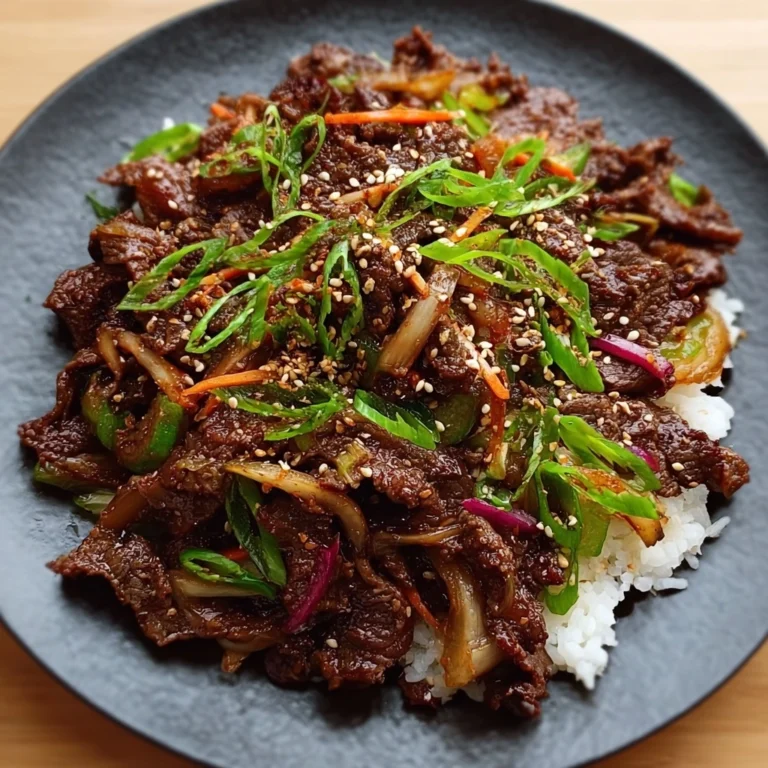
Beef Bulgogi
🥩 Experience the authentic flavors of Korean barbecue with this tender, marinated beef bulgogi that brings restaurant-quality taste to your home kitchen
🌟 The perfect balance of sweet, savory, and spicy flavors makes this dish an impressive crowd-pleaser for any occasion
- Total Time: 3 hours
- Yield: 4 servings
Ingredients
– 1 ½ pounds boneless rib eye steak for marbling
– ½ small pear peeled and coarsely grated for tenderizing meat
– ¼ cup reduced sodium soy sauce for umami base
– 2 tablespoons brown sugar for balancing flavors
– 2 tablespoons toasted sesame oil for nutty aroma and rich depth
– 3 cloves garlic minced for sharp aromatic kick
– 1 tablespoon freshly grated ginger for fresh zing and warmth
– 1 tablespoon gochujang for mild heat and fermented complexity
– 2 tablespoons vegetable oil for searing
– 2 green onions thinly sliced for garnish
– 1 teaspoon sesame seeds for crunch and visual appeal
Instructions
1-First Step: Prep the Steak Wrap the 1 ½ pounds boneless rib eye steak in plastic wrap and freeze for 30 minutes. This makes slicing super easy into ¼-inch thick pieces against the grain. Thin slices cook fast and soak up the bulgogi marinade evenly, key for tender Korean beef. For dietary tweaks, partially freeze tofu the same way if going vegan.
2-Second Step: Make the Marinade Grate ½ small pear, peeled and coarsely grated, into a bowl. Mix in ¼ cup reduced sodium soy sauce, 2 tablespoons brown sugar, 2 tablespoons toasted sesame oil, 3 cloves minced garlic, 1 tablespoon grated ginger, and 1 tablespoon gochujang. Stir until smooth. The pear tenderizes naturally, perfect for homemade beef bulgogi.
3-Third Step: Marinate the Beef Add sliced steak to a large resealable plastic bag with the marinade. Seal, squeeze out air, and massage to coat. Marinate in the fridge for at least 2 hours or overnight, flipping now and then. Longer marinate deepens flavor; even 30 minutes works for quicker meals. Gluten-free? Tamari swaps right in.
4-Fourth Step: Heat the Pan Grab a cast iron grill pan and heat 1 tablespoon vegetable oil over medium-high until shimmering. This high heat sears without steaming, giving charred bits. No grill pan? A regular skillet shines too.
5-Fifth Step: Cook in Batches Add steak in a single layer, no crowding. Flip once, cooking 2-3 minutes per side until charred and done. Use the second tablespoon oil for more batches. Total cook around 15 minutes. Low-cal tip: Blot excess marinade before cooking to cut oil.
6-Final Step: Garnish and Serve Sprinkle with 2 thinly sliced green onions and 1 teaspoon sesame seeds. Dish up with white rice, kimchi, cucumbers, perilla leaves, and ssamjang. Try lettuce wraps or veggie-packed rice bowls. Rest a minute for juices to settle. Your traditional Korean bulgogi recipe is ready to wow.
Last Step:
Please leave a rating and comment letting us know how you liked this recipe! This helps our business to thrive and continue providing free, high-quality recipes for you.Notes
🔪 Partially freeze steak for 20-30 minutes to easily slice into thin, even pieces
🍐 Grated pear tenderizes the meat and adds natural sweetness; use Korean or Bosc pear if available
🍳 Use a hot cast iron grill pan or skillet for batches to achieve a good sear without steaming; avoid overcrowding
- Prep Time: 2 hours 30 minutes
- Marinating time: 2 hours
- Cook Time: 15 minutes
- Category: Main Course
- Method: Grilling/Pan-frying
- Cuisine: Korean
- Diet: Gluten-Free Option
Nutrition
- Serving Size: 1 serving
- Calories: 320
- Sugar: 12g
- Sodium: 680mg
- Fat: 18g
- Saturated Fat: 6g
- Unsaturated Fat: 10g
- Trans Fat: 0g
- Carbohydrates: 15g
- Fiber: 2g
- Protein: 28g
- Cholesterol: 75mg