
Why You’ll Love This Belgian Stoofvlees
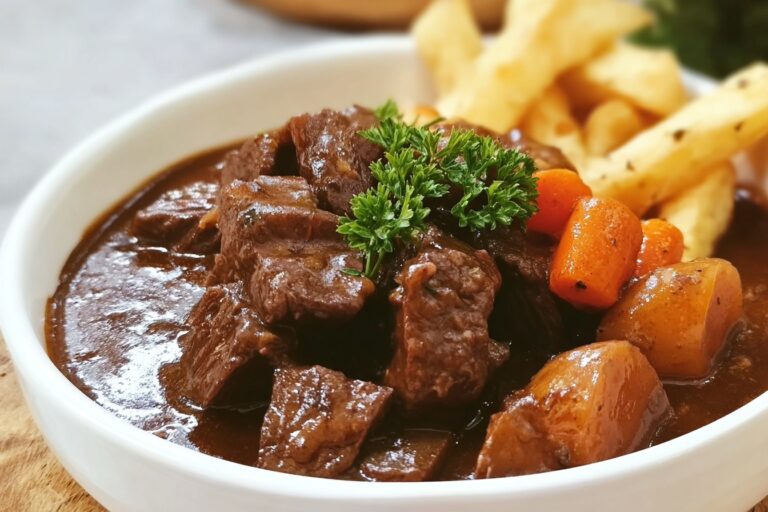
Belgian Stoofvlees is one of those meals that feels like a warm blanket the moment it hits the table. It’s a thick Flemish beef stew cooked slowly in Belgian brown ale, which gives the gravy that deep, malty flavor you just can’t get from plain broth. And because it’s traditionally served with fries or crusty brown bread and mustard, it’s comforting in a very real, everyday way.
- Ease of preparation: Most of the work is hands-off simmering. You marinate ahead, sear, then let time do the magic.
- Health benefits: Beef provides protein, and the long-cooked onions and carrots add fiber and helpful nutrients. Pair it with a lighter side if you want a more balanced plate.
- Versatility: You can swap in different vegetables, seasonings, and even alternate proteins based on what you have on hand.
- Distinctive flavor: Brown ale plus coarse mustard, thyme, and bay leaves create a rich, savory stew that tastes Belgian through and through.
If you like meals that taste even better the next day, Belgian Stoofvlees is for you. Flavors meld while it cools, so leftovers are often better than the first serving.
It’s also a great fit for busy parents, working professionals, students, and seniors because you can prep once and enjoy multiple meals. And if you’re a traveler at heart, this dish brings a taste of Flanders and the Netherlands right into your kitchen.
Jump to:
- Why You’ll Love This Belgian Stoofvlees
- Essential Ingredients for Belgian Stoofvlees
- Special Dietary Options
- How to Prepare the Perfect Belgian Stoofvlees: Step-by-Step Guide
- Quick timeline and what to expect
- Step-by-step directions
- Common issues and quick fixes
- Protein and Main Component Alternatives
- Best protein swaps
- Beer and liquid alternatives
- Vegetable, Sauce, and Seasoning Modifications
- Vegetable swaps
- Seasoning and sauce tweaks
- Mastering Belgian Stoofvlees: Advanced Tips and Variations
- Pro cooking techniques
- Flavor variations
- Presentation tips
- How to Store Belgian Stoofvlees: Best Practices
- Refrigeration
- Freezing
- Reheating
- Meal prep considerations
- FAQs: Frequently Asked Questions About Belgian Stoofvlees
- What is Belgian stoofvlees?
- What type of beer is best for stoofvlees?
- What cut of beef is best for stoofvlees?
- How long should you marinate beef for stoofvlees?
- How do you prevent stoofvlees from sticking to the pot?
- Belgian Stoofvlees
- Ingredients
- Instructions
- Last Step:
- Notes
- Nutrition
- Did you make this recipe?
Essential Ingredients for Belgian Stoofvlees
Below are the exact ingredients and measurements for a classic, authentic Belgian Stoofvlees. The list is organized so you can shop quickly and prep with confidence.
- For the beef and marinade:
- 1 pound beef, cut into 1-inch cubes
- 1 small minced onion
- 4 cloves garlic, minced
- 1 sprig fresh rosemary
- 1/2 teaspoon dried thyme
- 1/2 teaspoon sweet paprika
- 1/2 teaspoon smoked paprika
- 1/2 teaspoon hot paprika
- 1 tablespoon coarse Dutch-style mustard
- 2 tablespoons red or white wine vinegar
- For the stew:
- 2 tablespoons all-purpose flour
- 2 tablespoons flavorless cooking oil, divided
- 1 large diced onion
- 1 bottle (about 12 oz or 30 cl) Belgian brown ale
- 1 cup beef broth
- 1 cup water
- 2 dried bay leaves
- 1 tablespoon brown sugar
- 1/4 teaspoon salt
- 1/8 teaspoon ground black pepper
- 1 teaspoon coarse Dutch-style mustard
- For the carrots:
- 1 large carrot
- 1 garlic clove, minced
- 1/2 sprig fresh rosemary, chopped
- 1/4 teaspoon olive oil
- Pinch of salt
- A few grinds of black pepper
Special note on serving: Belgian Stoofvlees is traditionally served with fries or crusty brown bread with mustard. If you’re planning a full meal, that pairing is part of what makes it feel truly Belgian.
Special Dietary Options
You can make Belgian Stoofvlees fit more dietary needs with a few swaps. Exact options depend on your goals, so adjust based on your preferences and what you have available.
- Gluten-free: Use a gluten-free all-purpose flour blend for coating and thickening. Double-check that your beef broth and wine vinegar are gluten-free.
- Lower-sodium: Choose low-sodium beef broth and reduce added salt carefully. Taste after simmering.
- Low-calorie: Keep the stew portions moderate and serve with roasted potatoes in smaller amounts, or choose extra vegetables as a lighter side.
Vegan note: This recipe is naturally meat-based, so a true vegan version requires a full ingredient rewrite. If you want, you can mimic the flavor profile using a plant-based “beef-style” substitute and a stout or brown beer alternative, but it won’t be identical.
How to Prepare the Perfect Belgian Stoofvlees: Step-by-Step Guide
Belgian Stoofvlees is a thick Flemish beef stew cooked slowly in Belgian brown ale. It comes from Flanders, Belgium, and is also popular in the Netherlands. The key is taking your time, building flavor through marination and searing, and stirring regularly so it turns into a glossy, hearty gravy.
Quick timeline and what to expect
| Stage | Time | Your main job |
|---|---|---|
| Marinate | At least 4 hours, preferably overnight | Mix ingredients and refrigerate |
| Cook | About 6 hours total | Sear, simmer, stir, finish carrots |
| Prep | 10 minutes (excluding marinating) | Chop, measure, mise en place |
| Total | Approximately 10 hours including marinating | Plan ahead, then relax |
Step-by-step directions
Tip: For best results, use a heavy pot or Dutch oven. It helps with even heat during the long simmer.
- First Step: Combine the beef cubes with the minced onion, garlic, rosemary, thyme, three types of paprika, coarse Dutch-style mustard, and wine vinegar. Refrigerate covered for at least 4 hours or overnight.
- Second Step: Remove the beef from the fridge about 20 minutes before cooking. Remove the rosemary sprig and toss the beef with the all-purpose flour.
- Third Step: Heat 1 tablespoon of the flavorless cooking oil in a large pot over medium heat. Brown the beef in batches for about 3 minutes each, then remove and set aside.
- Fourth Step: Add the remaining oil to the pot and sauté the diced onions for 2 to 3 minutes, until soft.
- Fifth Step: Deglaze the pot with the Belgian brown ale. Keep the heat turned low and scrape up all browned bits from the bottom carefully.
- Sixth Step: Return the beef and its juices to the pot. Add beef broth, water, brown sugar, salt, black pepper, and bay leaves. Bring to a boil.
- Seventh Step: Cover and simmer on low for 4 to 5 hours. Stir every 45 minutes to an hour to prevent sticking.
- Eighth Step: About one hour before serving, sauté carrot slices in a separate pan with olive oil, minced garlic, chopped rosemary, salt, and pepper for about 4 minutes.
- Ninth Step: Stir the sautéed carrots and the remaining teaspoon of coarse Dutch-style mustard into the stew. Cook uncovered on low for the final hour, stirring as needed.
- Final Step: Serve piping hot with crusty brown bread and Belgian-style fries or roasted potatoes. Add mustard if you like a classic finish.
Why the deglaze matters: Deglazing after searing pulls flavor off the bottom of the pot and into your sauce. That browned crust is where a lot of the magic comes from.
If you want a side idea that also works for cozy meals, check out this banana bundt cake for dessert planning on busy weekends.
Common issues and quick fixes
- Stew too thick: Add a splash of water or beef broth and stir until it loosens.
- Not flavorful enough: Give it more time on low heat. Belgian Stoofvlees improves as it simmers.
- Carrots too soft: That’s why the recipe has you sauté them separately and add near the end.
As the stew cooks, you’ll notice it turn rich and thick. That’s exactly what you want from a thick Flemish beef stew.
Protein and Main Component Alternatives
If you’re cooking for a crowd or you simply want to work with what’s in your kitchen, you can adjust the main protein while keeping the stew’s spirit. Belgian Stoofvlees is built around braising, so any substitute should handle long, gentle cooking.
Best protein swaps
- Other stewing beef cuts: Use chuck, brisket, or shank. They break down beautifully during the 4 to 5 hour simmer.
- Turkey or chicken thighs: You can do it, but reduce simmer time slightly to avoid drying. The stew will be less “classic Belgian,” but still comforting.
- Mushroom-forward option: For a vegetarian twist, you can increase mushrooms and use extra broth. Keep in mind it won’t be true Belgian Stoofvlees.
Beer and liquid alternatives
The Belgian brown ale is a signature part of this dish. If you can’t find it, choose something with a similar body like a porter. Darker beers add caramel and nutty notes, while very light beers often taste thin after long simmering.
Choose a brown Belgian ale for authentic rich flavor, then let it simmer long enough that the alcohol cooks off and the flavor stays.
Vegetable, Sauce, and Seasoning Modifications
Traditional Belgian Stoofvlees includes carrots cooked separately and stirred in near the end to keep them tender but not mushy. Still, it’s easy to customize the stew based on the season or what you and your family enjoy.
Vegetable swaps
- Root vegetables: Replace some carrots with parsnips or turnips. Sauté them separately first, then add near the end.
- Celery and leeks: Add a small amount to the onions step for extra sweetness.
- Greens: Stir in spinach or kale during the last 10 to 15 minutes if you want a pop of color.
Seasoning and sauce tweaks
The sauce gets its signature character from coarse Dutch-style mustard, thyme, bay leaves, and the three paprikas. If you adjust seasonings, do it gradually and taste as you go.
- Mustard lovers: Add a little extra coarse mustard near the end for tang and thickness.
- Smoky preference: Increase smoked paprika slightly if you like a deeper, campfire-style flavor.
- Sweetness balance: Brown sugar helps round out the beer and vinegar. If you prefer less sweetness, reduce by a small amount, then taste.
For more Belgian cooking context, you can read this guide: Flemish beef stew (Stoofvlees) overview. It’s a helpful comparison point after you cook your first batch.
Mastering Belgian Stoofvlees: Advanced Tips and Variations
Once you nail the basics, the next step is making Belgian Stoofvlees taste even more “yours.” These tips focus on texture, flavor depth, and making the recipe work on your schedule.
Pro cooking techniques
- Don’t crowd the pot: Brown beef in batches so it sears instead of steams.
- Scrape the bottom well: Deglazing is crucial. Scrape up every browned bit while heat is low.
- Stir on a rhythm: Stir every 45 minutes to an hour during the long simmer to prevent burning and sticking.
Flavor variations
- Two-day version: Some people cook 2 to 3 hours on day one, refrigerate, then finish cooking the next day for enhanced flavors.
- Mustard-smeared bread: You can add it to thicken the stew, but serving it on the side helps preserve bread texture.
Presentation tips
Belgian Stoofvlees looks great when served in a deep bowl. Spoon stew generously over fries or alongside crusty brown bread and mustard. If you want a final touch, add extra pepper on top right before serving.
How to Store Belgian Stoofvlees: Best Practices
Because Belgian Stoofvlees is hearty and thick, it stores beautifully. If you want an easy meal for tomorrow or next week, follow these best practices.
Refrigeration
- Cool the stew quickly after cooking.
- Store in an airtight container in the fridge for up to 3 to 4 days.
- Reheat gently on the stove, stirring occasionally until hot all the way through.
Freezing
- Freeze portions in freezer-safe containers or bags for up to 2 to 3 months.
- Thaw overnight in the fridge before reheating.
Reheating
- Reheat on low to medium heat so the gravy stays thick and smooth.
- If it’s too thick after thawing, add a splash of water or beef broth.
Meal prep considerations
Batch cooking works great here. If you’re serving with fries, cook fries fresh for the best crunch and texture, then spoon hot stew on top or serve stew on the side.

FAQs: Frequently Asked Questions About Belgian Stoofvlees
What is Belgian stoofvlees?
What type of beer is best for stoofvlees?
What cut of beef is best for stoofvlees?
How long should you marinate beef for stoofvlees?
How do you prevent stoofvlees from sticking to the pot?
Belgian Stoofvlees
🍲 Tender beef cubes slow-braised in rich Belgian brown ale with caramelized onions – hearty Flemish comfort that warms the soul!
🥄 Authentic stoofvlees pairs perfectly with fries or mustard bread, deep flavors from overnight marinate for home-cooked bliss!
- Total Time: 10 hours
- Yield: 4 servings
Ingredients
– 1 pound beef
– 1 small minced onion
– 4 cloves garlic
– 1 sprig fresh rosemary
– 1/2 teaspoon dried thyme
– 1/2 teaspoon sweet paprika
– 1/2 teaspoon smoked paprika
– 1/2 teaspoon hot paprika
– 1 tablespoon coarse Dutch-style mustard
– 2 tablespoons red or white wine vinegar
– 2 tablespoons all-purpose flour
– 2 tablespoons flavorless cooking oil
– 1 large diced onion
– 1 bottle (about 12 oz or 30 cl) Belgian brown ale
– 1 cup beef broth
– 1 cup water
– 2 dried bay leaves
– 1 tablespoon brown sugar
– 1/4 teaspoon salt
– 1/8 teaspoon ground black pepper
– 1 teaspoon coarse Dutch-style mustard
– 1 large carrot
– 1 garlic clove
– 1/2 sprig fresh rosemary
– 1/4 teaspoon olive oil
– Pinch of salt
– A few grinds of black pepper
Instructions
1-First Step: Combine the beef cubes with the minced onion, garlic, rosemary, thyme, three types of paprika, coarse Dutch-style mustard, and wine vinegar. Refrigerate covered for at least 4 hours or overnight.
2-Second Step: Remove the beef from the fridge about 20 minutes before cooking. Remove the rosemary sprig and toss the beef with the all-purpose flour.
3-Third Step: Heat 1 tablespoon of the flavorless cooking oil in a large pot over medium heat. Brown the beef in batches for about 3 minutes each, then remove and set aside.
4-Fourth Step: Add the remaining oil to the pot and sauté the diced onions for 2 to 3 minutes, until soft.
5-Fifth Step: Deglaze the pot with the Belgian brown ale. Keep the heat turned low and scrape up all browned bits from the bottom carefully.
6-Sixth Step: Return the beef and its juices to the pot. Add beef broth, water, brown sugar, salt, black pepper, and bay leaves. Bring to a boil.
7-Seventh Step: Cover and simmer on low for 4 to 5 hours. Stir every 45 minutes to an hour to prevent sticking.
8-Eighth Step: About one hour before serving, sauté carrot slices in a separate pan with olive oil, minced garlic, chopped rosemary, salt, and pepper for about 4 minutes.
9-Ninth Step: Stir the sautéed carrots and the remaining teaspoon of coarse Dutch-style mustard into the stew. Cook uncovered on low for the final hour, stirring as needed.
10-Final Step: Serve piping hot with crusty brown bread and Belgian-style fries or roasted potatoes. Add mustard if you like a classic finish.
Last Step:
Please leave a rating and comment letting us know how you liked this recipe! This helps our business to thrive and continue providing free, high-quality recipes for you.Notes
🍺 Authentic brown Belgian ale like Chimay or Leffe Brune for deepest flavor.
⏲️ Overnight marinate maximizes tenderness and taste infusion.
🥄 Stir often during simmer; deglaze thoroughly for rich gravy.
- Prep Time: 10 minutes
- Marinating: 4 hours (overnight preferred)
- Cook Time: 6 hours
- Category: Soups & Stews
- Method: Slow Cooked
- Cuisine: Belgian
Nutrition
- Serving Size: 1 bowl
- Calories: 550 kcal
- Sugar: 8g
- Sodium: 700mg
- Fat: 25g
- Saturated Fat: 10g
- Unsaturated Fat: 15g
- Trans Fat: 0g
- Carbohydrates: 25g
- Fiber: 3g
- Protein: 35g
- Cholesterol: 100mg