Why You’ll Love This Creamy Coconut Hot Chocolate
There’s nothing quite like wrapping your hands around a steaming mug of rich, velvety hot chocolate when the temperature drops. But this isn’t just any ordinary hot chocolate recipe. This creamy coconut hot chocolate brings a tropical twist to the classic winter beverage, combining indulgent comfort with unique flavors that will transform your cozy evening routine.
Let me share why this coconut hot chocolate deserves a permanent spot in your recipe collection:
- Ease of Preparation: This creamy hot chocolate comes together in just 10 minutes with minimal ingredients. Whether you choose the stovetop or microwave method, you’ll have a delicious, comforting beverage ready faster than you can say “movie night.” No complicated techniques or special equipment required, making it perfect for busy weeknights or unexpected guests.
- Health Benefits: Unlike traditional hot chocolate made with cow’s milk and sugar, this coconut milk hot chocolate offers impressive nutritional advantages. Coconut contains medium-chain triglycerides (MCTs), which are easily digested and may provide quick energy. Plus, this dairy free hot chocolate naturally avoids lactose, making it gentler on sensitive stomachs while still delivering that crave-worthy richness. Learn more about the health benefits of coconut and why it’s such a wonderful ingredient for your beverages.
- Versatility: This vegan hot chocolate adapts beautifully to various dietary preferences without sacrificing flavor. Whether you’re strictly plant-based, following a paleo lifestyle, or simply looking to reduce dairy intake, this recipe has you covered. It also works well with multiple sweetener options, from maple syrup to stevia, allowing you to customize based on your nutritional goals.
- Distinctive Flavor: The subtle natural sweetness of coconut creates a perfectly balanced backdrop for the deep cocoa notes, resulting in a complex flavor profile that sets it apart from standard hot chocolate. The natural fats in coconut milk create an irresistibly creamy texture without feeling heavy or cloying, making each sip a truly luxurious experience.
Jump to:
- Why You’ll Love This Creamy Coconut Hot Chocolate
- Essential Ingredients for Creamy Coconut Hot Chocolate
- How to Prepare the Perfect Creamy Coconut Hot Chocolate: Step-by-Step Guide
- First Step: Preparation and Mise en Place
- Second Step: Heating the Coconut Milk
- Third Step: Blending the Chocolate Base
- Fourth Step: Simmering and Developing Flavor
- Final Step: Finishing Touches and Serving
- Dietary Substitutions to Customize Your Creamy Coconut Hot Chocolate
- Protein and Main Component Alternatives
- Vegetable, Sauce, and Seasoning Modifications
- Mastering Creamy Coconut Hot Chocolate: Advanced Tips and Variations
- Pro Cooking Techniques
- Flavor Variations
- Presentation Tips
- Make-Ahead Options
- How to Store Creamy Coconut Hot Chocolate: Best Practices
- Refrigeration
- Freezing
- Reheating
- Meal Prep Considerations
- FAQs: Frequently Asked Questions About Creamy Coconut Hot Chocolate
- What is creamy coconut hot chocolate?
- Is creamy coconut hot chocolate dairy-free and vegan?
- How do you make creamy coconut hot chocolate at home?
- Can you make creamy coconut hot chocolate thicker or less sweet?
- How long does creamy coconut hot chocolate last and how to store it?
- Creamy Coconut Hot Chocolate
- Ingredients
- Instructions
- Last Step:
- Notes
- Nutrition
- Did you make this recipe?
Essential Ingredients for Creamy Coconut Hot Chocolate
The secret to an exceptional coconut hot chocolate lies in using high-quality ingredients that complement each other perfectly. Here’s everything you need to create this indulgent beverage:
Main Ingredients:
- 1 can (14 ounces) full-fat coconut milk – The foundation of our recipe, providing richness and creamy texture
- 3 tablespoons unsweetened cocoa powder – Delivers deep chocolate flavor without excessive sugar
- 2-4 tablespoons pure maple syrup – Natural sweetener that complements coconut beautifully
- 1 teaspoon pure vanilla extract – Enhances and rounds out the chocolate and coconut flavors
- 1/4 teaspoon sea salt – Crucial for balancing sweetness and intensifying chocolate notes
- 1/4 cup coconut cream (optional) – For an extra luxurious, velvety texture
Optional Toppings:
- 2 tablespoons toasted coconut flakes – Adds texture and a beautiful presentation
- 1/4 cup vegan marshmallows – For that classic hot chocolate experience
- 2 tablespoons shaved dark chocolate (70% or higher) – Elegant garnish that melts deliciously
- 1 tablespoon coconut whipped cream – For the ultimate decadent finish
Special Dietary Options:
| Dietary Need | Substitution | Notes |
|---|---|---|
| Vegan | Use plant-based ingredients as listed | Ensure marshmallows are vegan-friendly |
| Gluten-Free | All ingredients are naturally gluten-free | Double-check cocoa powder labels |
| Low-Calorie | Use light coconut milk | Reduce sweetener to 1-2 tablespoons |
| Paleo | Use coconut sugar instead of maple syrup | Ensure all ingredients are unprocessed |
How to Prepare the Perfect Creamy Coconut Hot Chocolate: Step-by-Step Guide
Creating the perfect cup of coconut hot chocolate is simpler than you might think. Follow these detailed steps for consistently delicious results that will impress everyone who tries it.
First Step: Preparation and Mise en Place
Before you begin heating anything, proper preparation ensures a smooth cooking process. Start by shaking your can of full-fat coconut milk thoroughly to distribute the cream that typically separates and rises to the top. This step is crucial for achieving uniform texture in your final drink.
Measure out all your ingredients in advance: 3 tablespoons of unsweetened cocoa powder, 2-4 tablespoons of maple syrup (depending on your preferred sweetness level), 1 teaspoon of vanilla extract, and 1/4 teaspoon of sea salt. If you’re planning to use the optional coconut cream for extra richness, have that measured as well. Having everything ready before you turn on the heat prevents scorching and ensures proper blending of flavors.
For those who enjoy toppings, this is also the perfect time to prepare them. Toast coconut flakes in a dry skillet over medium heat for 2-3 minutes until golden and fragrant, watching carefully to prevent burning. Shave your dark chocolate if using, and set out your vegan marshmallows. This way, everything will be ready to garnish your hot chocolate the moment it’s prepared.
Second Step: Heating the Coconut Milk
Pour 1 cup of the shaken coconut milk into a small saucepan. If you’re using the optional coconut cream for extra richness, add it now. Place the saucepan over medium heat and warm gently, stirring occasionally. You want to heat the milk until it’s hot but not boiling approximately 3-4 minutes.
While heating, be patient and avoid rushing this step. Heating the coconut milk gradually prevents separation and allows the natural flavors to develop fully. If you prefer using a microwave instead of the stovetop, heat the milk in a microwave-safe container for about 2 minutes, stopping once to stir halfway through.
Watch for small bubbles forming around the edges of the pan this indicates your milk has reached the perfect temperature. At this point, remove the pan from the heat. The milk should be hot enough to dissolve the cocoa powder and sweetener but not so hot that it scorches when these ingredients are added.
Third Step: Blending the Chocolate Base
Once your coconut milk is hot, it’s time to create the chocolate base. Add the 3 tablespoons of unsweetened cocoa powder to the hot milk, whisking constantly to prevent clumps from forming. A small whisk or fork works well for this step just ensure you break up any cocoa lumps for a smooth final result.
Continue whisking until the cocoa powder is fully dissolved and the mixture begins to darken and thicken slightly. This process typically takes 1-2 minutes of steady whisking. The aroma of chocolate will become more pronounced as the cocoa integrates with the warm milk, signaling that you’re on the right track.
Next, add your chosen amount of maple syrup, starting with 2 tablespoons if you prefer a less sweet drink or 4 tablespoons for a more dessert-like experience. Whisk thoroughly to combine, then add the vanilla extract and sea salt. The salt is particularly important here it may seem counterintuitive, but it actually intensifies the chocolate flavor and balances the sweetness of the maple syrup.
Fourth Step: Simmering and Developing Flavor
Return the saucepan to low heat and let your coconut hot chocolate simmer gently for another 2-3 minutes. This brief simmering period allows the flavors to meld together and the mixture to reach its ideal consistency. During this time, stir occasionally to prevent anything from sticking to the bottom of the pan.
As the mixture simmers, you’ll notice it thickening slightly and becoming glossy a sign that the coconut milk’s natural fats have emulsified with the cocoa powder. This is exactly what creates that luxurious mouthfeel that makes this recipe so special. Keep a close eye on the pan during this step to ensure the liquid doesn’t boil, as boiling can cause the coconut milk to separate.
For those who prefer an exceptionally smooth and frothy texture, you can use an immersion blender at this stage to blend the hot chocolate for 10-15 seconds. This creates a wonderful frothiness without needing a specialized milk frother. If you don’t have an immersion blender, you can also carefully pour the hot chocolate into a standard blender, blend briefly, then return it to the pan to keep warm.
Final Step: Finishing Touches and Serving
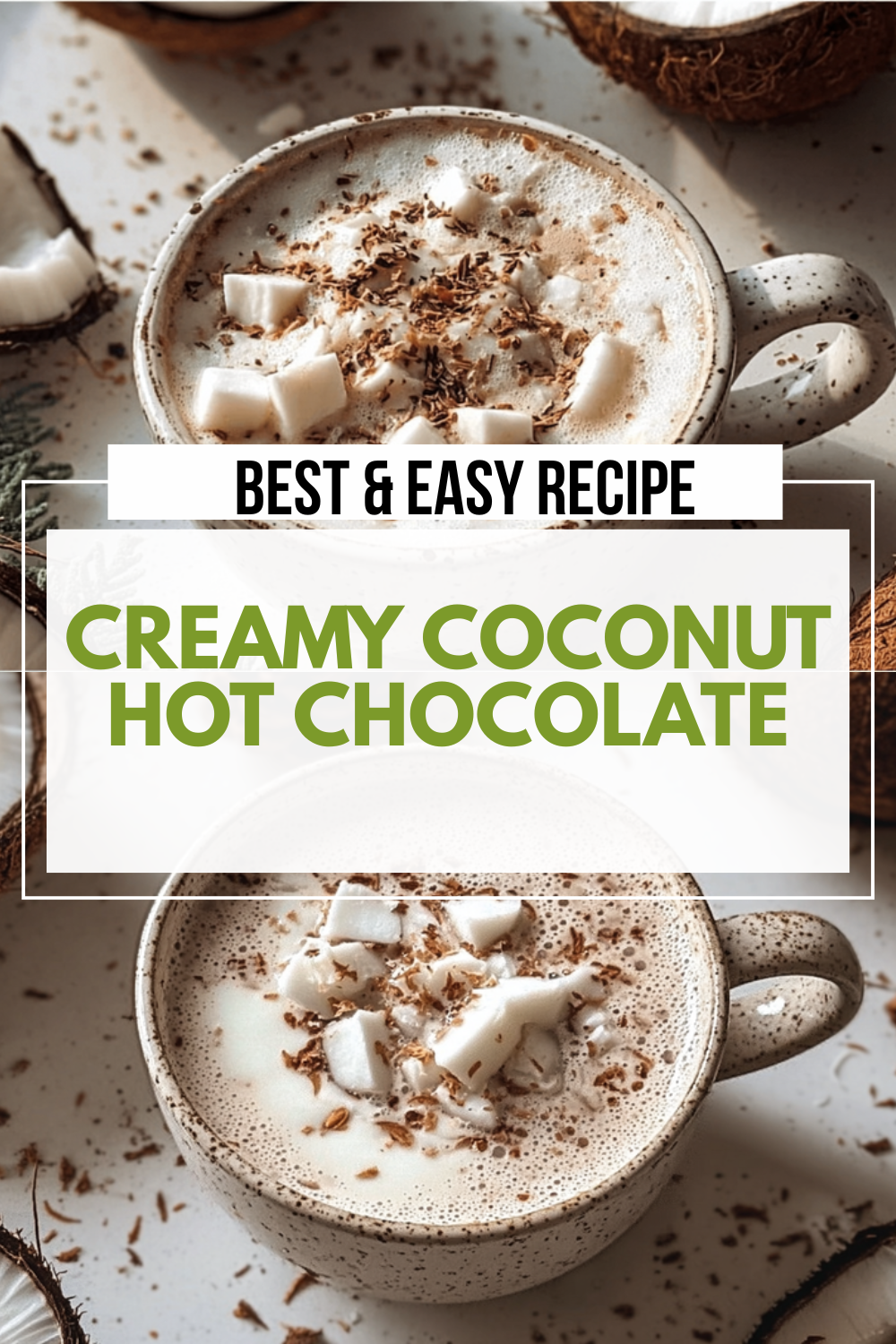
Once your creamy coconut hot chocolate has reached the perfect consistency and all flavors have harmonized, it’s time for the most rewarding part serving! Pour the hot chocolate into your favorite mug, filling it about 3/4 full to leave room for delicious toppings.
This is where you can get creative with presentation. Top with a generous handful of the toasted coconut flakes you prepared earlier, adding both visual appeal and a delightful crunch. Add vegan marshmallows that will slowly melt into the hot chocolate, creating pockets of sweet fluffiness. For chocolate lovers, sprinkle shaved dark chocolate on top, allowing the heat to slightly melt it into a ganache-like layer.
For the ultimate indulgence, add a dollop of coconut whipped cream on top of everything. The contrast between the hot chocolate and cool whipped cream creates a textural experience that elevates this simple beverage into a special treat. Serve immediately with a spoon to enjoy all the layers of flavor and texture.
This recipe typically makes 2 servings, though it can easily be doubled or tripled for a crowd. Each 8-ounce serving contains approximately 250-350 calories, depending on your chosen sweetener amount and toppings. It’s a perfect way to end a meal, enjoy during a movie marathon, or serve as a special treat during the holiday season.

Dietary Substitutions to Customize Your Creamy Coconut Hot Chocolate
One of the greatest strengths of this coconut hot chocolate recipe is its adaptability. Whether you have specific dietary requirements or simply want to experiment with different flavors, these substitutions will help you create the perfect version for your needs.
Protein and Main Component Alternatives
While full-fat coconut milk provides the ideal base for this recipe, there are several alternatives you can use depending on your preferences or dietary needs. For a lighter version with fewer calories, try using light coconut milk mixed with a small amount of coconut cream to maintain the rich texture. This modification reduces the fat content while still delivering that distinctive coconut flavor.
If you’re not following a strict dairy-free diet, you can create a hybrid version by using half coconut milk and half your favorite dairy milk. This produces a slightly lighter drink while introducing the creamy qualities of cow’s milk. For those who enjoy a more intense coconut flavor, try using all coconut cream diluted with a small amount of water this creates an exceptionally rich, dessert-like beverage.
Protein enthusiasts might consider adding a scoop of vanilla or chocolate protein powder to boost the nutritional content. Choose a high-quality plant-based protein powder to maintain the dairy-free nature of the recipe. Simply whisk the powder in after removing the mixture from heat to ensure smooth incorporation without clumps.
Vegetable, Sauce, and Seasoning Modifications
While this recipe doesn’t traditionally include vegetables, creative cooks have found ways to incorporate them for added nutrition without compromising taste. A small amount of pureed butternut squash or sweet potato can be added to the milk as it heats, contributing natural sweetness and creaminess along with essential vitamins. The subtle earthiness of these vegetables actually complements the chocolate flavor beautifully.
For sauce variations, consider adding a tablespoon of almond butter, cashew butter, or even sunflower seed butter to create a nutty undertone. These additions increase the protein content while adding depth to the flavor profile. Just whisk them in thoroughly after removing the pan from heat to ensure smooth incorporation.
Seasoning options go well beyond the basic vanilla and salt in the original recipe. A pinch of cinnamon adds warmth and complexity, while a tiny bit of cayenne pepper creates a Mexican-inspired hot chocolate with a gentle kick. For a festive twist during winter months, add 1/4 teaspoon of peppermint extract instead of vanilla for a refreshing mint-chocolate experience. Cardamom, ginger, or even a drop of orange extract can transform the basic recipe into something entirely new and exciting.
For those watching their sugar intake, numerous sweetener alternatives exist. Coconut sugar works well for a more unrefined option that still provides a slightly caramel-like flavor. Liquid stevia or monk fruit sweetener can reduce calories significantly start with small amounts and adjust to taste, as these concentrated sweeteners pack a powerful punch. Date syrup or maple alternatives like yacon syrup provide different flavor profiles while maintaining natural sweetening properties.
If you’re looking to add more healthy fats, try swirling in a teaspoon of coconut oil or MCT oil after removing the pan from heat. This modification not only increases satiety but also provides potential cognitive benefits from the medium-chain triglycerides. Discover more about coconut nutrition and benefits to understand why this superfood makes such an excellent addition to your hot chocolate.
Mastering Creamy Coconut Hot Chocolate: Advanced Tips and Variations
Now that you’ve mastered the basic recipe, let’s explore some expert techniques and creative variations that will take your coconut hot chocolate to the next level. These tips will help you achieve consistently excellent results and create signature versions that impress friends and family.
Pro Cooking Techniques
For the smoothest possible texture, try straining your hot chocolate through a fine-mesh sieve before serving. This removes any undissolved cocoa particles or lumps that might have formed during preparation, ensuring an utterly silky drinking experience. This simple extra step makes a noticeable difference, especially when making this for guests or special occasions.
Temperature control is crucial for perfect results. Always heat coconut milk gradually over medium-low heat rather than rushing with high heat. This prevents the natural fats from separating and maintains the emulsion that creates that luxurious mouthfeel. If your hot chocolate does separate despite your best efforts, simply whisk vigorously while off the heat, or use an immersion blender to bring it back together.
Another professional technique is blooming your cocoa powder before incorporating it. Mix the cocoa powder with a small amount of hot liquid (about 2 tablespoons) until it forms a smooth paste, then whisk this into the remaining heated milk. This ensures complete dissolution of the cocoa and intensifies its chocolate flavor, creating a more robust hot chocolate experience.
For an incredibly frothy top layer without specialized equipment, pour your finished hot chocolate between two containers 4-5 times from a height of about 8 inches. This aerates the liquid, creating natural foam similar to what you’d get from a coffee shop drink. Be careful not to splash, and work quickly so the hot chocolate doesn’t cool too much during this process.
Flavor Variations
Once you’re comfortable with the basic recipe, try these exciting flavor combinations to keep things interesting:
- Mexican Spiced Coconut Hot Chocolate: Add 1/4 teaspoon cinnamon, 1/8 teaspoon cayenne pepper, and a pinch of ancho chili powder along with the cocoa powder. Top with a sprinkle of cinnamon and a cinnamon stick for stirring.
- Peppermint Mocha Coconut Hot Chocolate: Replace vanilla extract with peppermint extract and add 1 tablespoon of instant coffee dissolved in a small amount of hot water before mixing with the coconut milk. Garnish with crushed candy cane pieces.
- Salted Caramel Coconut Hot Chocolate: Swirl in 2 tablespoons of vegan caramel sauce after removing from heat, then top with flaky sea salt. The combination of coconut, chocolate, and caramel creates an indulgent dessert-like experience.
- Orange Chocolate Coconut Hot Chocolate: Add the zest of one orange while heating the milk, and replace half the vanilla extract with orange extract. The citrus notes brighten the rich chocolate and complement the coconut flavor beautifully.
- White Chocolate Coconut Hot Chocolate: Substitute 1/3 cup melted vegan white chocolate for the cocoa powder. Reduce the sweetener accordingly, as white chocolate contains sugar. This creates a completely different but equally delicious experience.
Presentation Tips
The way you present your hot chocolate can transform it from a simple beverage to a special experience. Start with attractive mugs clear glass mugs allow you to showcase the layers, while ceramic mugs retain heat better for prolonged enjoyment. Consider rimming your mug with shredded coconut or crushed nuts for an extra textural element.
Create beautiful garnishes by making coconut whipped cream (simply chill a can of full-fat coconut milk overnight, scoop out the solid cream, and whip with a touch of sweetener). Pipe this on top of your hot chocolate in an elegant swirl, then sprinkle with chocolate shavings or cocoa powder. A drizzle of vegan caramel or chocolate sauce in a decorative pattern adds visual appeal and another layer of flavor.
For special occasions, consider creating a hot chocolate bar with various toppings and mix-ins. Set out bowls of toasted coconut flakes, crushed nuts, different types of chocolate chips, marshmallows, flavored syrups, and even cookie pieces. This interactive element makes serving hot chocolate a fun experience for parties, especially during holidays or winter gatherings.
Make-Ahead Options
While this hot chocolate tastes best when freshly made, there are several make-ahead strategies for busy schedules. Prepare a large batch of the basic hot chocolate (without toppings) and store it in an airtight container in the refrigerator for up to 4 days. When ready to serve, simply reheat gently on the stovetop or in the microwave, whisking occasionally to restore the smooth texture.
For even greater convenience, pre-portion the dry ingredients cocoa powder and any powdered sweeteners in small jars or bags. When you’re ready for hot chocolate, simply add coconut milk and heat. This approach works especially well for camping trips, office snacks, or quick weeknight treats.
If you’re meal prepping for the week, consider making hot chocolate “ice cubes” by pouring prepared hot chocolate into ice cube trays and freezing. Pop a few cubes into a mug, add a splash of fresh coconut milk, and microwave for an instant portion-controlled serving without the mess of making individual cups each time.
How to Store Creamy Coconut Hot Chocolate: Best Practices
Making a large batch of coconut hot chocolate ahead of time is a smart strategy for busy households, but proper storage is essential to maintain quality and safety. Follow these guidelines to ensure your delicious creation stays fresh and delicious for later enjoyment.
Refrigeration
For short-term storage, refrigerate your coconut hot chocolate in an airtight container for 3-4 days maximum. Glass containers work best as they don’t retain odors and allow you to see the contents clearly. Leave about an inch of space at the top of the container, as liquids expand when cooled and you’ll need room to shake or stir before reheating.
Before refrigerating, allow the hot chocolate to cool completely at room temperature placing hot liquids directly in the refrigerator can raise the appliance’s internal temperature, potentially affecting other food items. Once cooled, cover tightly and store in the main compartment of your refrigerator rather than the door, where temperatures fluctuate more.
Natural separation may occur during refrigeration, with the coconut fat rising to the top and forming a solid layer. This is completely normal and doesn’t indicate spoilage. Simply let the container come to room temperature, then shake vigorously or whisk to reincorporate before reheating. The texture should return to its original smooth consistency with proper mixing.
Freezing
For longer storage, freezing is an excellent option that can extend the life of your coconut hot chocolate up to 1 month. Portion the hot chocolate into freezer-safe containers or mason jars, leaving at least 1.5 inches of headspace to accommodate expansion during freezing. Label each container with the date and contents for easy identification later.
Another clever freezing method is to pour the hot chocolate into ice cube trays. Once frozen, transfer the cubes to a freezer bag. This approach allows you to thaw exactly the amount you need without defrosting an entire batch. Each cube typically equals about 2-3 tablespoons of hot chocolate, making portion control simple.
When ready to use frozen hot chocolate, thaw it overnight in the refrigerator rather than at room temperature. This gradual thawing helps maintain the texture better. After thawing, you may notice slight changes in consistency, but whisking or blending will typically restore the smooth texture. The flavor should remain virtually unchanged when properly frozen and thawed.
Reheating
Proper reheating techniques are crucial for maintaining the quality of stored coconut hot chocolate. The stovetop method generally yields the best results simply pour the desired amount into a small saucepan and heat over low to medium-low heat, stirring constantly. This gentle heating prevents separation and maintains the emulsion that creates the creamy texture.
If using the microwave for reheating, heat in 30-second intervals, stirring between each to ensure even heating and prevent hot spots. This method is faster but requires more attention to prevent overheating, which can cause the coconut milk to separate and the texture to become grainy.
Never bring stored hot chocolate to a boil when reheating, as this will almost certainly cause separation and may create a grainy texture. Instead, heat just until hot throughout but not bubbling. If separation does occur during reheating, remove from heat immediately and whisk vigorously or use an immersion blender to restore the smooth consistency.
Meal Prep Considerations
For efficient meal prepping, consider preparing a batch of coconut hot chocolate on Sunday to enjoy throughout the week. Divide into individual servings in microwave-safe containers for quick breakfasts or snacks. Each container holds one perfect portion, ready to grab and heat whenever the craving strikes.
When meal prepping, leave off any toppings until just before serving. Store coconut flakes, marshmallows, and chocolate shavings separately in airtight containers at room temperature. This prevents toppings from becoming soggy and allows you to customize each serving with fresh garnishes when ready to eat.
For variety, prepare one large batch but add different flavorings to individual containers before storing. Label each clearly so you know which flavor you’re grabbing maybe cinnamon for Monday, peppermint for Tuesday, and plain for Wednesday. This approach provides variety without requiring multiple batches of hot chocolate to be made.
“Good food is the foundation of genuine happiness.” This quote by Auguste Escoffier perfectly captures how a simple cup of hot chocolate can transform an ordinary moment into something special. The warmth, comfort, and joy of a well-made beverage extend far beyond its basic ingredients, creating memories and connections that last long after the cup is empty.
FAQs: Frequently Asked Questions About Creamy Coconut Hot Chocolate
What is creamy coconut hot chocolate?
Is creamy coconut hot chocolate dairy-free and vegan?
How do you make creamy coconut hot chocolate at home?
Can you make creamy coconut hot chocolate thicker or less sweet?
How long does creamy coconut hot chocolate last and how to store it?
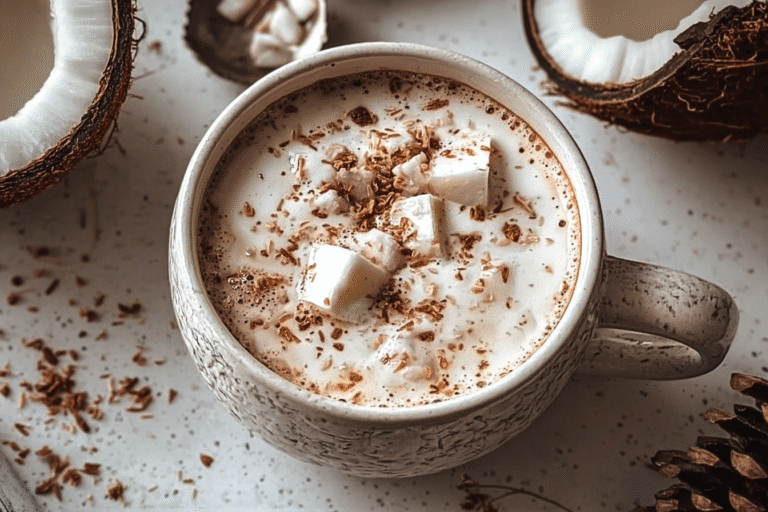
Creamy Coconut Hot Chocolate
☕ Luxuriously thick dairy-free indulgence blends rich cocoa with silky coconut milk for tropical warmth that soothes any chill.
🥥 5-minute creamy dream outperforms milky versions—vegan paradise packed with healthy fats for guilt-free sipping joy!
- Total Time: 10 minutes
- Yield: 2 servings
Ingredients
– 1 can (14 ounces) full-fat coconut milk for richness and creamy texture
– 3 tablespoons unsweetened cocoa powder for deep chocolate flavor without excessive sugar
– 2-4 tablespoons pure maple syrup for natural sweetening that complements coconut beautifully
– 1 teaspoon pure vanilla extract for enhancing and rounding out the chocolate and coconut flavors
– 1/4 teaspoon sea salt for balancing sweetness and intensifying chocolate notes
– 1/4 cup coconut cream (optional) for an extra luxurious, velvety texture
– 2 tablespoons toasted coconut flakes for adding texture and a beautiful presentation
– 1/4 cup vegan marshmallows for that classic hot chocolate experience
– 2 tablespoons shaved dark chocolate (70% or higher) for elegant garnish that melts deliciously
– 1 tablespoon coconut whipped cream for the ultimate decadent finish
Instructions
1-First Step: Preparation and Mise en Place Before you begin heating anything, proper preparation ensures a smooth cooking process. Start by shaking your can of full-fat coconut milk thoroughly to distribute the cream that typically separates and rises to the top. This step is crucial for achieving uniform texture in your final drink. Measure out all your ingredients in advance: 3 tablespoons of unsweetened cocoa powder, 2-4 tablespoons of maple syrup (depending on your preferred sweetness level), 1 teaspoon of vanilla extract, and 1/4 teaspoon of sea salt. If you’re planning to use the optional coconut cream for extra richness, have that measured as well. Having everything ready before you turn on the heat prevents scorching and ensures proper blending of flavors. For those who enjoy toppings, this is also the perfect time to prepare them. Toast coconut flakes in a dry skillet over medium heat for 2-3 minutes until golden and fragrant, watching carefully to prevent burning. Shave your dark chocolate if using, and set out your vegan marshmallows. This way, everything will be ready to garnish your hot chocolate the moment it’s prepared.
2-Second Step: Heating the Coconut Milk Pour 1 cup of the shaken coconut milk into a small saucepan. If you’re using the optional coconut cream for extra richness, add it now. Place the saucepan over medium heat and warm gently, stirring occasionally. You want to heat the milk until it’s hot but not boiling approximately 3-4 minutes. While heating, be patient and avoid rushing this step. Heating the coconut milk gradually prevents separation and allows the natural flavors to develop fully. If you prefer using a microwave instead of the stovetop, heat the milk in a microwave-safe container for about 2 minutes, stopping once to stir halfway through. Watch for small bubbles forming around the edges of the pan this indicates your milk has reached the perfect temperature. At this point, remove the pan from the heat. The milk should be hot enough to dissolve the cocoa powder and sweetener but not so hot that it scorches when these ingredients are added.
3-Third Step: Blending the Chocolate Base Once your coconut milk is hot, it’s time to create the chocolate base. Add the 3 tablespoons of unsweetened cocoa powder to the hot milk, whisking constantly to prevent clumps from forming. A small whisk or fork works well for this step just ensure you break up any cocoa lumps for a smooth final result. Continue whisking until the cocoa powder is fully dissolved and the mixture begins to darken and thicken slightly. This process typically takes 1-2 minutes of steady whisking. The aroma of chocolate will become more pronounced as the cocoa integrates with the warm milk, signaling that you’re on the right track. Next, add your chosen amount of maple syrup, starting with 2 tablespoons if you prefer a less sweet drink or 4 tablespoons for a more dessert-like experience. Whisk thoroughly to combine, then add the vanilla extract and sea salt. The salt is particularly important here it may seem counterintuitive, but it actually intensifies the chocolate flavor and balances the sweetness of the maple syrup.
4-Fourth Step: Simmering and Developing Flavor Return the saucepan to low heat and let your coconut hot chocolate simmer gently for another 2-3 minutes. This brief simmering period allows the flavors to meld together and the mixture to reach its ideal consistency. During this time, stir occasionally to prevent anything from sticking to the bottom of the pan. As the mixture simmers, you’ll notice it thickening slightly and becoming glossy a sign that the coconut milk’s natural fats have emulsified with the cocoa powder. This is exactly what creates that luxurious mouthfeel that makes this recipe so special. Keep a close eye on the pan during this step to ensure the liquid doesn’t boil, as boiling can cause the coconut milk to separate. For those who prefer an exceptionally smooth and frothy texture, you can use an immersion blender at this stage to blend the hot chocolate for 10-15 seconds. This creates a wonderful frothiness without needing a specialized milk frother. If you don’t have an immersion blender, you can also carefully pour the hot chocolate into a standard blender, blend briefly, then return it to the pan to keep warm.
5-Final Step: Finishing Touches and Serving Once your creamy coconut hot chocolate has reached the perfect consistency and all flavors have harmonized, it’s time for the most rewarding part serving! Pour the hot chocolate into your favorite mug, filling it about 3/4 full to leave room for delicious toppings. This is where you can get creative with presentation. Top with a generous handful of the toasted coconut flakes you prepared earlier, adding both visual appeal and a delightful crunch. Add vegan marshmallows that will slowly melt into the hot chocolate, creating pockets of sweet fluffiness. For chocolate lovers, sprinkle shaved dark chocolate on top, allowing the heat to slightly melt it into a ganache-like layer. For the ultimate indulgence, add a dollop of coconut whipped cream on top of everything. The contrast between the hot chocolate and cool whipped cream creates a textural experience that elevates this simple beverage into a special treat. Serve immediately with a spoon to enjoy all the layers of flavor and texture.
Last Step:
Please leave a rating and comment letting us know how you liked this recipe! This helps our business to thrive and continue providing free, high-quality recipes for you.Notes
🥥 Full-fat coconut milk essential for restaurant-thick texture.
🍫 Sift cocoa if clumpy for lump-free silkiness.
🌿 Add chili powder or cardamom for spiced global twists.
- Prep Time: 5 minutes
- Cook Time: 5 minutes
- Category: Beverage
- Method: Stovetop
- Cuisine: Fusion
- Diet: Vegan
Nutrition
- Serving Size: 1 cup
- Calories: 280 kcal
- Sugar: 20g
- Sodium: 50mg
- Fat: 22g
- Saturated Fat: 19g
- Unsaturated Fat: 2g
- Trans Fat: 0g
- Carbohydrates: 25g
- Fiber: 4g
- Protein: 3g
- Cholesterol: 0mg