Why You’ll Love This Homemade Louisiana Hot Sauce
There’s something truly special about whipping up your own homemade Louisiana hot sauce right in your kitchen. It’s simple to make and lets you control the heat and flavors, which is ideal for busy parents or students looking for quick cooking wins. Plus, with options like fermented or fresh versions, you can pick what fits your schedule and taste buds, making it a fun project for home cooks of all levels.
This recipe shines because of its health perks. Packed with fresh peppers and vinegar, it delivers low calories just around 8 per serving along with vitamins A and C that support your wellness goals. Whether you’re a food enthusiast aiming for bold meals or a diet-conscious person watching sodium, this sauce adapts easily and avoids artificial additives for a natural boost.
The versatility is another big draw; it’s vegan and gluten-free by default, so it works for nearly everyone from newlyweds to seniors. You can drizzle it on seafood, veggies, or even try it in dishes like a tasty shrimp boil skillet to add that authentic Cajun kick. Overall, this homemade Louisiana hot sauce brings joy to your table with its tangy spice and endless uses.
Jump to:
- Why You’ll Love This Homemade Louisiana Hot Sauce
- Essential Ingredients for Homemade Louisiana Hot Sauce
- Fermented Version Ingredients
- Non-Fermented Version Ingredients
- How to Prepare the Perfect Homemade Louisiana Hot Sauce: Step-by-Step Guide
- Dietary Substitutions to Customize Your Homemade Louisiana Hot Sauce
- Mastering Homemade Louisiana Hot Sauce: Advanced Tips and Variations
- How to Store Homemade Louisiana Hot Sauce: Best Practices
- FAQs: Frequently Asked Questions About Homemade Louisiana Hot Sauce
- What types of chili peppers are best for making homemade Louisiana hot sauce?
- Should I ferment the peppers when making Louisiana hot sauce at home?
- What type of vinegar works best for homemade Louisiana hot sauce?
- How long does homemade Louisiana hot sauce last in the refrigerator?
- Why does my homemade hot sauce separate, and how can I fix it?
- Homemade Louisiana Hot Sauce
- Ingredients
- Instructions
- Last Step:
- Notes
- Nutrition
- Did you make this recipe?
Essential Ingredients for Homemade Louisiana Hot Sauce
For making homemade Louisiana hot sauce, you’ll need specific ingredients that vary based on whether you choose the fermented or non-fermented method. Below is a structured list of all required items for each version, based on precise measurements. This ensures you have everything on hand for a smooth recipe process.
Fermented Version Ingredients
- 1 pound (about 450 grams) red chili peppers (such as cayenne, tabasco, or red jalapeno), chopped
- 1 quart (approximately 950 ml) unchlorinated water
- 3 tablespoons sea salt
- ½ to 1 cup white wine vinegar, to taste
Non-Fermented Version Ingredients
- 1 pound (about 450 grams) red chili peppers, chopped
- ½ to 1 teaspoon salt, to preference
- ½ to 1 cup white wine vinegar, to preference
These ingredients keep things simple and accessible, fitting for working professionals or baking enthusiasts. The fermented option adds depth with its brine, while the fresh one keeps it quick and straightforward.
How to Prepare the Perfect Homemade Louisiana Hot Sauce: Step-by-Step Guide
Diving into homemade Louisiana hot sauce starts with gathering your tools and ingredients for either the fermented or non-fermented path. Have you ever wondered how a simple mix of peppers and vinegar can turn into that fiery condiment you love? Let’s break it down step by step to make it easy for home cooks.
First, rinse and dry the red chili peppers thoroughly, removing stems but keeping seeds for extra heat. For the fermented version, chop the peppers and pack them into a jar with at least 1 inch of headspace; prepare a brine by mixing 1 quart of unchlorinated water with 3 tablespoons of sea salt, then pour it over the peppers to cover them completely.
Second, if fermenting, seal the jar and let it sit away from direct sunlight for 1 to 2 weeks at 55-75°F (13-24°C), burping it daily to release gases. For the non-fermented version, combine the chopped peppers, ½ to 1 teaspoon salt, and ½ to 1 cup white wine vinegar in a pot.
Third, bring the non-fermented mixture to a quick boil, then reduce heat and simmer for 10 minutes to soften the peppers. After fermentation in the other method, transfer the peppers and brine to a pot, add ½ to 1 cup white wine vinegar, and simmer for 15 minutes.
Fourth, cool the mixture slightly after simmering. Fifth, blend until smooth, adding water as needed for the non-fermented version to adjust consistency. Sixth, for a thinner sauce, strain out solids. Finally, transfer to sterilized bottles or jars and store, keeping in mind the fermented version yields about 2 cups and takes 10 minutes prep plus 1-2 weeks fermentation, while the fresh one is ready in 25-30 minutes total.
| Step | Fermented Version | Non-Fermented Version |
|---|---|---|
| Prep Time | 10 minutes plus 1-2 weeks | 10 minutes |
| Cook Time | 15 minutes after fermentation | 10 minutes |
| Yield | About 2 cups | About 2 cups |

Dietary Substitutions to Customize Your Homemade Louisiana Hot Sauce
Adapting homemade Louisiana hot sauce to your needs is simple and fun, especially if you’re tailoring it for dietary preferences. For instance, if you’re looking to reduce spice, you can swap peppers easily, which is great for busy parents or diet-conscious folks.
Protein and main component alternatives include substituting red chili peppers with milder options like Anaheim peppers for less heat. You might also use smoked paprika to add a smoky twist without overpowering flavors.
For vegetable, sauce, and seasoning modifications, replace white wine vinegar with apple cider vinegar to change the tang. Add fresh herbs like oregano for extra depth, or cut back on salt for low-sodium diets. These tweaks keep the sauce versatile for travelers or working professionals while maintaining its core appeal.
This flexibility means you can make the sauce your own, whether you’re a food enthusiast experimenting or a senior keeping things mild.
Mastering Homemade Louisiana Hot Sauce: Advanced Tips and Variations
Once you’re comfortable with the basics, taking your homemade Louisiana hot sauce to the next level adds excitement. Slow roasting peppers before blending can intensify flavors, and fermenting brings in natural probiotics for a richer taste perfect for those who enjoy hands-on cooking.
Flavor variations let you play around; try adding honey for a touch of sweetness or smoked garlic for depth. This works well for baking enthusiasts wanting to blend sweet and spicy notes. Presentation tips include serving in cute bottles with labels, or sprinkling it over meals for a pop of color.
- Roast peppers for deeper flavor.
- Experiment with honey or herbs.
- Make large batches for meal prep.
For make-ahead options, prepare extra and freeze in trays, which is handy for students or working professionals. Remember, adjusting the heat by pepper choice or dilution keeps it customizable.
How to Store Homemade Louisiana Hot Sauce: Best Practices
Proper storage keeps your homemade Louisiana hot sauce fresh and flavorful longer. For the best results, always refrigerate it in glass containers to maintain that tangy kick, especially after trying it in recipes like garlic lemon butter shrimp.
Refrigeration in airtight jars works for up to a month, while freezing in trays lets you thaw just what you need. When reheating, warm it gently to preserve taste, and shake the bottle before use to mix any separation.
Meal prep ideas include making batches ahead for weekly use, helping you add spice without extra effort. Keeping the pH around 4.0 or lower aids preservation, so adjust vinegar as needed.
FAQs: Frequently Asked Questions About Homemade Louisiana Hot Sauce
What types of chili peppers are best for making homemade Louisiana hot sauce?
Should I ferment the peppers when making Louisiana hot sauce at home?
What type of vinegar works best for homemade Louisiana hot sauce?
How long does homemade Louisiana hot sauce last in the refrigerator?
Why does my homemade hot sauce separate, and how can I fix it?
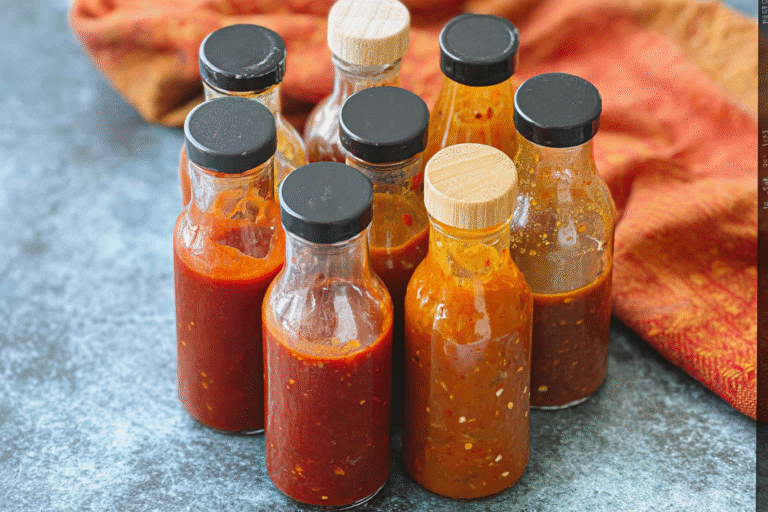
Homemade Louisiana Hot Sauce
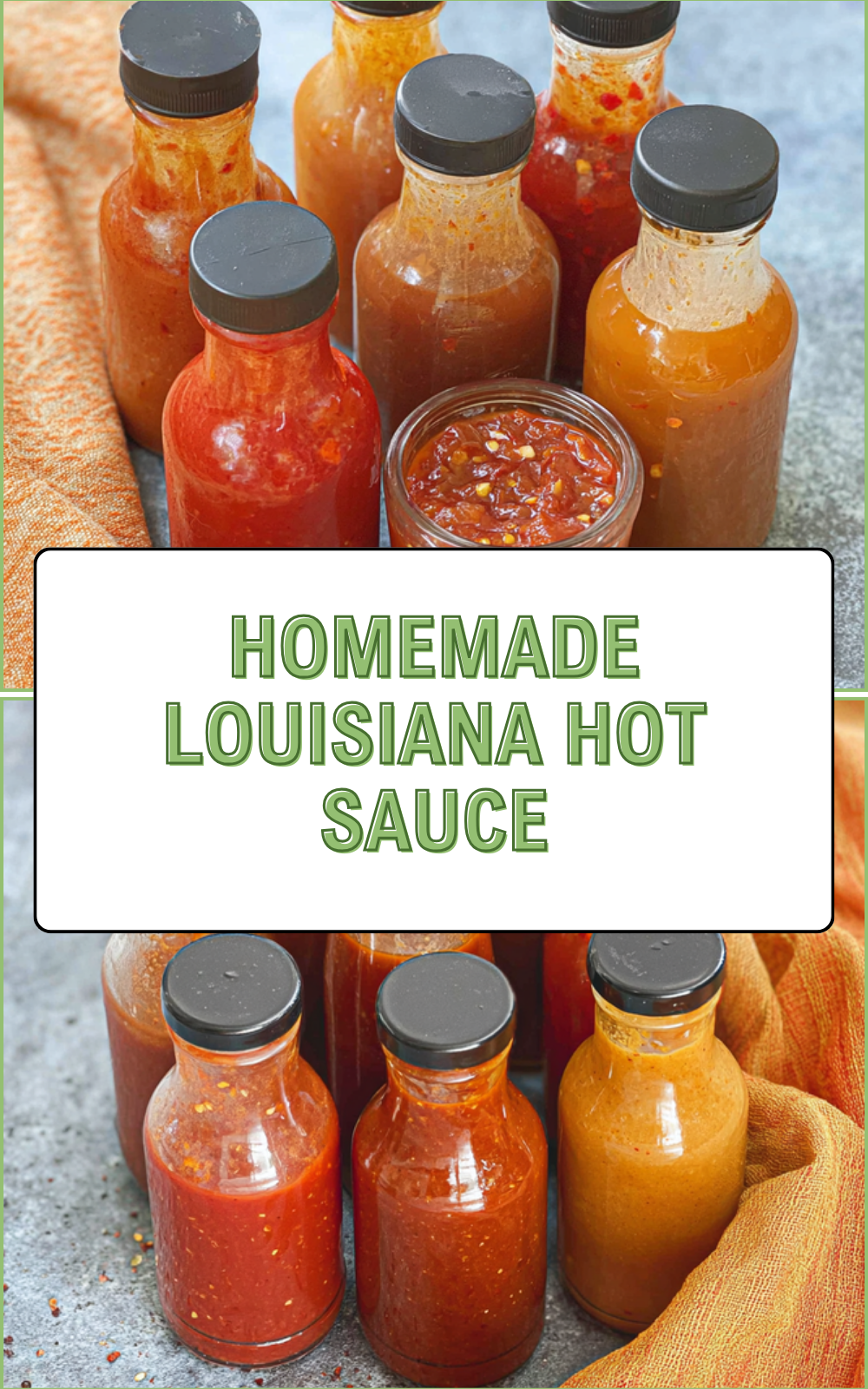
🌶️ This Homemade Louisiana Hot Sauce offers authentic spicy heat with both fermented and fresh preparation options for versatility.
🍶 Fermentation enhances depth of flavor and adds probiotics, while the fresh version provides a quick, tangy kick to elevate any dish.
- Total Time: Varies (including fermentation)
- Yield: About 2 cups 1x
Ingredients
1 pound (about 450 grams) red chili peppers (such as cayenne, tabasco, or red jalapeno), chopped
1 quart (approximately 950 ml) unchlorinated water
3 tablespoons sea salt
½ to 1 cup white wine vinegar, to taste
1 pound (about 450 grams) red chili peppers, chopped
½ to 1 teaspoon salt, to preference
½ to 1 cup white wine vinegar, to preference
Instructions
1-First, rinse and dry the red chili peppers thoroughly, removing stems but keeping seeds for extra heat. For the fermented version, chop the peppers and pack them into a jar with at least 1 inch of headspace; prepare a brine by mixing 1 quart of unchlorinated water with 3 tablespoons of sea salt, then pour it over the peppers to cover them completely.
2-Second, if fermenting, seal the jar and let it sit away from direct sunlight for 1 to 2 weeks at 55-75°F (13-24°C), burping it daily to release gases. For the non-fermented version, combine the chopped peppers, ½ to 1 teaspoon salt, and ½ to 1 cup white wine vinegar in a pot.
3-Third, bring the non-fermented mixture to a quick boil, then reduce heat and simmer for 10 minutes to soften the peppers. After fermentation in the other method, transfer the peppers and brine to a pot, add ½ to 1 cup white wine vinegar, and simmer for 15 minutes.
4-Fourth, cool the mixture slightly after simmering. Fifth, blend until smooth, adding water as needed for the non-fermented version to adjust consistency. Sixth, for a thinner sauce, strain out solids. Finally, transfer to sterilized bottles or jars and store, keeping in mind the fermented version yields about 2 cups and takes 10 minutes prep plus 1-2 weeks fermentation, while the fresh one is ready in 25-30 minutes total.
Last Step:
Please leave a rating and comment letting us know how you liked this recipe! This helps our business to thrive and continue providing free, high-quality recipes for you.Notes
🧂 Use red chili peppers to maintain classic bright red color.
🔒 Ensure peppers stay submerged during fermentation to prevent spoilage.
🎛️ Adjust vinegar type and amount to customize flavor and acidity.
- Prep Time: 10 minutes
- Fermentation Time: 1-2 weeks
- Cook Time: 15 minutes (fermented) or 10 minutes (fresh)
- Category: Condiment
- Method: Fermentation and Simmering
- Cuisine: Louisiana, Cajun
- Diet: Gluten-Free, Vegan
Nutrition
- Serving Size: 1 tablespoon
- Calories: 8
- Sugar: 0g
- Sodium: 1051mg (fermented) or 61mg (fresh)
- Fat: 0g
- Saturated Fat: 0g
- Unsaturated Fat: 0g
- Trans Fat: 0g
- Carbohydrates: 1-2g
- Fiber: 0.1g
- Protein: 0.1g
- Cholesterol: 0mg