Why You’ll Love This Moo Shu Pork
- Ease of preparation: Moo Shu Pork comes together in about 30 to 40 minutes. You get a fast stir-fry, scrambled eggs, and a quick toss with savory sauces, so weeknight cooking feels manageable even when you are busy.
- Health benefits: This dish balances protein from pork tenderloin (often 300 to 400g) and eggs with crunchy vegetables like cabbage, shiitake or wood ear mushrooms, and scallions. It is a satisfying, savory plate without feeling heavy.
- Versatility: You can adjust Moo Shu Pork for different preferences by swapping proteins, using lighter oils, or changing the pancake wrap approach. It is also easy to make gluten-free with the right soy sauce and pancake option.
- Distinctive flavor: The signature taste comes from hoisin (about 2 tbsp), soy sauce (about 1 tbsp), and sesame oil (about 1 tsp). When combined with quickly cooked aromatics like minced garlic and minced ginger, the result is sweet-savory and deeply comforting.
If you love family-style meals, Moo Shu Pork is also fun to eat because it is served as handheld wraps in thin Mandarin pancakes (typically 12 to 16 pieces). My dad always said the secret is not complicated steps, it is thin slicing, hot heat, and timing.
Jump to:
- Why You’ll Love This Moo Shu Pork
- Essential Ingredients for Moo Shu Pork
- Main ingredients (structured list)
- Optional pantry helpers and timing notes
- Special dietary options
- How to Prepare the Perfect Moo Shu Pork: Step-by-Step Guide
- Step-by-step instructions
- First Step: Prep your ingredients (mise en place)
- Second Step: Heat a wok and stir-fry the pork
- Third Step: Scramble the eggs separately
- Fourth Step: Briefly stir-fry vegetables to retain crunch
- Fifth Step: Combine pork, eggs, and sauces
- Final Step: Warm the pancakes and wrap tightly
- How to adapt for dietary needs (without losing the flavor)
- Protein and Main Component Alternatives
- Protein swaps
- Egg and wrap options
- Vegetable, Sauce, and Seasoning Modifications
- Vegetable upgrades and swaps
- Sauce and seasoning variations
- Mastering Moo Shu Pork: Advanced Tips and Variations
- Pro cooking techniques
- Flavor variations to try
- Presentation and serving ideas
- How to Store Moo Shu Pork: Best Practices
- Refrigeration
- Freezing
- Reheating
- FAQs: Frequently Asked Questions About Moo Shu Pork
- What is moo shu pork?
- What ingredients do I need for moo shu pork?
- How do you make moo shu pork at home?
- What’s the best way to wrap moo shu pork pancakes?
- Can I use my dad’s authentic moo shu pork recipe tips for beginners?
- Moo Shu Pork
- Ingredients
- Instructions
- Last Step:
- Notes
- Nutrition
- Did you make this recipe?
Essential Ingredients for Moo Shu Pork
Below is a clear, home-cook friendly ingredient list for this Moo Shu Pork recipe style. It follows the classic Cantonese-inspired approach with marinated pork, scrambled eggs, crunchy cabbage, and mushroom mix, plus hoisin-forward flavor.
Main ingredients (structured list)
- 200g shiitake or wood ear mushrooms (sliced) – for earthy bite and classic Moo Shu texture
- 4 cups shredded cabbage or 300g shredded cabbage – for crunch and volume
- 4 scallions (chopped) – for fresh oniony flavor and color
- 2 cloves minced garlic – for savory aroma
- 1 tbsp minced ginger – for warm, bright depth
- 2 tbsp hoisin sauce – for sweet-savory signature sauce
- 1 tbsp soy sauce – for salty backbone in the dish
- 1 tsp sesame oil – for nutty finishing flavor
- 4 large beaten eggs – for fluffy scrambled egg layer
- 12 to 16 thin Mandarin pancakes – for wrapping and serving
- 300 to 400g pork tenderloin (thinly sliced) – for the main protein in Moo Shu Pork
Optional pantry helpers and timing notes
- Oil for stir-frying – needed to cook pork and vegetables in a hot wok
- Any additional soy sauce for taste – if your brand is milder or saltier
Diet-friendly flexibility:
Special dietary options
- Vegan: Swap pork tenderloin for extra-firm tofu or marinated soy curls. Use vegan hoisin and a plant-based egg substitute or tofu scramble.
- Gluten-free: Choose gluten-free soy sauce and gluten-free Mandarin pancakes. Many grocery stores carry gluten-free pancake wraps, or you can use lettuce cups.
- Low-calorie: Use a nonstick wok or minimal oil. Lean pork or turkey tenderloin works well, and keep hoisin to the stated amount for a controlled flavor profile.
Quick tip: Slice pork thinly for fast cooking and avoid overcooking cabbage so your Moo Shu Pork stays crisp, not limp.
How to Prepare the Perfect Moo Shu Pork: Step-by-Step Guide
When you cook Moo Shu Pork the “dad chef” way, the dish feels restaurant-style without stress. The key is a hot wok, quick cooking, and a clean sequence: pork first, then eggs, then brief vegetable toss so everything keeps its crunch.
| Stage | What you do | Timing |
|---|---|---|
| Pork stir-fry | Stir-fry marinated thin pork until cooked | About 2 to 3 minutes |
| Egg scramble | Scramble beaten eggs, then set aside | About 1 to 2 minutes |
| Vegetables | Briefly stir-fry cabbage, mushrooms, scallions, aromatics | About 3 minutes |
| Sauce toss | Toss with hoisin and soy, then combine with eggs and pork | About 1 minute |
Step-by-step instructions
Total time: 30 to 40 minutes.
First Step: Prep your ingredients (mise en place)
Slice the pork thinly and set it aside. Chop scallions, mince garlic and ginger, shred cabbage (about 4 cups or 300g), and slice the mushrooms (about 200g shiitake or wood ear). Make sure everything is ready before you heat the wok, because this Moo Shu Pork recipe moves fast.
Second Step: Heat a wok and stir-fry the pork
Heat a wok over high heat until it is hot. Add oil, then stir-fry the thin pork until cooked through and lightly browned. The goal is to cook quickly, not dry it out, so keep it moving.
Third Step: Scramble the eggs separately
Remove the pork to a plate, then add a little more oil if the wok is dry. Pour in the beaten eggs (4 large) and scramble until set. This helps Moo Shu Pork taste fluffy and layered, not like one uniform scramble.
Fourth Step: Briefly stir-fry vegetables to retain crunch
Add aromatics and vegetables in a quick sequence. Stir-fry minced garlic (2 cloves) and minced ginger (1 tbsp) briefly, then add cabbage and mushrooms. Stir just until the cabbage softens slightly but stays crisp. If you overcook the cabbage, Moo Shu Pork loses that classic crunchy bite.
Fifth Step: Combine pork, eggs, and sauces
Return the cooked pork to the wok. Toss everything with hoisin (2 tbsp) and soy sauce (1 tbsp), plus a small drizzle of sesame oil (1 tsp). Stir so the sauce coats the pork and eggs evenly, then toss for about a minute to marry the flavors.
Final Step: Warm the pancakes and wrap tightly
Warm the thin Mandarin pancakes (12 to 16 pieces) until pliable. Spoon the hot Moo Shu Pork filling in a line down the center, then fold and roll tightly so the wrap does not spring open. Serve right away for the best texture, and consider an extra spoon of hoisin on the side.
Dad chef timing rule: If you can hear active sizzling the whole time, you are cooking with the right heat.
How to adapt for dietary needs (without losing the flavor)
- Gluten-free: Use gluten-free soy sauce and ensure your Mandarin pancakes are gluten-free.
- Lower-sodium: Reduce soy sauce slightly and add more cabbage for bulk. Hoisin can stay as written for the classic sweet-savory profile.
- Vegetarian meal: Swap pork for tofu or plant-based protein, keeping the same cabbage and mushroom mix.
If you enjoy quick, hand-held dinners, you might also like banana oat chocolate chip cookies for a sweet treat after a savory wrap night.
Protein and Main Component Alternatives
Moo Shu Pork is flexible as long as you keep the “thin, fast, hot” idea. That means your protein should cook quickly and your vegetables should stay crisp. Here are good swaps when pork tenderloin is not available or when you want a new twist.
Protein swaps
- Chicken tenderloin or thin chicken breast: Similar cook time and texture for stir-fry wrapping.
- Shrimp: Cook only until opaque, then combine at the sauce-toss step so it stays tender.
- Tofu: Use extra-firm tofu. Press and pan-sear first, then toss briefly with hoisin and soy.
- Extra-firm vegetarian mince: Choose a type that browns well so it does not turn watery.
Egg and wrap options
- Egg swap: For egg-free versions, use a tofu scramble method or a plant-based egg product cooked like scrambled eggs.
- Wrap swap: Use lettuce leaves if you want a lower-carb take. Still aim to keep the filling hot and not over-sauced.
Keep this consistent: The core flavor stays anchored by hoisin (2 tbsp), soy sauce (1 tbsp), and sesame oil (1 tsp), plus crunchy cabbage and mushrooms.
Vegetable, Sauce, and Seasoning Modifications
Even though classic Moo Shu Pork uses specific vegetables, you can tailor the filling based on what you have. The trick is to keep vegetables crisp, so your wrap stays satisfying.
Vegetable upgrades and swaps
- Mushrooms: Use 200g shiitake or wood ear for authentic chew. If substituting, choose mushrooms with bite, like king oyster (sliced thin).
- Cabbage: Stick to 4 cups or 300g shredded cabbage. Napa cabbage gives a softer feel, but regular green cabbage can work if shredded very thin.
- Scallions: Keep the 4 stalks for that fresh punch and color.
- Extra crunch: Add thinly sliced carrots or celery if you want more texture.
Sauce and seasoning variations
Most of the signature taste comes from the simple sauce trio. When you change other flavors, keep hoisin and sesame oil in balance.
- Hoisin adjustment: Start with 2 tbsp hoisin. If you like it less sweet, reduce slightly and add a small extra splash of soy.
- Soy sauce control: Keep 1 tbsp as your baseline, then adjust based on your soy brand.
- Sesame oil: Use 1 tsp sesame oil as written for aroma without bitterness.
- Garlic and ginger: Use 2 cloves garlic and 1 tbsp minced ginger for the classic fragrant profile.
For a nutrition-friendly look at pork, you can refer to nutrition information about pork.
Mastering Moo Shu Pork: Advanced Tips and Variations
Once you nail the basics, you can make this Moo Shu Pork taste even more “family chef” by focusing on technique. Here are my favorite advanced tips that help with flavor, texture, and presentation.
Pro cooking techniques
- Slice thinly: Thin pork cooks fast and stays juicy. If your slices are thick, your Moo Shu filling can end up uneven.
- High heat: A hot wok sears flavor quickly and prevents soggy vegetables.
- Keep vegetables brief: Avoid overcooking cabbage. When you can still see texture and bite, you are doing it right.
- Cook eggs separately: Scrambled eggs should be soft and fluffy, not clumped into the sauce.
Flavor variations to try
- More garlic-ginger: Add an extra pinch of minced garlic or ginger (small amounts) for a bolder aromatics taste.
- Mushroom-forward: Use the full 200g mushrooms and slice them evenly for consistent chew.
- Extra hoisin finish: Serve with extra hoisin on the side so each person can choose their sweetness.
Presentation and serving ideas
Try this simple setup for a fun family dinner:
- Arrange pancakes on a plate with a warm towel nearby.
- Serve Moo Shu Pork in a bowl so people scoop and wrap.
- Top with extra chopped scallions for crunch.
Make-ahead option: You can prep the chopped cabbage, scallions, and sliced mushrooms up to a day ahead. Cook the filling fresh so the texture stays crisp. The pancakes can be warmed just before serving.
Texture goal: Moo Shu Pork should taste crunchy, savory, and slightly sweet, with pancakes that fold easily.
How to Store Moo Shu Pork: Best Practices
Storing leftovers the right way helps keep Moo Shu Pork tasty and safe. Since this dish has cabbage and egg, proper cooling and reheating are especially important.
Refrigeration
- Cool the filling quickly, then store in an airtight container.
- Keep in the refrigerator for up to 2 days.
- Store pancakes separately so they do not get soft.
Freezing
- Freeze the cooked filling in a sealed container for up to 1 to 2 months.
- For best texture, thaw in the fridge overnight before reheating.
Reheating
- Reheat in a wok or skillet over medium heat until warmed through.
- If it looks dry, add a tiny splash of water and stir quickly.
- Warm pancakes briefly and re-wrap for best results.
Meal prep tip: Portion filling into small containers so you can reheat exactly what you need for lunch or dinner.

FAQs: Frequently Asked Questions About Moo Shu Pork
What is moo shu pork?
What ingredients do I need for moo shu pork?
How do you make moo shu pork at home?
What’s the best way to wrap moo shu pork pancakes?
Can I use my dad’s authentic moo shu pork recipe tips for beginners?
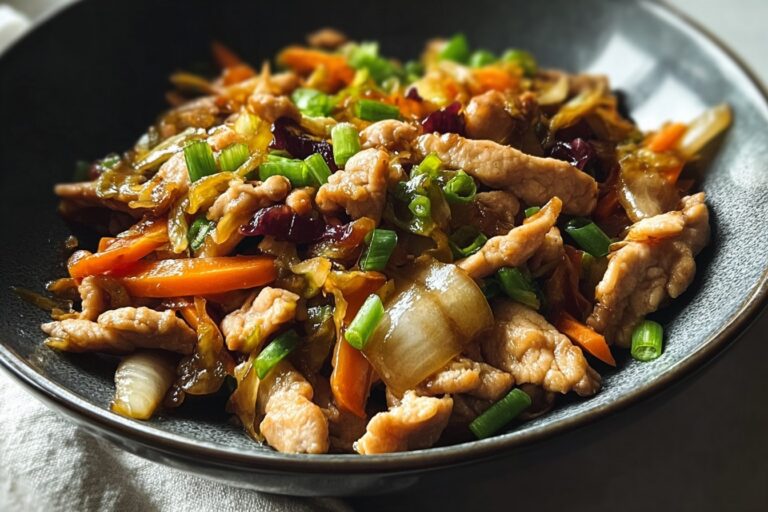
Moo Shu Pork
🥡 Crispy veggie-packed pork stir-fry with fluffy scrambled eggs, wrapped in soft pancakes – authentic Cantonese family feast!
👨🍳 Dad chef secrets deliver umami hoisin bliss in 35 minutes, balanced protein-veggie comfort everyone loves!
- Total Time: 35 minutes
- Yield: 4 servings
Ingredients
– 200g shiitake or wood ear mushrooms (sliced) for earthy bite and classic Moo Shu texture
– 4 cups shredded cabbage or 300g shredded cabbage for crunch and volume
– 4 scallions (chopped) for fresh oniony flavor and color
– 2 cloves minced garlic for savory aroma
– 1 tbsp minced ginger for warm, bright depth
– 2 tbsp hoisin sauce for sweet-savory signature sauce
– 1 tbsp soy sauce for salty backbone in the dish
– 1 tsp sesame oil for nutty finishing flavor
– 4 large beaten eggs for fluffy scrambled egg layer
– 12 to 16 thin Mandarin pancakes for wrapping and serving
– 300 to 400g pork tenderloin (thinly sliced) for the main protein in Moo Shu Pork
– Oil for stir-frying needed to cook pork and vegetables in a hot wok
– Any additional soy sauce for taste if your brand is milder or saltier
Instructions
1-First Step: Prep your ingredients (mise en place) Slice the pork thinly and set it aside. Chop scallions, mince garlic and ginger, shred cabbage (about 4 cups or 300g), and slice the mushrooms (about 200g shiitake or wood ear). Make sure everything is ready before you heat the wok, because this Moo Shu Pork recipe moves fast.
2-Second Step: Heat a wok and stir-fry the pork Heat a wok over high heat until it is hot. Add oil, then stir-fry the thin pork until cooked through and lightly browned. The goal is to cook quickly, not dry it out, so keep it moving.
3-Third Step: Scramble the eggs separately Remove the pork to a plate, then add a little more oil if the wok is dry. Pour in the beaten eggs (4 large) and scramble until set. This helps Moo Shu Pork taste fluffy and layered, not like one uniform scramble.
4-Fourth Step: Briefly stir-fry vegetables to retain crunch Add aromatics and vegetables in a quick sequence. Stir-fry minced garlic (2 cloves) and minced ginger (1 tbsp) briefly, then add cabbage and mushrooms. Stir just until the cabbage softens slightly but stays crisp. If you overcook the cabbage, Moo Shu Pork loses that classic crunchy bite.
5-Fifth Step: Combine pork, eggs, and sauces Return the cooked pork to the wok. Toss everything with hoisin (2 tbsp) and soy sauce (1 tbsp), plus a small drizzle of sesame oil (1 tsp). Stir so the sauce coats the pork and eggs evenly, then toss for about a minute to marry the flavors.
6-Final Step: Warm the pancakes and wrap tightly Warm the thin Mandarin pancakes (12 to 16 pieces) until pliable. Spoon the hot Moo Shu Pork filling in a line down the center, then fold and roll tightly so the wrap does not spring open. Serve right away for the best texture, and consider an extra spoon of hoisin on the side.
Last Step:
Please leave a rating and comment letting us know how you liked this recipe! This helps our business to thrive and continue providing free, high-quality recipes for you.Notes
🔪 Slice pork and veggies paper-thin for quick even cooking.
🥬 High wok heat keeps cabbage crisp; don’t overcook.
🥞 Wrap pancakes tightly around filling to hold juices.
- Prep Time: 15 minutes
- Cook Time: 20 minutes
- Category: Main Dishes
- Method: Stir-Fry
- Cuisine: Chinese
- Diet: High-Protein
Nutrition
- Serving Size: 3 pancakes with filling
- Calories: 450 kcal
- Sugar: 8g
- Sodium: 800mg
- Fat: 22g
- Saturated Fat: 5g
- Unsaturated Fat: 17g
- Trans Fat: 0g
- Carbohydrates: 35g
- Fiber: 4g
- Protein: 28g
- Cholesterol: 220mg