
Why You’ll Love This Nepali Momo
Nepali Momo is a steamed filled dumpling that feels both familiar and exciting, especially for home cooks who want restaurant-style flavor with dependable results. It is popular across Nepali and Tibetan-influenced regions, and you can also find it in places like Bhutan, parts of India, and some areas of China. In Nepal, the typical served style is round and paired with a spicy tomato-based achar or sauces that may include sesame, peanut, or soybean.
- Ease of preparation: With a simple momo dough made from white flour and water, the process is straightforward and works well for busy schedules (steamed momo takes about 10 to 12 minutes per batch after assembly).
- Health benefits: Steaming keeps oil moderate and supports a lighter meal profile. Depending on portion size, each momo averages about 35 to 100 calories, making Nepali steamed dumplings easier to fit into different eating goals.
- Versatility: You can tailor momo filling with chicken, buffalo, pork, goat, or vegetables like cabbage, onions, and mushrooms. You can also mix in paneer or local soft cheese for a different texture.
- Distinctive flavor: The dumpling wrapper stays tender while the filling stays juicy, helped by ginger-garlic, spices, and sometimes fatty meat or a small amount of oil or stock.
Tip: For extra sauce enjoyment, try open-top versions or serve with chili garlic sauce and pickled daikon or other achar.
Jump to:
- Why You’ll Love This Nepali Momo
- Essential Ingredients for Nepali Momo
- Ingredients for the dough, filling, and achar-style sauce
- Structured ingredient list (exact measurements)
- Special dietary options
- How to Prepare the Perfect Nepali Momo: Step-by-Step Guide
- Timeline overview
- Step-by-step instructions
- First Step: Make and rest the momo dough
- Second Step: Prepare the filling base
- Third Step: Adjust juiciness for tender momo filling
- Fourth Step: Roll and shape the wrappers
- Fifth Step: Fill and fold into round pockets or half-moons
- Sixth Step: Steam in a bamboo basket (mucktoo style)
- Final Step: Serve with spicy tomato achar and optional sauces
- How to modify for different dietary preferences
- Dietary Substitutions to Customize Your Nepali Momo
- Protein and main component alternatives
- Vegetable, sauce, and seasoning modifications
- Mastering Nepali Momo: Advanced Tips and Variations
- Pro cooking techniques
- Flavor variations to try
- Presentation and meal planning ideas
- How to Store Nepali Momo: Best Practices
- Refrigeration
- Freezing
- Reheating
- Meal prep considerations
- FAQs: Frequently Asked Questions About Nepali Momo
- What is Nepali momo?
- How do you make Nepali momo at home?
- What are the different types of Nepali momos?
- What fillings go in Nepali momos?
- What sauce goes with Nepali momo?
- Nepali Momo
- Ingredients
- Instructions
- Last Step:
- Notes
- Nutrition
- Did you make this recipe?
Essential Ingredients for Nepali Momo
Before you start rolling dough, gather your ingredients for Nepali Momo components: momo dough, momo filling, and momo sauce for dipping. Nepali momos are typically made with white flour and water dough, with optional oil for better texture, and a filling combining proteins or vegetables with aromatics and spices.
Ingredients for the dough, filling, and achar-style sauce
- 2 cups all-purpose flour – creates the basic momo dough wrapper.
- 3/4 cup water – binds the dough into a smooth consistency.
- 1 tbsp oil or fat (optional) – improves texture and helps the dough stay tender.
Structured ingredient list (exact measurements)
- 2 cups all-purpose flour
- 3/4 cup water
- 1 tbsp oil or fat (optional)
- 1 lb ground chicken or buffalo
- 1 chopped onion
- 2 cups cabbage, chopped
- 1 tbsp ginger-garlic paste
- 1 tsp cumin
- 1 tbsp coriander
- salt
- pepper
- 1 tbsp oil or stock (for juiciness per 500g filling)
- 4 tomatoes
- 5 red chilies
- 2 garlic cloves
- 1 tbsp sesame seeds
- ginger
- 1 tsp cumin (for simmering dip)
- vinegar
Special dietary options
- Vegetarian (vegetarian Nepali momo): Swap the meat with finely chopped cabbage, onions, mushrooms, and herbs. Add paneer or local soft cheese for richness, plus puréed garlic and ginger.
- Vegan: Use tofu as the base for momo filling, such as crumbled tofu with spinach or cabbage. Keep the sauce tomato-based and use sesame-based peanut alternatives if needed.
- Low-calorie: Use less oil in the filling and focus on vegetables. Keep portions smaller and rely on spicy tomato achar for flavor rather than extra fat.
- Gluten-free: Replace the flour with a gluten-free all-purpose baking blend designed for dumplings. Resting still helps improve texture.
Note on traditional style: Nepali momos are usually round and served with spicy tomato-based achar or sauces containing sesame, peanut, or soybean. If you prefer a smoother sauce, blend and simmer until thick.
For a quick reference, here is a simple comparison of styles you might make:
| Momo Style | Texture | Best When You Want |
|---|---|---|
| Steamed | Tender, juicy | A lighter meal |
| Fried or kothey | Crispy base or full crunch | Crunch with sauce |
| Jhol momo | Soupy and saucy | Warm comfort on cold days |
External resource: For additional guidance on dumpling technique, you can reference homemade momo.
How to Prepare the Perfect Nepali Momo: Step-by-Step Guide
This Nepali steamed dumplings recipe follows the classic flow: prepare momo dough, make momo filling with meat or vegetables, assemble small circular wrappers, then steam. Momos originate in Tibetan-influenced cuisine and later became a beloved cultural icon in Nepal, especially in areas like Kathmandu’s Thamel. Even if you are cooking at home for the first time, the steps below are designed to be clear and repeatable.
Timeline overview
- Prep: 1 to 2 hours total
- Rest dough: 30 minutes
- Steam: 10 to 12 minutes per batch
Step-by-step instructions
First Step: Make and rest the momo dough
In a mixing bowl, combine 2 cups all-purpose flour with 3/4 cup water. Knead for about 10 minutes until the dough feels smooth and elastic. If you want a softer wrapper, knead in 1 tbsp oil or fat (optional). Cover and rest for 30 minutes so the gluten relaxes and the wrappers roll more easily.
Second Step: Prepare the filling base
For a classic chicken Nepali momo recipe, brown 1 lb ground chicken or buffalo in a pan until the raw color disappears. Add 1 chopped onion and cook briefly. Stir in 2 cups cabbage, chopped, then add 1 tbsp ginger-garlic paste, 1 tsp cumin, 1 tbsp coriander, plus salt and pepper. Cool the mixture fully before assembling dumplings, because warm filling can make dough tear.
Third Step: Adjust juiciness for tender momo filling
Juiciness is one of the main reasons Nepali Momo tastes so satisfying. If your filling seems dry, add 1 tbsp oil or stock (for juiciness per 500g filling), or mix in a small splash of stock while cooling. A common technique is to use slightly fatty meat for better moisture, while also mixing meat and veggies for balanced flavor.
Fourth Step: Roll and shape the wrappers
Lightly flour your work surface. Divide the rested dough into small pieces and roll each into a small circular flat, aiming for about 3-inch circles. Keep the unused dough covered to prevent drying. This stage is where the “Nepali dumplings” look forms, so focus on consistent thickness for even steaming.
Fifth Step: Fill and fold into round pockets or half-moons
Place about 1 tbsp filling in the center of each wrapper. Fold the wrapper into a round pocket or half-moon shape, then press the edges firmly to seal. Traditional Nepali momos are often pleated and sealed well to avoid bursts. If you notice the dough drying out, dab water along the edge to help it stick.
Sixth Step: Steam in a bamboo basket (mucktoo style)
Arrange momos on a steamer liner so they do not stick. Steam in a mucktoo utensil or bamboo basket over boiling water. Steam for 10 to 12 minutes, until the wrappers look translucent and the filling is heated through.
Final Step: Serve with spicy tomato achar and optional sauces
Serve Nepali Momo hot with your spicy tomato achar. The typical sauce is tomato-based and may include sesame seeds and garlic, and it pairs especially well with steamed dumplings. You can also add chili garlic sauce, and a classic side is pickled daikon or other achar for tang.
Serving note: Momos average about 35 to 100 calories each, depending on size and ingredients, and preparation typically takes 1 to 2 hours. Adjust portion size based on your daily needs.
How to modify for different dietary preferences
- For vegetarian Nepali momo: Replace meat with chopped cabbage, onions, mushrooms, herbs, and optionally paneer or local soft cheese. Add puréed garlic and ginger, plus spices and a small amount of oil.
- For a steamed-only approach: Keep everything cooked evenly before stuffing so the steam time stays consistent.
- For fried or kothey momo: Steam first, then pan-fry in oil until the bottom turns crisp. This keeps moisture inside while adding crunch.
- For jhol momo: After steaming, serve in a spicy tomato-sesame broth so each dumpling becomes sauce-forward.
External resource: If you want background on how cabbage fits into a healthy diet, see cabbage and benefits.

Dietary Substitutions to Customize Your Nepali Momo
Protein and main component alternatives
Nepali momo fillings commonly combine protein with vegetables for a balanced bite. If you prefer a chicken Nepali momo recipe, keep the spice profile similar and only change the base protein. If you want a buffalo style, ground buffalo provides a deeper flavor, especially when paired with cabbage and onion.
- Chicken: ground chicken for a mild, family-friendly flavor.
- Buffalo: richer taste that stays juicy when cooked gently.
- Pork or goat: popular in other regional versions, especially in hills and colder climates.
- Vegetarian: potatoes, leeks, mushrooms, and paneer, plus herbs for aroma.
- Vegan: tofu plus spinach or cabbage, using spices and a bit of oil or stock for moisture.
- Cheese fillings: add paneer or a local soft cheese for creamy texture.
Vegetable, sauce, and seasoning modifications
Vegetable selection changes the flavor profile more than many cooks expect. Cabbage and onions are classic because they soften nicely and hold moisture. Mushrooms and herbs add a more earthy note, while a little ginger and garlic helps round out the filling.
- Vegetables: finely chopped cabbage, onions, mushrooms, herbs, leeks, or potatoes.
- Momo sauce variations: keep the tomato base for achar, or shift to chili garlic sauce for a sharper bite.
- Sesame-peanut or soybean notes: blend toasted sesame with peanuts for a thicker sauce, or use soybean-based sauces if you enjoy deeper umami.
- Jhol method: serve in spicy tomato-sesame broth for a soup-like meal.
- Open-top momo: leave a small opening so sauce flows in more easily.
Internal link suggestion: If you are planning a larger menu and want a sweet ending, try strawberry shortcake trifles for a simple, shareable dessert.
Mastering Nepali Momo: Advanced Tips and Variations
Once you master steaming, small technique adjustments can improve both texture and consistency. Nepali Momo is flexible, and variation is part of what makes it a staple street food and home dish across Nepal and Tibetan-influenced regions. Below are advanced tips plus ideas for different styles, including fried options and soup versions.
Pro cooking techniques
- Use fatty meat for juiciness: A little fat helps keep the filling moist during steaming.
- Mix meat and veggies: Cabbage and onions add moisture and volume, while spices add warmth.
- Steam for moisture: Steaming is the most forgiving method for keeping the wrapper tender.
- Pan-fry after steaming for crispiness: Try kothey momo by frying the steamed dumplings to crisp the base.
- Open-top versions: For extra sauce, shape wrappers with a small opening so dipping sauces and jhol broth reach the filling.
- Seal well: Press edges firmly, and use a tiny dab of water if the dough is too dry.
Flavor variations to try
- Chicken, buffalo, or goat: Keep ginger-garlic and cumin consistent, then adjust chili level to preference.
- Vegetable-forward filling: Use cabbage plus mushrooms and herbs, and add paneer for a richer bite.
- Sweet momo: Some versions use milk solids and sugar for dessert-style dumplings.
Presentation and meal planning ideas
Presentation matters because momos are finger-friendly and best served quickly. Arrange steamed momo in a wide bowl with sauce on the side, or drizzle chili garlic sauce right before serving. If you are hosting, set out a few dips such as tomato achar, chili garlic, and a sesame-peanut option.
Make-ahead options:
- Assemble momos ahead, then refrigerate on a tray.
- For longer storage, freeze assembled momos so you can steam from frozen.
- Prepare achar in advance; it can be refrigerated for about one week.
If you enjoy baking as well, you might like banana oat chocolate chip cookies to pair with a cozy savory dinner.
How to Store Nepali Momo: Best Practices
Proper storage helps your Nepali Momo keep its texture and flavor. Because momos are filled dumplings, moisture balance matters when refrigerating or reheating. Follow the guidelines below for best results, whether you cooked a big batch for the week or made extra for guests.
Refrigeration
- Cool momos completely before storing.
- Store in an airtight container.
- Refrigerate up to 2 to 3 days for best quality.
Freezing
- Freeze assembled momos on a tray first so they do not stick together.
- Once solid, transfer to a freezer bag or container.
- Freeze for longer storage and steam or cook when ready.
Reheating
- Best method: steam to reheat without drying out the wrapper.
- For crispiness: pan-fry after steaming, similar to kothey momo.
- Avoid microwaving if possible, because it can soften wrappers unevenly.
Meal prep considerations
- Plan batch assembly to reduce weekday cooking time.
- Store sauce separately when possible for fresh flavor.
- Keep pickled daikon or other achar ready for quick serving.
Reminder: Nepali dumplings taste best hot and fresh, but thoughtful reheating can keep them satisfying.
FAQs: Frequently Asked Questions About Nepali Momo
What is Nepali momo?
How do you make Nepali momo at home?
What are the different types of Nepali momos?
What fillings go in Nepali momos?
What sauce goes with Nepali momo?
Nepali Momo
🥟 Juicy steamed Nepali dumplings filled with spiced chicken and veggies – flavorful protein-packed bites perfect for sharing!
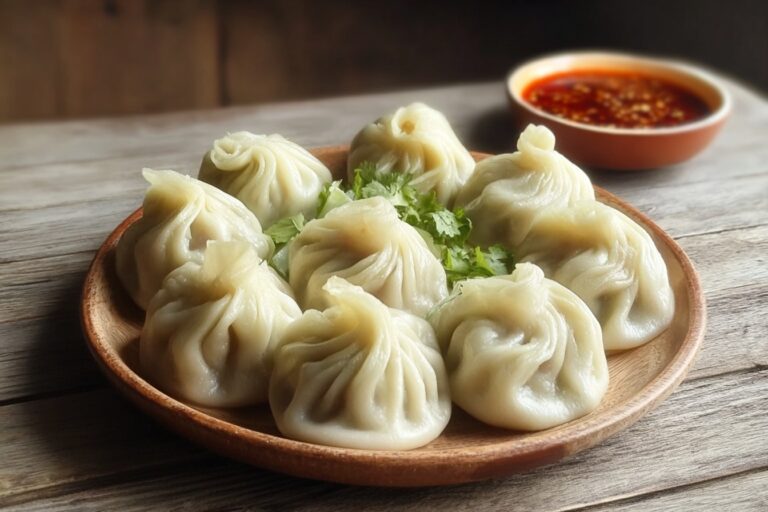
🍲 Authentic momo with pleated wrappers, served with fiery tomato achar – easy homemade Himalayan street food delight!
- Total Time: 1 hour 30 minutes
- Yield: 4 servings (20-25 momos)
Ingredients
– 2 cups all-purpose flour
– 3/4 cup water
– 1 tbsp oil or fat (optional)
– 1 lb ground chicken or buffalo
– 1 chopped onion
– 2 cups cabbage, chopped
– 1 tbsp ginger-garlic paste
– 1 tsp cumin
– 1 tbsp coriander
– salt
– pepper
– 1 tbsp oil or stock for juiciness per 500g filling
– 4 tomatoes
– 5 red chilies
– 2 garlic cloves
– 1 tbsp sesame seeds
– ginger
– 1 tsp cumin for simmering dip
– vinegar
Instructions
1-First Step: Make and rest the momo dough. In a mixing bowl, combine 2 cups all-purpose flour with 3/4 cup water. Knead for about 10 minutes until the dough feels smooth and elastic. If you want a softer wrapper, knead in 1 tbsp oil or fat (optional). Cover and rest for 30 minutes so the gluten relaxes and the wrappers roll more easily.
2-Second Step: Prepare the filling base. For a classic chicken Nepali momo recipe, brown 1 lb ground chicken or buffalo in a pan until the raw color disappears. Add 1 chopped onion and cook briefly. Stir in 2 cups cabbage, chopped, then add 1 tbsp ginger-garlic paste, 1 tsp cumin, 1 tbsp coriander, plus salt and pepper. Cool the mixture fully before assembling dumplings, because warm filling can make dough tear.
3-Third Step: Adjust juiciness for tender momo filling. Juiciness is one of the main reasons Nepali Momo tastes so satisfying. If your filling seems dry, add 1 tbsp oil or stock (for juiciness per 500g filling), or mix in a small splash of stock while cooling. A common technique is to use slightly fatty meat for better moisture, while also mixing meat and veggies for balanced flavor.
4-Fourth Step: Roll and shape the wrappers. Lightly flour your work surface. Divide the rested dough into small pieces and roll each into a small circular flat, aiming for about 3-inch circles. Keep the unused dough covered to prevent drying. This stage is where the “Nepali dumplings” look forms, so focus on consistent thickness for even steaming.
5-Fifth Step: Fill and fold into round pockets or half-moons. Place about 1 tbsp filling in the center of each wrapper. Fold the wrapper into a round pocket or half-moon shape, then press the edges firmly to seal. Traditional Nepali momos are often pleated and sealed well to avoid bursts. If you notice the dough drying out, dab water along the edge to help it stick.
6-Sixth Step: Steam in a bamboo basket (mucktoo style). Arrange momos on a steamer liner so they do not stick. Steam in a mucktoo utensil or bamboo basket over boiling water. Steam for 10 to 12 minutes, until the wrappers look translucent and the filling is heated through.
7-Final Step: Serve with spicy tomato achar and optional sauces. Serve Nepali Momo hot with your spicy tomato achar. The typical sauce is tomato-based and may include sesame seeds and garlic, and it pairs especially well with steamed dumplings. You can also add chili garlic sauce, and a classic side is pickled daikon or other achar for tang.
Last Step:
Please leave a rating and comment letting us know how you liked this recipe! This helps our business to thrive and continue providing free, high-quality recipes for you.Notes
🥩 Use fatty ground chicken for juicy, flavorful filling.
🤲 Pleat tightly to prevent leaks; wet edges for better seal.
🌶️ Adjust chilies in achar for spice level preference.
- Prep Time: 30 minutes
- Resting + Marinating: 45 minutes
- Cook Time: 12 minutes
- Category: Appetizers
- Method: Steamed
- Cuisine: Nepali
- Diet: Non-Vegetarian
Nutrition
- Serving Size: 5-6 momos
- Calories: 450 kcal
- Sugar: 5g
- Sodium: 800mg
- Fat: 15g
- Saturated Fat: 4g
- Unsaturated Fat: 11g
- Trans Fat: 0g
- Carbohydrates: 50g
- Fiber: 3g
- Protein: 30g
- Cholesterol: 80mg