Why You’ll Love This Ramen Carbonara
If you want a fast dinner that tastes rich, cozy, and a little special, Ramen Carbonara is a winner. It brings together the creamy comfort of carbonara and the quick-cooking charm of ramen noodles, so you can get dinner on the table in just 15 minutes. For more ramen background, you can also check out this guide to ramen styles.
- Easy to make: This ramen carbonara recipe uses simple pantry staples and comes together fast, making it perfect for busy weeknights, students, and working parents.
- Comforting and filling: With bacon, eggs, Parmesan, and noodles, this dish brings protein, fat, and carbs together for a satisfying meal that feels hearty without being fussy.
- Flexible for different diets: You can swap ingredients to fit your needs, from using pancetta instead of bacon to adding vegetables for a lighter bowl of ramen carbonara.
- Big flavor, small effort: Garlic, crisp bacon, fresh basil, and black pepper give this dish a bold taste that feels restaurant-worthy, even though it is simple to cook at home.
Because the sauce is made from eggs and cheese, the final texture turns silky and rich when you toss everything together off the heat. That means you get the creamy feel of classic carbonara without needing heavy cream. If you love quick dinners with lots of flavor, this is the kind of recipe you will want to make again and again.
Tip: The key to great ramen carbonara is timing. Keep everything hot, but take the skillet off the burner before adding the egg mixture so the sauce stays creamy instead of scrambling.
Jump to:
- Why You’ll Love This Ramen Carbonara
- Essential Ingredients for Ramen Carbonara
- Special dietary options
- How to Prepare the Perfect Ramen Carbonara: Step-by-Step Guide
- First step: Cook the ramen noodles
- Second step: Mix the eggs and cheese
- Third step: Cook the bacon
- Fourth step: Add the garlic
- Fifth step: Toss in the noodles
- Sixth step: Add the egg mixture off the heat
- Final step: Garnish and serve
- Dietary Substitutions to Customize Your Ramen Carbonara
- Protein and main component alternatives
- Vegetable, sauce, and seasoning modifications
- Mastering Ramen Carbonara: Advanced Tips and Variations
- How to Store Ramen Carbonara: Best Practices
- FAQs: Frequently Asked Questions About Ramen Carbonara
- What is ramen carbonara?
- How do you make ramen carbonara at home?
- Can I substitute ingredients in ramen carbonara?
- Why does ramen carbonara sauce scramble and how to fix it?
- Is ramen carbonara healthy or good for meal prep?
- Ramen Carbonara
- Ingredients
- Instructions
- Last Step:
- Notes
- Nutrition
- Did you make this recipe?
Essential Ingredients for Ramen Carbonara
Here is everything you need for this easy ramen carbonara recipe. The measurements below match the recipe exactly, so you can shop and cook with confidence.
- 9 ounces ramen noodles (3 packages, discard the seasoning) – These cook quickly and give the dish its chewy noodle base.
- 1 tablespoon olive oil – Helps coat the noodles and adds a little richness.
- 8 slices bacon, chopped – Brings smoky, salty flavor and helps build the carbonara sauce.
- 3 cloves garlic, minced – Adds aroma and a savory bite.
- 2 large eggs – Create the creamy sauce when mixed with the hot noodles.
- 1 cup Parmesan cheese, freshly grated – Melts into the eggs for a smooth, cheesy finish.
- 1/4 teaspoon salt, or to taste – Balances the flavors.
- 1/4 teaspoon pepper, or to taste – Gives the dish its classic carbonara kick.
- 4 tablespoons basil, fresh and chopped – Adds freshness and a bright finishing touch.
Special dietary options
- Vegan: Use plant-based bacon, egg substitute, and dairy-free Parmesan-style cheese. Add extra olive oil or a splash of reserved pasta water for creaminess.
- Gluten-free: Swap the ramen noodles for gluten-free noodles or rice noodles.
- Low-calorie: Use less bacon, reduce the cheese slightly, and add vegetables like spinach or zucchini for more volume.
If you want to compare this dish with another classic pasta favorite, you may also like this traditional carbonara recipe guide. It is a helpful reference if you want to see how the classic version works before trying the ramen twist.
How to Prepare the Perfect Ramen Carbonara: Step-by-Step Guide
First step: Cook the ramen noodles
Start by bringing a pot of water to a boil and cooking the ramen noodles according to the package instructions. Since this recipe uses 9 ounces of ramen noodles, you will usually have about 3 packages. Discard the seasoning packets, because the sauce gets its flavor from bacon, garlic, cheese, and black pepper instead.
Once the noodles are tender, drain them well and toss them with 1 tablespoon olive oil. This keeps the noodles from sticking together while you finish the sauce. If you want a little extra insurance for the sauce, reserve a small cup of pasta water before draining. That starchy liquid can help loosen the sauce later if it gets too thick.
Second step: Mix the eggs and cheese
In a medium bowl, whisk together the 2 large eggs and 1 cup freshly grated Parmesan cheese. Add the 1/4 teaspoon salt and 1/4 teaspoon pepper, or adjust to taste. The mixture should look thick and slightly grainy from the cheese.
If you are using Pecorino Romano instead of Parmesan, the flavor will be saltier and a bit sharper. That is a great choice if you want a more authentic carbonara taste. Either way, freshly grated cheese works much better than pre-shredded cheese because it melts more smoothly.
Third step: Cook the bacon
Place a skillet over medium heat and add the chopped bacon. Cook it until crisp, stirring now and then so it browns evenly. This usually takes a few minutes, depending on the thickness of the bacon.
When the bacon is done, carefully drain off the excess fat, but leave about 1 tablespoon in the skillet. That small amount of fat helps carry flavor and keeps the garlic from sticking. If you prefer, you can use pancetta or guanciale instead of bacon for a different taste. Both work well in ramen carbonara and bring a classic Italian feel.
Fourth step: Add the garlic
Once the bacon is crisp, add the minced garlic to the skillet and saute it for about 30 seconds. Keep the heat moderate so the garlic softens and smells fragrant, but does not burn. Burnt garlic can taste bitter, so this step moves quickly.
If you love garlic, you can add a little more. If you prefer a softer flavor, use slightly less. This recipe is easy to adjust based on your taste, which makes it great for families with different preferences.
Fifth step: Toss in the noodles
Add the cooked ramen noodles to the skillet and toss them with the bacon and garlic. Make sure the noodles are evenly coated with the bacon fat and flavor from the pan. This step helps the sauce cling to the noodles later.
If the skillet looks dry, add a splash of the reserved pasta water before moving on. A little moisture helps the egg mixture coat everything smoothly. This is especially helpful if you are using drier noodles or want a looser sauce.
Sixth step: Add the egg mixture off the heat
Here is the most important part of the recipe: remove the skillet from the heat before adding the egg and cheese mixture. Pour the egg mixture over the noodles and toss quickly and steadily. The heat from the noodles will gently cook the eggs and turn them into a creamy sauce.
If the sauce seems too thick, add a small amount of reserved pasta water, one spoonful at a time, until it reaches the texture you like. If it seems too thin, toss for a few more seconds and let the heat from the noodles work its magic. This is the step that makes ramen carbonara feel silky and rich.
Best tip: Do not let the skillet stay on the burner when the eggs go in. Off-heat tossing is what keeps the sauce smooth and creamy.
Final step: Garnish and serve
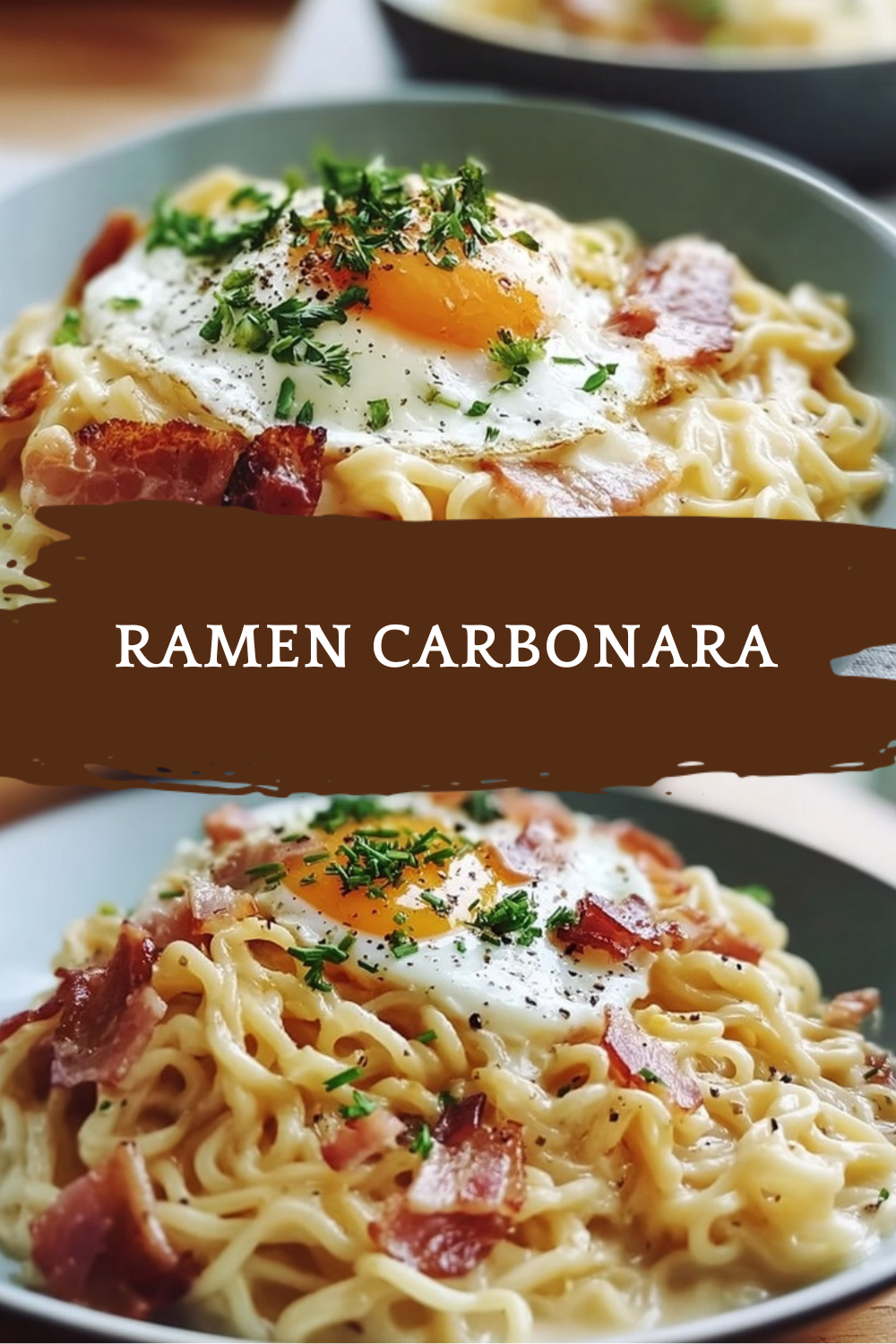
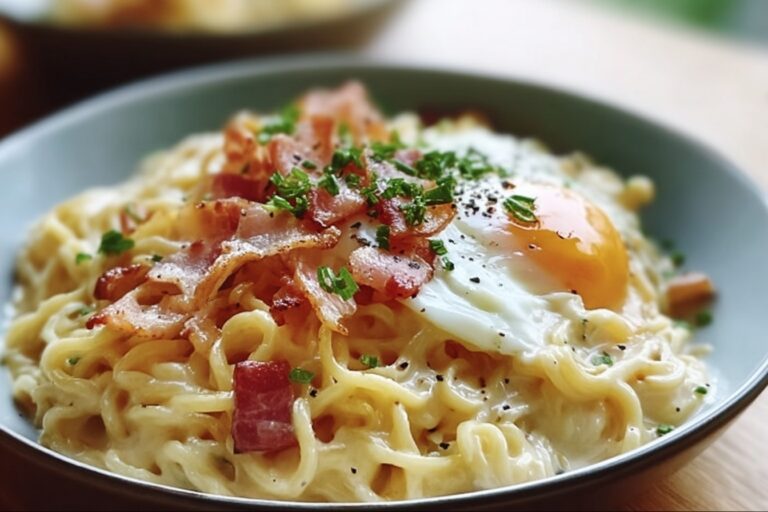
Finish the dish with fresh chopped basil and a little extra black pepper. The basil adds a fresh pop of color and flavor, while the pepper brings the classic carbonara finish. Serve the ramen carbonara warm right away so the sauce stays silky.
If you are cooking for two, this recipe makes a cozy dinner. If you are feeding a bigger group, you can easily double it and serve it with a simple salad or roasted vegetables. It is fast enough for weeknights, but tasty enough for guests too.
| Recipe Detail | Amount |
|---|---|
| Prep time | 5 minutes |
| Cook time | 10 minutes |
| Total time | 15 minutes |
| Servings | 2 to 4 |
| Calories per serving | 630 |

Dietary Substitutions to Customize Your Ramen Carbonara
Protein and main component alternatives
Ramen carbonara is easy to adjust, which is one reason so many home cooks love it. If bacon is not your thing, try pancetta or guanciale for a more classic Italian flavor. Turkey bacon works too if you want a lighter option, though the flavor will be a little leaner. For a meat-free version, use smoked tofu or browned mushrooms to add savory depth.
You can also switch up the noodles. Regular ramen works well, but fresh ramen or even another chewy wheat noodle can give a nicer texture. If you need a gluten-free option, rice noodles are a simple swap. Just be careful not to overcook them, since they can get soft fast.
Vegetable, sauce, and seasoning modifications
Adding vegetables is an easy way to make ramen carbonara more balanced. Spinach, peas, mushrooms, zucchini ribbons, or steamed broccoli all work nicely. Stir them in with the noodles so they warm through before the egg mixture goes in.
For seasoning, freshly ground black pepper is a must if you want that bold carbonara taste. You can also add a pinch of red pepper flakes if you like a little heat. If you want a stronger cheese flavor, use Pecorino Romano in place of some or all of the Parmesan. For a dairy-free version, use a plant-based cheese and a little extra reserved pasta water to help the sauce come together.
Mastering Ramen Carbonara: Advanced Tips and Variations
Once you make ramen carbonara a few times, small tweaks can help you get the exact texture and flavor you want. First, always keep some pasta water nearby. That starchy liquid is one of the easiest ways to loosen a sauce that turns too thick. A tablespoon or two can make a big difference.
Freshly grated cheese melts far better than packaged cheese, so take the extra minute to grate it yourself. The same goes for black pepper. Freshly ground pepper gives the dish a brighter, sharper finish. If you want a more traditional carbonara feel, Pecorino Romano is a smart swap for part of the Parmesan.
For variation, try adding peas, baby spinach, roasted mushrooms, or even a soft egg on top. You can also make the dish richer by keeping a little more bacon fat in the skillet, or lighter by draining more of it off. If you are cooking for someone who loves herbs, add extra basil at the end for a fresh finish.
Presentation matters too, even for a quick dinner. Twirl the noodles into shallow bowls, top with extra cheese, finish with basil, and add a final crack of black pepper. If you are packing this for lunch, let it cool slightly before portioning it into containers. That helps the sauce stay a little more stable.
Pro tip: If your sauce starts to look grainy, add a spoonful of hot pasta water and keep tossing. Most of the time, that brings it right back together.
How to Store Ramen Carbonara: Best Practices
Ramen carbonara tastes best fresh, but leftovers can still be good if you store them the right way. Let the noodles cool a bit, then place them in an airtight container and refrigerate them within 2 hours. They will keep for about 2 days, though the sauce may thicken as it sits.
Freezing is not the best option because egg-based sauces can change texture after thawing. If you do freeze it, expect the noodles and sauce to be softer when reheated. For better results, make the dish fresh and store only a portion if needed.
To reheat, warm it gently on the stovetop over low heat with a splash of water or broth. Stir often so the sauce loosens and does not stick to the pan. The microwave can work in a pinch, but use short bursts and stir between each one.
If you want to meal prep, cook the bacon ahead of time and keep it refrigerated. You can also grate the cheese and chop the basil in advance. That way, assembling the ramen carbonara later is much quicker.
FAQs: Frequently Asked Questions About Ramen Carbonara
What is ramen carbonara?
How do you make ramen carbonara at home?
Can I substitute ingredients in ramen carbonara?
Why does ramen carbonara sauce scramble and how to fix it?
Is ramen carbonara healthy or good for meal prep?
Ramen Carbonara
🍜 Savor the creamy, indulgent fusion of ramen noodles and classic carbonara sauce for a quick, comforting twist on your favorite pasta dish.
🥓 Experience smoky bacon, cheesy richness, and silky texture that transforms simple ramen into gourmet bliss in just 15 minutes.
- Total Time: 15 minutes
- Yield: 3 servings
Ingredients
– 9 ounces ramen noodles (3 packages, discard the seasoning)
– 1 tablespoon olive oil
– 8 slices bacon, chopped
– 3 cloves garlic, minced
– 2 large eggs
– 1 cup Parmesan cheese, freshly grated
– 1/4 teaspoon salt, or to taste
– 1/4 teaspoon pepper, or to taste
– 4 tablespoons basil, fresh and chopped
Instructions
1-First step: Cook the ramen noodles
Start by bringing a pot of water to a boil and cooking the ramen noodles according to the package instructions. Since this recipe uses 9 ounces of ramen noodles, you will usually have about 3 packages. Discard the seasoning packets, because the sauce gets its flavor from bacon, garlic, cheese, and black pepper instead.
Once the noodles are tender, drain them well and toss them with 1 tablespoon olive oil. This keeps the noodles from sticking together while you finish the sauce. If you want a little extra insurance for the sauce, reserve a small cup of pasta water before draining. That starchy liquid can help loosen the sauce later if it gets too thick.
2-Second step: Mix the eggs and cheese
In a medium bowl, whisk together the 2 large eggs and 1 cup freshly grated Parmesan cheese. Add the 1/4 teaspoon salt and 1/4 teaspoon pepper, or adjust to taste. The mixture should look thick and slightly grainy from the cheese.
If you are using Pecorino Romano instead of Parmesan, the flavor will be saltier and a bit sharper. That is a great choice if you want a more authentic carbonara taste. Either way, freshly grated cheese works much better than pre-shredded cheese because it melts more smoothly.
3-Third step: Cook the bacon
Place a skillet over medium heat and add the chopped bacon. Cook it until crisp, stirring now and then so it browns evenly. This usually takes a few minutes, depending on the thickness of the bacon.
When the bacon is done, carefully drain off the excess fat, but leave about 1 tablespoon in the skillet. That small amount of fat helps carry flavor and keeps the garlic from sticking. If you prefer, you can use pancetta or guanciale instead of bacon for a different taste. Both work well in ramen carbonara and bring a classic Italian feel.
4-Fourth step: Add the garlic
Once the bacon is crisp, add the minced garlic to the skillet and saute it for about 30 seconds. Keep the heat moderate so the garlic softens and smells fragrant, but does not burn. Burnt garlic can taste bitter, so this step moves quickly.
If you love garlic, you can add a little more. If you prefer a softer flavor, use slightly less. This recipe is easy to adjust based on your taste, which makes it great for families with different preferences.
5-Fifth step: Toss in the noodles
Add the cooked ramen noodles to the skillet and toss them with the bacon and garlic. Make sure the noodles are evenly coated with the bacon fat and flavor from the pan. This step helps the sauce cling to the noodles later.
If the skillet looks dry, add a splash of the reserved pasta water before moving on. A little moisture helps the egg mixture coat everything smoothly. This is especially helpful if you are using drier noodles or want a looser sauce.
6-Sixth step: Add the egg mixture off the heat
Here is the most important part of the recipe: remove the skillet from the heat before adding the egg and cheese mixture. Pour the egg mixture over the noodles and toss quickly and steadily. The heat from the noodles will gently cook the eggs and turn them into a creamy sauce.
If the sauce seems too thick, add a small amount of reserved pasta water, one spoonful at a time, until it reaches the texture you like. If it seems too thin, toss for a few more seconds and let the heat from the noodles work its magic. This is the step that makes ramen carbonara feel silky and rich.
7-Final step: Garnish and serve
Finish the dish with fresh chopped basil and a little extra black pepper. The basil adds a fresh pop of color and flavor, while the pepper brings the classic carbonara finish. Serve the ramen carbonara warm right away so the sauce stays silky.
If you are cooking for two, this recipe makes a cozy dinner. If you are feeding a bigger group, you can easily double it and serve it with a simple salad or roasted vegetables. It is fast enough for weeknights, but tasty enough for guests too.
Last Step:
Please leave a rating and comment letting us know how you liked this recipe! This helps our business to thrive and continue providing free, high-quality recipes for you.Notes
🔥 Always remove the skillet from heat before adding the egg mixture to prevent the eggs from scrambling.
🧀 For a more authentic Italian taste, substitute Parmesan with Pecorino Romano cheese.
💧 Reserve some pasta water to adjust the sauce consistency if it becomes too thick.
- Prep Time: 5 minutes
- Cook Time: 10 minutes
- Category: Main Course
- Method: Stovetop
- Cuisine: Fusion
Nutrition
- Serving Size: 1 serving
- Calories: 630 kcal
- Sugar: 1g
- Sodium: 2172mg
- Fat: 40g
- Saturated Fat: 16g
- Unsaturated Fat: 22g
- Trans Fat: 0.1g
- Carbohydrates: 43g
- Fiber: 2g
- Protein: 25g
- Cholesterol: 139mg