
Why You’ll Love This Traditional Sausage Vegetable Stew
This Traditional Sausage Vegetable Stew is a go-to for busy families and home cooks looking for a simple yet satisfying meal. It’s packed with hearty flavors from sausage and fresh veggies, making it ideal for weeknights or casual gatherings. Whether you’re a beginner in the kitchen or a seasoned cook, this recipe delivers comfort without the fuss.
One reason to try this Traditional Sausage Vegetable Stew is its ease of preparation. The recipe is straightforward and forgiving, ideal for weeknight cooking. With a simple setup of chopping vegetables and slicing sausages, the active prep is minimal (about 15-20 minutes). Most of the recipe is simmer time (25-35 minutes) where flavors develop without constant attention. Because this sausage and vegetable stew uses one pot, cleanup is quick and the method is accessible to beginners and busy cooks alike.
Health benefits are another draw for this hearty sausage stew. This hearty sausage stew balances protein, fiber, and micronutrients. Sausages provide satisfying protein and iron, while root vegetables, tomatoes, and leafy greens add vitamins A, C, potassium, and dietary fiber. Using lean or poultry sausage and plenty of vegetables keeps calories reasonable and supports satiety and digestive health a wholesome comfort meal that still aligns with wellness goals.
The versatility of Traditional Sausage Vegetable Stew makes it a favorite for many. The traditional sausage vegetable stew adapts easily to different dietary needs. Swap sausages for plant-based links or white beans for vegan and vegetarian versions, choose gluten-free sausages to avoid gluten, or reduce oil and use lean sausage to lower calories. The stew base accepts grains, potatoes, or pasta for varied serving styles, making this sausage stew a flexible family favorite.
Finally, the distinctive flavor sets this stew apart. What sets this sausage and vegetable stew apart is the interplay of browned sausage caramelization, aromatic soffritto (onion, celery, carrot), and slow-simmered tomatoes that build depth. A touch of smoked paprika, fresh herbs, or a splash of vinegar brightens the broth, creating a memorable, savory profile that distinguishes this traditional stew from plain soups. For more on how ingredients like kielbasa add to the dish, check out Is Kielbasa Healthy? to learn about its benefits.
Jump to:
- Why You’ll Love This Traditional Sausage Vegetable Stew
- Essential Ingredients for Traditional Sausage Vegetable Stew
- How to Prepare the Perfect Traditional Sausage Vegetable Stew: Step-by-Step Guide
- First Step: Preparation and Mise en Place
- Second Step: Brown the Sausage
- Third Step: Sweat the Aromatics
- Fourth Step: Add Vegetables and Spices
- Fifth Step: Add Tomatoes and Broth
- Sixth Step: Finish with Greens and Adjust Texture
- Seventh Step: Final Seasoning and Serve
- Dietary Substitutions to Customize Your Traditional Sausage Vegetable Stew
- Protein and Main Component Alternatives
- Vegetable, Sauce, and Seasoning Modifications
- Mastering Traditional Sausage Vegetable Stew: Advanced Tips and Variations
- How to Store Traditional Sausage Vegetable Stew: Best Practices
- FAQs: Frequently Asked Questions About Traditional Sausage Vegetable Stew
- What kind of sausage is best for making Traditional Sausage Vegetable Stew?
- Which vegetables should I include in a Traditional Sausage Vegetable Stew?
- How long does it take to prepare and cook Traditional Sausage Vegetable Stew?
- Can I add pasta or grains to the sausage and vegetable stew?
- How should I store leftover Traditional Sausage Vegetable Stew, and how long will it keep?
- Traditional Sausage Vegetable Stew
- Ingredients
- Instructions
- Last Step:
- Notes
- Nutrition
- Did you make this recipe?
Essential Ingredients for Traditional Sausage Vegetable Stew
Gathering the right ingredients is key to making a delicious Traditional Sausage Vegetable Stew. This recipe focuses on fresh, simple items that come together for a nourishing meal. Below is a complete list of everything you’ll need, based on a classic preparation that highlights hearty flavors and nutrition.
- Drizzle of extra virgin olive oil
- 13.5 oz kielbasa, quartered and chopped
- 2 ribs celery, thinly sliced
- 2 medium carrots, finely chopped
- 1 shallot or small onion, chopped
- 3 cloves garlic, minced or pressed
- 2 teaspoons seasoned salt
- 15 oz canned petite diced tomatoes, undrained
- 15 oz canned Great Northern or garbanzo beans, drained and rinsed
- 4 cups chicken broth or stock
- Parmesan cheese rind (optional)
- 2 cups diced peeled russet potatoes (about 1 medium potato)
- 2 packed cups baby spinach, roughly chopped
- Freshly grated parmesan cheese for topping
This list ensures your stew is comprehensive and easy to follow. It’s great for diet-conscious folks, as options like garbanzo beans can be explored further in Chickpeas Nutrition Benefits, which highlights their health perks.
For special dietary options, you can adapt as needed. For a vegan twist, replace kielbasa with plant-based alternatives and use vegetable broth. If you’re gluten-free, stick to the beans and veggies as they’re naturally suitable.
How to Prepare the Perfect Traditional Sausage Vegetable Stew: Step-by-Step Guide
First Step: Preparation and Mise en Place
Getting organized is the secret to a smooth cooking experience with this Traditional Sausage Vegetable Stew. Start by prepping all your ingredients to make the process fun and stress-free. This step sets the stage for a flavorful outcome that even busy parents will appreciate.
First Step: Preparation/mise en place – Remove sausages from casings if preferred and slice into 1/2-inch rounds; or leave whole for roasting first. Chop 1 large onion, 2 celery stalks, 2 carrots, 1 red bell pepper, 2 cups potatoes (if using), and mince 3 cloves garlic. Measure 1 can (14 oz) crushed tomatoes and 4 cups (1 L) broth. Preheat a large heavy-bottomed pot or Dutch oven over medium-high heat. (Prep time: 15-20 minutes.) For vegan or vegetarian versions, press and crumble tofu or drain and rinse 2 cans of mixed beans at this stage.
Second Step: Brown the Sausage
Now, let’s add some depth to your Traditional Sausage Vegetable Stew by browning the sausage. This step builds that irresistible savory base everyone loves. Remember, a good sear makes all the difference.
Second Step: Brown the sausage – Add 2 tbsp olive oil to the hot pot and add the sausage slices in a single layer without crowding. Brown for 3-5 minutes per side until caramelized; this develops fond that flavors the stew. Remove browned sausage and set aside. For lower-fat or low-calorie adaptations, brown sausages in a nonstick skillet with 1 tsp oil or use a paper towel to blot excess fat. For plant-based sausages, brown similarly to get a crust.
Third Step: Sweat the Aromatics
Moving on, sweating the aromatics brings out their natural sweetness and ties everything together in your Traditional Sausage Vegetable Stew. It’s a simple technique that elevates the dish without extra effort. Stir occasionally to keep things even.
Third Step: Sweat the aromatics – In the same pot, reduce heat to medium and add the chopped onion, celery, and carrots. Cook 6-8 minutes, stirring occasionally, until softened and translucent. Add minced garlic and cook 30-60 seconds until fragrant. Deglaze the pot with a splash (about 1/4 cup) of broth or dry white wine, scraping up browned bits to incorporate flavor. This step is crucial for building depth regardless of protein choice.
Fourth Step: Add Vegetables and Spices
Here’s where you layer in more veggies and spices for that hearty feel in your Traditional Sausage Vegetable Stew. This keeps the dish nutritious and full of color. Lightly toasting the spices makes their flavors pop.
Fourth Step: Add vegetables and spices – Stir in diced red bell pepper, potatoes or barley (if using), 1 tsp smoked paprika, 1 tsp dried oregano, and a bay leaf. Cook 1-2 minutes to toast the spices lightly. This toasting helps bloom the spices so their flavors infuse the broth.
Fifth Step: Add Tomatoes and Broth
Bringing in the liquids is key to creating the stew’s comforting broth in this Traditional Sausage Vegetable Stew. Simmering allows everything to meld beautifully. Keep an eye on the heat to avoid overcooking.
Fifth Step: Add tomatoes and broth – Pour in the crushed tomatoes and the remaining 4 cups of broth. Return browned sausage to the pot. Bring the mixture to a simmer over medium-high heat, then reduce to low so it gently bubbles. For a thicker stew, simmer uncovered for 25-35 minutes; for a brothy stew, simmer covered for 15-20 minutes. Taste and season with salt and pepper as it cooks. For gluten-free diners, ensure the broth and sausages are certified gluten-free; for vegan versions, omit sausage and add beans at this stage so they heat through without disintegrating.
Sixth Step: Finish with Greens and Adjust Texture
Adding greens at the end keeps them vibrant and fresh in your Traditional Sausage Vegetable Stew. This final touch adds a nutritional boost and a pop of color. Adjust as needed for the perfect consistency.
Sixth Step: Finish with greens and adjust texture – With 5 minutes remaining, stir in 2 cups chopped kale or spinach to wilt and absorb savory juices. If the stew is too thick, add up to 1 cup additional broth or water; if too thin, simmer uncovered a bit longer. For a creamier finish, stir in 1/4 cup plain yogurt (dairy) off heat, or 2 tbsp blended cashews for a vegan creaminess.
Seventh Step: Final Seasoning and Serve
Time to taste and serve your Traditional Sausage Vegetable Stew it’s almost ready! This last step ensures every bite is just right. If you’re looking for more dessert ideas to pair with your meal, try banana bundt cake recipes for a sweet finish.
Seventh Step: Final seasoning and serve – Remove the bay leaf. Taste and adjust acidity with a squeeze of lemon juice or a teaspoon of red wine vinegar to brighten the flavors. Garnish with chopped fresh parsley or basil and a drizzle of good olive oil. Serve the Traditional Sausage Vegetable Stew hot over crusty bread, rice, or polenta. (Total cooking time: ~45-60 minutes.)
Adaptations and tips during steps: If you’re short on time, use pre-cooked sausage and add it during the last 10 minutes to heat through. For picky eaters, finely dice vegetables or blend a portion of the stew for a smoother texture. To prepare for meal prep, cool quickly and refrigerate within two hours in shallow containers; reheat gently over medium heat or in a 325°F (160°C) oven covered until warmed through.
| Step | Time Estimate | Key Tip |
|---|---|---|
| Preparation | 15-20 minutes | Chop ingredients ahead |
| Browning | 5 minutes | Avoid crowding the pot |
| Simmering | 25-35 minutes | Stir occasionally |

Dietary Substitutions to Customize Your Traditional Sausage Vegetable Stew
Protein and Main Component Alternatives
Customizing your Traditional Sausage Vegetable Stew for different diets is simple and fun. Start with protein swaps to match your needs, keeping the dish just as hearty. These changes help everyone enjoy the meal.
– Pork or beef sausages: Traditional options that deliver the classic flavor; use lean varieties if reducing fat. Brown thoroughly to develop flavor.
– Chicken or turkey sausage: Lighter alternative with comparable texture and faster cooking; ideal for lower-calorie or heart-conscious diets.
– Plant-based sausages: Use seitan-based links for meat-like texture or pea-protein/soy-based links for easy swaps. For gluten-free vegan versions, choose soy- or pea-based products only.
– Tofu/tempeh: Crumbled firm tofu or cubed tempeh provide plant protein; marinate in smoked paprika and soy-free tamari to mimic savory depth. Press tofu to remove moisture for better browning.
– Canned or dried beans (cannellini, kidney, or chickpeas): Excellent for vegetarian or budget-friendly builds, adding fiber and protein; add toward the end to avoid overcooking if canned, or pre-soak and cook dried beans beforehand.
– Lentils: Brown or green lentils hold texture well and thicken the stew, good for vegetarian protein-centric versions.
Vegetable, Sauce, and Seasoning Modifications
Don’t stop at protein tweak veggies and seasonings for variety in your Traditional Sausage Vegetable Stew. This keeps things exciting and adaptable to what’s in season. Small changes can make a big difference.
– Root vegetables: Swap or mix potatoes with sweet potatoes, parsnips, or turnips for seasonal variety and differing sweetness levels.
– Greens: Use kale, Swiss chard, spinach, or collards depending on desired texture; add hearty greens earlier and tender leaves later.
– Tomatoes: Replace crushed tomatoes with diced tomatoes plus 2 tbsp tomato paste for more concentrated flavor, or use fire-roasted tomatoes for smoky notes.
– Broth: Chicken, beef, or vegetable broth will change richness; use low-sodium versions to control salt. For a deeper umami profile, add 1-2 tbsp soy sauce (or tamari for gluten-free) or 1 tsp fish sauce for non-vegetarian versions.
– Herbs and spices: Swap oregano for thyme, rosemary, or marjoram; add a pinch of red pepper flakes for heat. For Mediterranean variation, include smoked paprika and a splash of sherry vinegar. For an Italian twist, stir in pesto at the end.
– Creaminess: For a richer stew, add 1/2 cup heavy cream or half-and-half near the end. For dairy-free, blend soaked cashews with some broth and stir in.
Seasonal and preference notes: Adjust vegetable choices based on seasonality (summer: zucchini and eggplant; winter: root vegetables). Keep flavor balance in mind sweeter vegetables pair well with acidic tomatoes and bright herbs to maintain the stew’s characteristic depth.
Mastering Traditional Sausage Vegetable Stew: Advanced Tips and Variations
Taking your Traditional Sausage Vegetable Stew to the next level is easier than you think. With a few pro tips, you can create something truly special. Let’s dive into techniques that add wow factor.
Pro cooking techniques: Develop deeper flavor by fully caramelizing the sausage and then deglazing the pot with wine or broth to lift the fond. Use medium-high heat for browning and avoid overcrowding the pan work in batches if necessary. Use a combination of cooking methods: sear sausage, then roast root vegetables at 400°F (200°C) for 20-25 minutes to concentrate sugars before adding to the stew for enhancer complexity. Finish with a five-minute gentle simmer after adding greens to preserve their color and nutrients. For a silkier texture, use an immersion blender to purée 20-30% of the stew and stir back in to thicken naturally without cream.
Flavor variations: Smoky Mediterranean: Add smoked paprika, chopped chorizo or smoked sausage, roasted red peppers, and finish with sherry vinegar and parsley. Rustic Italian: Use fennel-seed-studded sausages, rosemary, and finish with torn basil and a drizzle of extra-virgin olive oil; serve with polenta or crusty bread. Lighter herb-forward: Choose chicken or turkey sausage, increase lemon zest, fresh thyme and oregano, and add white beans for a bright, Mediterranean-inspired bowl. Global twists: Introduce curry powder and coconut milk for an Indo-inspired stew (use plant-based sausages or chickpeas), or add harissa paste and preserved lemon for North African flair.
Presentation tips: Serve in shallow bowls with contrasting garnish: a spoonful of herb gremolata (parsley, lemon zest, garlic) brightens the rich stew. Layer texture: top with toasted breadcrumbs or crushed toasted almonds for crunch; a drizzle of flavored oil (garlic or chili) adds visual appeal and aroma. Portioning: Serve the stew over creamy polenta, mashed potatoes, or buttered pasta for an inviting presentation; use individual ramekins for elegant single servings.
Make-ahead options: Flavor improves: This sausage and vegetable stew often tastes better the next day as flavors meld. Cool completely and refrigerate up to 3 days in airtight containers. Freezer strategy: Freeze in meal-sized portions, leaving room for expansion. Thaw overnight in the refrigerator before reheating. Partial prep for busy schedules: Brown sausage and chop vegetables in advance; store components separately for up to 2 days. When ready, sweat aromatics and combine everything to finish in 30 minutes. Reheating guidance: Reheat gently over low heat, stirring occasionally; add a splash of broth to revive texture. For microwave reheating, cover and heat in 60-90 second intervals, stirring between cycles to ensure even warming.
This Traditional Sausage Vegetable Stew is not just food it’s a way to bring people together, especially with tips like serving it with gluten-free focaccia or as a comforting meal for friends in need.
How to Store Traditional Sausage Vegetable Stew: Best Practices
Proper storage keeps your Traditional Sausage Vegetable Stew tasting great for days. Follow these steps to maintain flavor and safety, perfect for meal prep. It’s all about making life easier for busy folks.
Refrigeration: Cool the Traditional Sausage Vegetable Stew to room temperature within two hours of cooking. Transfer to shallow airtight containers and refrigerate at 40°F (4°C) or below. Consume within 3-4 days for best quality and safety. If the stew contains dairy added at the end, use within 2-3 days for optimal texture.
Freezing: For long-term storage, cool completely and portion into freezer-safe containers or heavy-duty resealable bags, leaving about 1 inch (2.5 cm) headspace for expansion. Label with date; freeze for up to 3 months for best flavor. For best results, slightly undercook potatoes or barley if you plan to freeze, as they can become mealy after thawing and reheating. Thaw overnight in the refrigerator before reheating.
Reheating: Reheat gently to preserve texture and flavor. On the stovetop, bring to a simmer over medium-low heat, stirring occasionally and adding small amounts of broth or water if it seems too thick. Heat to an internal temperature of 165°F (74°C) for safety. In the microwave, cover and heat in 60-90 second intervals, stirring between cycles. Avoid boiling vigorously after adding delicate greens or dairy to prevent separation or toughness.
Meal prep considerations: Divide the stew into single-portion containers for grab-and-go lunches or family dinners. If you plan to add pasta or rice, store grains separately and combine when reheating to prevent sogginess. For freezer meal kits, pack cooked sausage, raw or blanched vegetables, and measured spices separately; assemble and simmer with broth when ready to eat for fresher texture. Proper labeling and portioning will streamline weeknight reheats and preserve the quality of your Traditional Sausage Vegetable Stew.

FAQs: Frequently Asked Questions About Traditional Sausage Vegetable Stew
What kind of sausage is best for making Traditional Sausage Vegetable Stew?
Which vegetables should I include in a Traditional Sausage Vegetable Stew?
How long does it take to prepare and cook Traditional Sausage Vegetable Stew?
Can I add pasta or grains to the sausage and vegetable stew?
How should I store leftover Traditional Sausage Vegetable Stew, and how long will it keep?
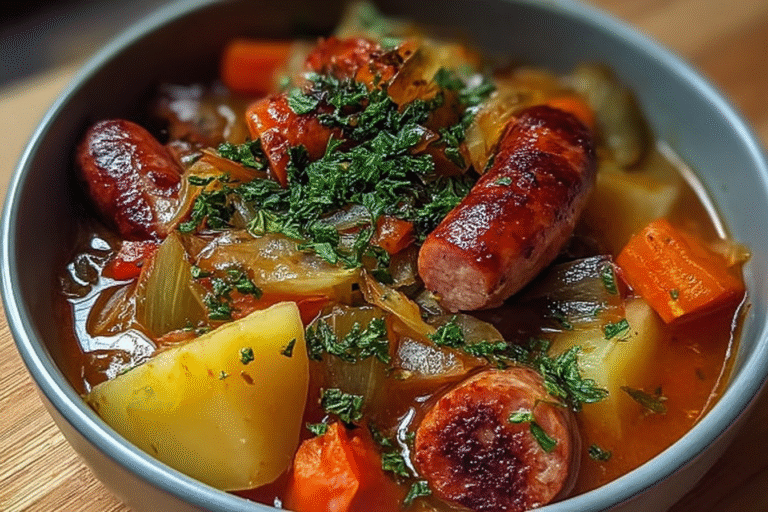
Traditional Sausage Vegetable Stew
🍲 Enjoy a hearty and wholesome meal with this Tuscan Sausage Vegetable Stew, loaded with fresh vegetables and robust herbs.
🌿 The combination of kielbasa, beans, and vegetables makes this stew flavorful, nutritious, and perfect for comforting family dinners.
- Total Time: 45 minutes
- Yield: 8 servings
Ingredients
– Drizzle of extra virgin olive oil
– 13.5 oz kielbasa, quartered and chopped
– 2 ribs celery, thinly sliced
– 2 medium carrots, finely chopped
– 1 shallot or small onion, chopped
– 3 cloves garlic, minced or pressed
– 2 teaspoons seasoned salt
– 15 oz canned petite diced tomatoes, undrained
– 15 oz canned Great Northern or garbanzo beans, drained and rinsed
– 4 cups chicken broth or stock
– Parmesan cheese rind (optional)
– 2 cups diced peeled russet potatoes (about 1 medium potato)
– 2 packed cups baby spinach, roughly chopped
– Freshly grated parmesan cheese for topping
Instructions
1-First Step: Preparation/mise en place – Remove sausages from casings if preferred and slice into 1/2-inch rounds; or leave whole for roasting first. Chop 1 large onion, 2 celery stalks, 2 carrots, 1 red bell pepper, 2 cups potatoes (if using), and mince 3 cloves garlic. Measure 1 can (14 oz) crushed tomatoes and 4 cups (1 L) broth. Preheat a large heavy-bottomed pot or Dutch oven over medium-high heat. (Prep time: 15-20 minutes.) For vegan or vegetarian versions, press and crumble tofu or drain and rinse 2 cans of mixed beans at this stage.
2-Second Step: Brown the sausage – Add 2 tbsp olive oil to the hot pot and add the sausage slices in a single layer without crowding. Brown for 3-5 minutes per side until caramelized; this develops fond that flavors the stew. Remove browned sausage and set aside. For lower-fat or low-calorie adaptations, brown sausages in a nonstick skillet with 1 tsp oil or use a paper towel to blot excess fat. For plant-based sausages, brown similarly to get a crust.
3-Third Step: Sweat the aromatics – In the same pot, reduce heat to medium and add the chopped onion, celery, and carrots. Cook 6-8 minutes, stirring occasionally, until softened and translucent. Add minced garlic and cook 30-60 seconds until fragrant. Deglaze the pot with a splash (about 1/4 cup) of broth or dry white wine, scraping up browned bits to incorporate flavor. This step is crucial for building depth regardless of protein choice.
4-Fourth Step: Add vegetables and spices – Stir in diced red bell pepper, potatoes or barley (if using), 1 tsp smoked paprika, 1 tsp dried oregano, and a bay leaf. Cook 1-2 minutes to toast the spices lightly. This toasting helps bloom the spices so their flavors infuse the broth.
5-Fifth Step: Add tomatoes and broth – Pour in the crushed tomatoes and the remaining 4 cups of broth. Return browned sausage to the pot. Bring the mixture to a simmer over medium-high heat, then reduce to low so it gently bubbles. For a thicker stew, simmer uncovered for 25-35 minutes; for a brothy stew, simmer covered for 15-20 minutes. Taste and season with salt and pepper as it cooks. For gluten-free diners, ensure the broth and sausages are certified gluten-free; for vegan versions, omit sausage and add beans at this stage so they heat through without disintegrating.
6-Sixth Step: Finish with greens and adjust texture – With 5 minutes remaining, stir in 2 cups chopped kale or spinach to wilt and absorb savory juices. If the stew is too thick, add up to 1 cup additional broth or water; if too thin, simmer uncovered a bit longer. For a creamier finish, stir in 1/4 cup plain yogurt (dairy) off heat, or 2 tbsp blended cashews for a vegan creaminess.
7-Seventh Step: Final seasoning and serve – Remove the bay leaf. Taste and adjust acidity with a squeeze of lemon juice or a teaspoon of red wine vinegar to brighten the flavors. Garnish with chopped fresh parsley or basil and a drizzle of good olive oil. Serve the Traditional Sausage Vegetable Stew hot over crusty bread, rice, or polenta. (Total cooking time: ~45-60 minutes.)
Last Step:
Please leave a rating and comment letting us know how you liked this recipe! This helps our business to thrive and continue providing free, high-quality recipes for you.Notes
🍽️ Use precooked kielbasa for convenience and flavor.
🍝 Consider adding small pasta like mini shells or orzo for a family-friendly variation; cook pasta separately before serving.
🥣 Parmesan rind adds a rich, savory depth to the broth during simmering.
- Prep Time: 10 minutes
- Cook Time: 35 minutes
- Category: Soup/Stew
- Method: Simmering
- Cuisine: Italian-inspired
Nutrition
- Serving Size: 1 serving
- Calories: 283
- Sugar: 4 grams
- Sodium: 1239 milligrams
- Fat: 14 grams
- Saturated Fat: 5 grams
- Unsaturated Fat: 9 grams
- Trans Fat: 0 grams
- Carbohydrates: 26 grams
- Fiber: 5 grams
- Protein: 14 grams
- Cholesterol: 36 milligrams