Why You’ll Love This Vanilla Crepes
Vanilla crepes are a versatile and delicious dish that bring a touch of French elegance to your breakfast table. These delicate, paper-thin pancakes are loved worldwide for their light texture and subtle sweetness. Whether you’re a seasoned chef or a beginner in the kitchen, this vanilla crepes recipe will quickly become a favorite in your household.
Benefits of Making Vanilla Crepes at Home
- Ease of preparation: This simple crepes recipe comes together in just 30 minutes from start to finish. With basic pantry staples and straightforward techniques, you can whip up restaurant-quality crepes without any special skills or equipment. The batter requires just a few minutes of whisking, and each crepe cooks in under two minutes.
- Health benefits: Unlike many breakfast options, vanilla crepes can be part of a balanced diet. The main ingredients provide protein from eggs, calcium from milk, and carbohydrates from flour for sustained energy. By controlling the amount of sugar and choosing nutritious fillings, you can create a satisfying meal that fits various dietary preferences. The vanilla not only adds delightful flavor but also contains beneficial compounds for your health.
- Versatility: One of the greatest appeals of vanilla crepes is their adaptability to different dietary needs and taste preferences. They can be enjoyed with sweet fillings like fresh fruits, chocolate, or whipped cream, or transformed into a savory meal with ham and cheese or vegetables. This flexibility makes them perfect for breakfast, brunch, dessert, or even a light dinner.
- Distinctive flavor: What sets vanilla crepes apart from regular pancakes is their delicate balance of sweetness and sophistication. The hint of vanilla elevates the simple batter, creating a fragrant, aromatic experience that pairs beautifully with countless toppings and fillings. The tender, lacy edges and soft center create a mouthwatering texture that’s simply irresistible.
Jump to:
- Why You’ll Love This Vanilla Crepes
- Benefits of Making Vanilla Crepes at Home
- Essential Ingredients for Vanilla Crepes
- Main Ingredients
- Special Dietary Options
- Vegan Substitutions
- Gluten-Free Alternatives
- Low-Calorie Options
- How to Prepare the Perfect Vanilla Crepes: Step-by-Step Guide
- Preparing the Batter
- Resting and Cooking
- Dietary Substitutions to Customize Your Vanilla Crepes
- Protein and Main Component Alternatives
- Vegetable, Sauce, and Seasoning Modifications
- Mastering Vanilla Crepes: Advanced Tips and Variations
- Pro Cooking Techniques
- Flavor Variations
- Presentation Tips
- Make-Ahead Options
- How to Store Vanilla Crepes: Best Practices
- Refrigeration Guidelines
- Freezing Methods
- Reheating Techniques
- Meal Prep Considerations
- FAQs: Frequently Asked Questions About Vanilla Crepes
- What are vanilla crepes?
- How do you make vanilla crepes from scratch?
- What are the best fillings for vanilla crepes?
- How do you store vanilla crepes?
- Can you make vegan vanilla crepes?
- Vanilla Crepes
- Ingredients
- Instructions
- Last Step:
- Notes
- Nutrition
- Did you make this recipe?
Essential Ingredients for Vanilla Crepes
Creating the perfect vanilla crepes starts with quality ingredients. Each component plays a crucial role in achieving that delicate texture and authentic flavor that makes French crepes so beloved. Here’s what you’ll need to make 8-10 delicious crepes:
Main Ingredients
1 cup all-purpose flour – The foundation of your crepe batter, providing structure and creating the thin, pliable texture that characterizes authentic French crepes
2 large eggs – Binding the ingredients together while adding richness and helping the crepes hold their shape when folded or rolled
1 cup whole milk – Creating a smooth, pourable batter and contributing to the tender texture of the cooked crepes
½ cup water – Thinning the batter to achieve the perfect consistency for spreading thinly in the pan
2 tablespoons melted unsalted butter – Adding richness and flavor while helping prevent sticking during cooking
2 tablespoons granulated sugar – Providing just the right amount of sweetness to complement the vanilla without overpowering other flavors
1 teaspoon pure vanilla extract – Infusing the crepes with that distinctive aromatic flavor that makes vanilla crepes so special
Pinch of salt – Enhancing all the flavors and balancing the sweetness
Special Dietary Options
Vegan Substitutions
- Replace eggs with 2 tablespoons of flaxseed meal mixed with 6 tablespoons of water (let sit for 5 minutes until thickened)
- Use plant-based milk such as almond, soy, or oat milk in place of whole milk
- Swap butter with melted coconut oil or vegan butter alternative
- Replace honey or maple syrup for the granulated sugar if preferred
Gluten-Free Alternatives
- Use a 1:1 gluten-free flour blend in place of all-purpose flour
- Alternatively, try buckwheat flour for an authentic French “galette” style crepe
- Add an extra tablespoon of flour if the batter seems too thin, as gluten-free blends sometimes require adjustments
Low-Calorie Options
- Substitute skim milk or unsweetened almond milk for whole milk
- Reduce the sugar to 1 tablespoon or use a natural sweetener like stevia
- Replace butter with a small amount of cooking spray for greasing the pan
- Increase the water slightly to create lighter, thinner crepes with fewer calories
Remember that ingredient temperatures matter! For the smoothest batter, use room temperature eggs and milk. This helps them incorporate more easily and creates a consistent texture throughout your vanilla crepes.
How to Prepare the Perfect Vanilla Crepes: Step-by-Step Guide
Making restaurant-quality vanilla crepes at home is simpler than you might think. With this detailed guide, you’ll master the technique in no time and impress family and friends with your culinary skills. The key lies in proper batter preparation, patience, and a few professional tips.
Preparing the Batter
First Step: Gather Your Tools and Ingredients
Before you begin, ensure you have all ingredients measured and ready. For this recipe, you’ll need a medium mixing bowl, a whisk or immersion blender, a non-stick skillet or crepe pan (about 8-10 inches in diameter), a ladle or ¼ cup measuring cup, and a rubber spatula. Having everything organized will make the process smooth and enjoyable.
Second Step: Mix the Dry Ingredients
In your mixing bowl, whisk together 1 cup of all-purpose flour, 2 tablespoons of sugar, and a pinch of salt until well combined. This step ensures even distribution of these ingredients throughout the batter, preventing any lumps or pockets of flour when cooking. Creating this dry mixture first makes incorporating the wet ingredients much easier.
Third Step: Add the Wet Ingredients
Create a well in the center of your dry ingredients and crack 2 large eggs into it. Whisk the eggs into the flour mixture, gradually adding 1 cup of milk and ½ cup of water. Continue whisking until the mixture is smooth and free of lumps. Add 2 tablespoons of melted butter and 1 teaspoon of vanilla extract, whisking until fully incorporated. For an extra smooth batter, you can use an immersion blender for about 30 seconds.
Resting and Cooking
Fourth Step: Let the Batter Rest
Allow your batter to rest at room temperature for 20-30 minutes. This resting period is crucial as it allows the flour to fully absorb the liquid, resulting in tender crepes that won’t tear easily. It also helps any bubbles in the batter to dissipate, preventing holes in your crepes while cooking. If you’re short on time, a minimum of 15 minutes will suffice, but longer resting yields better results.
Fifth Step: Prepare Your Pan
While the batter rests, heat your non-stick skillet or crepe pan over medium heat for 2-3 minutes. To test if it’s ready, sprinkle a few drops of water into the pan – they should sizzle and evaporate quickly. Lightly grease the pan with a small amount of butter or oil, using a paper towel to wipe away any excess. You want just enough coating to prevent sticking without creating a greasy texture.
Sixth Step: Cook Your First Crepe
Stir the rested batter briefly and pour about ¼ cup into the center of the hot pan. Immediately lift and tilt the pan, swirling it in a circular motion to spread the batter evenly across the bottom. Work quickly as the batter sets almost immediately. Cook for 1-2 minutes until the edges begin to lift slightly and the bottom is golden brown with lacy edges.
Seventh Step: Flip and Finish
Gently slide a thin spatula under the crepe and flip it in one swift motion. Cook the second side for only 30-60 seconds – it should be lightly golden but paler than the first side. Slide the cooked crepe onto a plate and cover with a clean kitchen towel to keep it warm while you repeat the process with the remaining batter. You should be able to make 8-10 crepes from this recipe.
Final Step: Serve and Enjoy
Now comes the fun part – filling and serving your vanilla crepes! While crepes are delicious warm, they’re also delightful at room temperature. Fold them into quarters or roll them with your desired fillings. Traditional sweet options include fresh berries with whipped cream, a sprinkle of lemon juice and sugar, or a spread of chocolate hazelnut. For something different, try pairing your crepes with a light side dish like fresh Caesar salad for a balanced brunch experience.
Pro tip: The first crepe is often called the “sacrificial crepe” as it helps you adjust your heat and batter quantity. Don’t worry if it’s not perfect – the rest will turn out beautifully!

Dietary Substitutions to Customize Your Vanilla Crepes
One of the wonderful aspects of vanilla crepes is their adaptability to various dietary preferences and restrictions. With a few simple substitutions, you can customize this classic recipe to meet your specific needs while maintaining the delicious flavor and texture that makes crepes so special.
Protein and Main Component Alternatives
For those with egg allergies or following a vegan lifestyle, several effective alternatives can replace the binding and richness that eggs provide. A popular option is a flaxseed “egg” made by combining 2 tablespoons of ground flaxseed meal with 6 tablespoons of water, letting the mixture sit for 5 minutes until it thickens to a gel-like consistency. This works well in crepe batter, providing both binding properties and a subtle nutty flavor.
Another egg alternative is commercial egg replacer powder, following the package instructions for equivalent measurements. For a whole-food approach, mashed banana (about ½ medium banana per egg) can work, though it will impart a slight banana flavor and denser texture. Silken tofu (¼ cup blended smooth per egg) creates a lighter crepe with extra protein.
For protein-sensitive individuals, the main flour component can be adjusted. While all-purpose flour works best for traditional texture, alternatives include buckwheat flour (naturally gluten-free with a robust flavor), oat flour (mild taste and soft texture), or a blend of almond flour and tapioca starch for low-carb options. When substituting flours, you may need to adjust the liquid content slightly to achieve the right batter consistency.
Vegetable, Sauce, and Seasoning Modifications
While vanilla crepes are traditionally sweet, you can easily transform them into savory delights by modifying the seasonings. For a savory version, reduce or omit the sugar and vanilla, adding instead herbs like finely chopped fresh chives, parsley, or dill directly into the batter. A pinch of garlic powder, onion powder, or grated Parmesan cheese can create delicious flavor variations perfect for brunch or light dinner options.
For vegetable-based fillings, sautéed spinach with ricotta cheese, caramelized mushrooms with goat cheese, or roasted red peppers with feta make excellent savory combinations. These transform the basic crepe into a complete meal that’s both nutritious and satisfying. Pair your savory crepes with a light soup like creamy tortellini minestrone for a perfect dinner combination.
For sauce alternatives, consider a light lemon curd instead of traditional fillings, or create a fruit compote by simmering seasonal berries with a touch of honey. A simple chocolate ganache made with dark chocolate and a splash of cream provides an indulgent twist, while a dusting of powdered sugar and a squeeze of fresh lemon juice creates an elegant and light dessert option.
For those watching sugar intake, natural sweeteners like pure maple syrup, honey, or agave nectar can replace the granulated sugar in both the batter and as toppings. These alternatives often provide more complex flavor profiles and may have a lower glycemic index, making them preferable for some dietary needs.
Mastering Vanilla Crepes: Advanced Tips and Variations
Once you’ve mastered the basic vanilla crepes recipe, you might want to elevate your technique and experiment with creative variations. These advanced tips will help you achieve consistently perfect results and inspire you to try new flavor combinations that will impress everyone at your table.
Pro Cooking Techniques
The secret to restaurant-quality crepes lies in achieving the perfect batter consistency and mastering the swirling technique. Your batter should be the consistency of heavy cream – thin enough to spread easily but thick enough to coat the pan evenly. If it’s too thick, add water one tablespoon at a time until you reach the right texture. Conversely, if it’s too thin, add a tablespoon of flour and whisk thoroughly.
Temperature control is crucial when cooking crepes. Start with medium heat, adjusting slightly up or down as needed. If your pan is too hot, the crepes will brown before cooking through or develop holes. Too cool, and they’ll stick or require longer cooking times that dries them out. Between crepes, you may need to adjust the heat as the pan retains heat during the cooking process.
Professional chefs often use the “off-heat” swirling technique for more control: pour the batter into the hot pan, then immediately remove the pan from the heat while swirling to spread the batter. Return to heat to cook. This method gives you more time to achieve an even, thin layer before the batter begins to set.
Flavor Variations
While vanilla crepes are delicious on their own, experimenting with different flavor profiles can create exciting new experiences. For a citrus twist, replace some of the vanilla extract with lemon or orange zest. Chocolate lovers can add 1 tablespoon of cocoa powder to the dry ingredients for chocolate crepes that pair perfectly with fresh raspberries and cream.
For a warming autumn version, add a teaspoon of pumpkin pie spice or cinnamon to the batter and serve with apple compote. Coffee aficionados might enjoy adding 1 tablespoon of instant espresso powder to create mocha-flavored crepes. Nut lovers can incorporate 1 tablespoon of hazelnut or almond extract in place of half the vanilla for a nutty aroma and taste.
For a savory variation, omit the vanilla and sugar, adding instead herbs like finely chopped fresh herbs, grated Parmesan cheese, or sun-dried tomatoes to the batter. These savory crepes make excellent bases for lunch or dinner options filled with vegetables, meats, or cheeses.
Presentation Tips
The visual appeal of crepes can transform a simple meal into an elegant dining experience. For classic presentation, fold crepes into quarters and arrange them in a circular pattern on a plate, dusted with powdered sugar and garnished with fresh berries or mint leaves. Alternatively, roll crepes into cylinders and stand them vertically, exposing the filling at the top.
For a more dramatic presentation, create a crepe cake by layering cooled crepes with fillings like pastry cream, Nutella, or fruit preserves, stacking them to form a towering dessert. Dust generously with powdered sugar and serve in wedges. This impressive centerpiece looks elaborate but is surprisingly simple to assemble.
Garnishes make a significant difference in both appearance and taste. Fresh seasonal berries, a drizzle of chocolate sauce, a dollop of whipped cream, or a sprinkle of chopped nuts all add visual interest and complementary flavors. Edible flowers, microgreens, or finely grated citrus zest can provide professional-looking finishing touches.
Make-Ahead Options
For busy schedules, vanilla crepes can be prepared in advance and stored for later use. The batter can be made up to 24 hours ahead and kept refrigerated – in fact, many chefs believe this improves the flavor and texture. Just bring it to room temperature and give it a quick whisk before cooking.
Fully cooked crepes can be stacked between sheets of parchment paper, wrapped tightly in plastic, and refrigerated for up to 2 days or frozen for up to 1 month. To reheat, simply warm them in a lightly buttered pan for about 30 seconds per side or microwave them wrapped in a damp paper towel for 10-15 seconds each.
For meal prep, consider making a double batch on the weekend. Cooked crepes can be frozen in portions of 3-4, making them ready to grab for quick weekday breakfasts. Prepare several different fillings ahead of time as well, creating a “crepe bar” that allows family members to customize their own breakfasts throughout the week.
How to Store Vanilla Crepes: Best Practices
Proper storage of vanilla crepes ensures they maintain their delicate texture and fresh flavor for future enjoyment. Whether you have leftovers from a large batch or are intentionally making crepes ahead for meal prep, following these guidelines will help you preserve quality and avoid food waste.
Refrigeration Guidelines
For short-term storage, allow crepes to cool completely on a wire rack to prevent condensation that can make them soggy. Once cooled, stack them between sheets of parchment or wax paper, which prevents sticking and makes it easier to separate individual crepes later. Place the stack in an airtight container or sealable plastic bag and refrigerate for up to 2 days. This method preserves moisture while preventing the crepes from absorbing odors from other foods in your refrigerator.
If you’ve prepared crepe batter in advance, store it in a covered container in the refrigerator for up to 24 hours. Before cooking, let the batter come to room temperature and give it a quick whisk to reincorporate any ingredients that may have settled. This resting period can actually improve the texture of your crepes, as the flour has more time to hydrate fully.
Freezing Methods
Vanilla crepes freeze exceptionally well, making them perfect for batch cooking. To freeze, cool the crepes completely, then stack them with parchment paper between each one. Wrap the entire stack tightly in plastic wrap, followed by aluminum foil, or place in a freezer-safe bag. Remove as much air as possible to prevent freezer burn. Label with the date and contents, and freeze for up to 1 month.
For added convenience, consider freezing crepes in pre-portioned stacks of 3-4, perfect for a single serving. This allows you to thaw only what you need without repeatedly exposing the remaining crepes to temperature changes that could affect their quality.
Another method is to freeze the filled crepes. Prepare your vanilla crepes with your desired fillings, fold them, arrange on a baking sheet, and freeze until solid. Then transfer to freezer bags. This method is ideal for grab-and-go breakfasts or quick desserts, as the crepes can go directly from freezer to oven or microwave.
Reheating Techniques
The key to reheating crepes is using gentle heat that warms them through without drying them out or making them tough. The microwave is convenient but requires care – wrap crepes in a damp paper towel and heat in 10-second intervals until warmed through. This method adds necessary moisture back into the crepes.
For the best texture, reheat crepes in a lightly buttered skillet over low-medium heat for about 30 seconds per side. This method helps recreate the fresh-cooked texture and can even improve the flavor slightly as the edges become crisp again. This is especially recommended if your crepes will be served with warm fillings.
For a large batch, arrange crepes in a single layer on a baking sheet, cover loosely with foil, and warm in a 300°F oven for about 5-7 minutes. This method is perfect when preparing breakfast for a crowd and ensures all crepes are ready to serve simultaneously.
Meal Prep Considerations
When incorporating vanilla crepes into your meal planning, consider preparing both the crepes and several filling options at the beginning of the week. This creates a versatile base for multiple meals – breakfast with fruit and yogurt, lunch with ham and cheese, or dessert with chocolate and berries. Having prepared components ready reduces daily cooking time while providing varied, nutritious meals throughout the week.
For the most efficient meal prep, designate a specific “crepe day” to make a large batch. Cook, cool, and stack the crepes with parchment paper as directed, then store in the refrigerator for use throughout the week. Prepare fillings that store well, such as fruit compotes, cheese spreads, or cooked vegetable mixtures, in separate containers. This approach provides maximum flexibility with minimal daily effort.

FAQs: Frequently Asked Questions About Vanilla Crepes
What are vanilla crepes?
How do you make vanilla crepes from scratch?
What are the best fillings for vanilla crepes?
How do you store vanilla crepes?
Can you make vegan vanilla crepes?
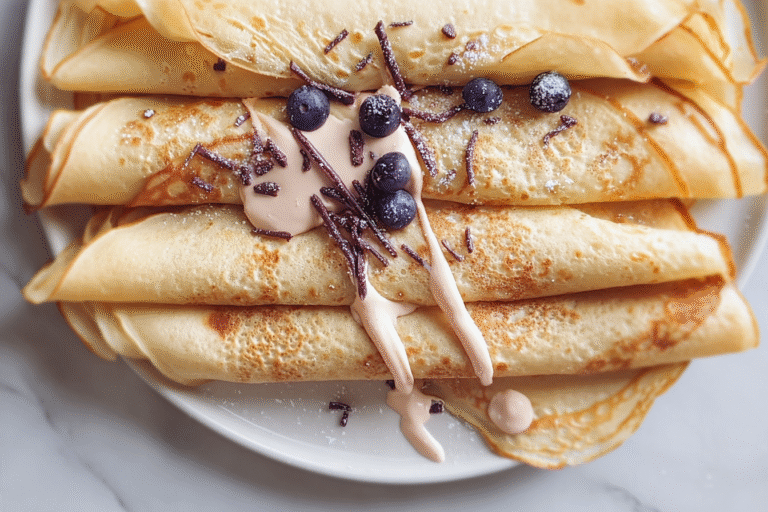
Vanilla Crepes
🥞 Thin, delicate crepes bursting with warm vanilla aroma provide a light, egg-rich canvas for sweet fruits, Nutella, or savory fillings.
🔥 Simple pantry staples yield restaurant-quality results in under an hour, ideal for lazy brunches or elegant desserts!
- Total Time: 1 hour
- Yield: 8 crepes
Ingredients
– 1 cup all-purpose flour
– 2 large eggs
– 1 cup whole milk
– ½ cup water
– 2 tablespoons melted unsalted butter
– 2 tablespoons granulated sugar
– 1 teaspoon pure vanilla extract
– Pinch of salt
Instructions
1-First Step: Gather Your Tools and Ingredients Before you begin, ensure you have all ingredients measured and ready. For this recipe, you’ll need a medium mixing bowl, a whisk or immersion blender, a non-stick skillet or crepe pan (about 8-10 inches in diameter), a ladle or ¼ cup measuring cup, and a rubber spatula. Having everything organized will make the process smooth and enjoyable.
2-Second Step: Mix the Dry Ingredients In your mixing bowl, whisk together 1 cup of all-purpose flour, 2 tablespoons of sugar, and a pinch of salt until well combined. This step ensures even distribution of these ingredients throughout the batter, preventing any lumps or pockets of flour when cooking. Creating this dry mixture first makes incorporating the wet ingredients much easier.
3-Third Step: Add the Wet Ingredients Create a well in the center of your dry ingredients and crack 2 large eggs into it. Whisk the eggs into the flour mixture, gradually adding 1 cup of milk and ½ cup of water. Continue whisking until the mixture is smooth and free of lumps. Add 2 tablespoons of melted butter and 1 teaspoon of vanilla extract, whisking until fully incorporated. For an extra smooth batter, you can use an immersion blender for about 30 seconds.
4-Fourth Step: Let the Batter Rest Allow your batter to rest at room temperature for 20-30 minutes. This resting period is crucial as it allows the flour to fully absorb the liquid, resulting in tender crepes that won’t tear easily. It also helps any bubbles in the batter to dissipate, preventing holes in your crepes while cooking. If you’re short on time, a minimum of 15 minutes will suffice, but longer resting yields better results.
5-Fifth Step: Prepare Your Pan While the batter rests, heat your non-stick skillet or crepe pan over medium heat for 2-3 minutes. To test if it’s ready, sprinkle a few drops of water into the pan – they should sizzle and evaporate quickly. Lightly grease the pan with a small amount of butter or oil, using a paper towel to wipe away any excess. You want just enough coating to prevent sticking without creating a greasy texture.
6-Sixth Step: Cook Your First Crepe Stir the rested batter briefly and pour about ¼ cup into the center of the hot pan. Immediately lift and tilt the pan, swirling it in a circular motion to spread the batter evenly across the bottom. Work quickly as the batter sets almost immediately. Cook for 1-2 minutes until the edges begin to lift slightly and the bottom is golden brown with lacy edges.
7-Seventh Step: Flip and Finish Gently slide a thin spatula under the crepe and flip it in one swift motion. Cook the second side for only 30-60 seconds – it should be lightly golden but paler than the first side. Slide the cooked crepe onto a plate and cover with a clean kitchen towel to keep it warm while you repeat the process with the remaining batter. You should be able to make 8-10 crepes from this recipe.
8-Final Step: Serve and Enjoy Now comes the fun part – filling and serving your vanilla crepes! While crepes are delicious warm, they’re also delightful at room temperature. Fold them into quarters or roll them with your desired fillings. Traditional sweet options include fresh berries with whipped cream, a sprinkle of lemon juice and sugar, or a spread of chocolate hazelnut. For something different, try pairing your crepes with a light side dish like fresh Caesar salad for a balanced brunch experience.
Last Step:
Please leave a rating and comment letting us know how you liked this recipe! This helps our business to thrive and continue providing free, high-quality recipes for you.Notes
🥞 Rest batter at least 30 minutes for lacy, non-stick crepes.
🔥 Medium heat prevents burning; adjust as needed for even browning.
🧈 Use a pastry brush to apply thin butter layer between crepes.
- Prep Time: 10 minutes
- Rest Time: 30 minutes
- Cook Time: 20 minutes
- Category: Breakfast
- Method: Stovetop
- Cuisine: French
- Diet: Vegetarian
Nutrition
- Serving Size: 1 crepe
- Calories: 120 kcal
- Sugar: 4g
- Sodium: 110mg
- Fat: 5g
- Saturated Fat: 3g
- Unsaturated Fat: 2g
- Trans Fat: 0g
- Carbohydrates: 15g
- Fiber: 0g
- Protein: 3g
- Cholesterol: 55mg