Why You’ll Love This Baked Salmon In Foil Recipe
- Ease of preparation: This baked salmon in foil recipe is quick to prep and cooks fast in the oven, usually in about 15 to 20 minutes at 375°F. You set it up, fold the foil into a packet, and let heat do the work.
- Health benefits: Oven baked salmon foil packets are a simple way to eat a high-protein, heart-friendly meal. Salmon is naturally rich in nutrients, and this version keeps things light with only olive oil, salt, pepper, garlic, lemon, and fresh herbs.
- Versatility: If you follow a specific eating style, this foil packet salmon idea adapts well. You can swap herbs, adjust salt, add butter, and pair it with roasted veggies, rice, salads, or potatoes.
- Distinctive flavor: Lemon, rosemary, and garlic perfume the salmon while the foil traps moisture. Then a short broil step brings a lightly browned top, so your baked salmon recipe tastes both fresh and cozy.
If you want tender, juicy salmon without babysitting the pan, this simple baked salmon foil method is for you.
Jump to:
- Why You’ll Love This Baked Salmon In Foil Recipe
- Essential Ingredients for Baked Salmon In Foil Recipe
- Ingredient notes (so your salmon turns out right)
- How to Prepare the Perfect Baked Salmon In Foil Recipe: Step-by-Step Guide
- First Step: Let the salmon warm up a bit
- Second Step: Preheat and prep the foil packet setup
- Third Step: Build the flavor base on the foil
- Fourth Step: Add salmon, then season and coat
- Fifth Step: Top with the remaining herbs and lemon
- Sixth Step: Seal into a packet (but don’t suffocate it)
- Seventh Step: Bake until just done
- Final Step: Broil for color, then rest and serve
- How long will this take?
- Dietary Substitutions to Customize Your Baked Salmon In Foil Recipe
- Protein and Main Component Alternatives
- Vegetable, Sauce, and Seasoning Modifications
- Mastering Baked Salmon In Foil Recipe: Advanced Tips and Variations
- Pro cooking techniques
- Flavor variations you can try
- Presentation tips
- Make-ahead options for busy schedules
- How to Store Baked Salmon In Foil Recipe: Best Practices
- Refrigeration
- Freezing
- Reheating without drying out
- Meal prep considerations
- FAQs: Frequently Asked Questions About Baked Salmon In Foil Recipe
- How long and at what temperature do I bake salmon in foil?
- How do I know when salmon baked in foil is done?
- Can I bake salmon in foil with the skin on or off?
- What can I use instead of foil to bake salmon?
- How do I store and reheat leftover baked salmon in foil?
- Baked Salmon In Foil Recipe
- Ingredients
- Instructions
- Last Step:
- Notes
- Nutrition
- Did you make this recipe?
Essential Ingredients for Baked Salmon In Foil Recipe
Below are the exact ingredients for a baked salmon in foil recipe that serves 6. It’s straightforward, and most items are pantry staples plus a few fresh aromatics.
- 2-pound side of salmon, boneless, skin on or off
- 5 sprigs fresh rosemary or other fresh herbs (not dried)
- 2 small lemons, divided, plus extra for serving if desired
- 2 tablespoons olive oil
- 1 teaspoon salt
- 1/4 teaspoon black pepper
- 4 cloves garlic, peeled and roughly chopped
- Optional: additional chopped fresh herbs such as basil, thyme, parsley, dill, or green onion
Ingredient notes (so your salmon turns out right)
Fresh rosemary (or another fresh herb) matters here. Fresh herbs release more fragrance than dried, which helps your salmon in foil taste bright and not flat. Also, lemons are doing more than flavoring. They add acidity that balances the richness of salmon and keeps the whole dish tasting lively.
Want extra guidance for pairing? This strawberry shortcake trifles page can give you a fun dessert idea if you’re planning a simple, crowd-friendly meal night.
How to Prepare the Perfect Baked Salmon In Foil Recipe: Step-by-Step Guide
Time to make your easy oven baked salmon foil packets. This baked salmon in foil recipe is designed for busy weeknights, students, and anyone who wants a reliable dinner with minimal cleanup.
| Step | What You Do | Time or Temp |
|---|---|---|
| Room-temp rest | Let salmon sit briefly | 10 minutes |
| Bake | Cook in sealed foil packet | 375°F for 15 to 20 minutes |
| Broil | Brown top and garlic | About 3 minutes |
First Step: Let the salmon warm up a bit
Let the salmon sit at room temperature for 10 minutes. This small step helps it cook more evenly, especially when your salmon is straight from the fridge. While it rests, you can prep your lemons, garlic, and herbs.
Second Step: Preheat and prep the foil packet setup
Preheat your oven to 375°F. Line a large baking dish or rimmed baking sheet with aluminum foil and lightly coat with baking spray.
This is where your salmon in foil starts to shine. The foil-lined pan prevents sticking and makes folding the packet easier and less messy.
Third Step: Build the flavor base on the foil
Arrange 2 sprigs rosemary down the center of the foil. Thinly slice 1 lemon and place half of the slices over the rosemary. This creates a fragrant “nest” so the salmon stays juicy as it bakes.
Fourth Step: Add salmon, then season and coat
Place the salmon on top of the rosemary and lemon slices. Drizzle with 2 tablespoons olive oil, sprinkle with 1 teaspoon salt and 1/4 teaspoon black pepper, and rub to coat.
Then scatter 4 cloves garlic, peeled and roughly chopped, over the salmon. Garlic in foil bakes into something mellow and sweet, not sharp or raw.
Fifth Step: Top with the remaining herbs and lemon
Top with the remaining rosemary sprigs and lemon slices. Juice the second lemon and pour the juice over the top. That lemon juice helps keep baked salmon in foil recipe results tender, especially if your salmon is thicker.
Sixth Step: Seal into a packet (but don’t suffocate it)
Fold the foil sides over the salmon to seal into a packet, allowing some air circulation. If you need more room, use extra foil.
Tip for foil packet salmon: a sealed packet traps steam and flavors, but leaving a little breathing room helps avoid soggy edges.
Seventh Step: Bake until just done
Bake for 15 to 20 minutes, based on thickness. Since thickness matters most, start checking near the low end if your salmon is about 1 inch thick or less.
Best doneness targets: internal temp should hit 145°F. Or, pull at 137°F to 140°F and let it rest to finish cooking. The salmon should flake easily when ready.
Final Step: Broil for color, then rest and serve
Open the foil carefully, watching for steam. Broil uncovered for about 3 minutes to brown the top and garlic, and watch closely so it doesn’t go from golden to overdone.
Rest tented with foil if needed. It’s done when it flakes easily. Once you’ve got that tender flake, serve right away with extra lemon if you want.
How long will this take?
- Prep: 15 minutes
- Cook: 15 to 20 minutes
- Total: about 30 minutes
If you want to plan a whole meal, consider adding a fresh, simple side like roasted veggies or asparagus. And if you’re a home cook who likes to keep dessert easy, pairing this with an ice-cold cake batter milkshake is a fun way to make the night feel special.
Quick nutrition snapshot (per serving): 180 calories, 28g protein, 6g fat, 4g carbohydrates, 1g fiber, and 60mg cholesterol.
For broader nutrition context on salmon benefits, you can also check this Cleveland Clinic guide to salmon benefits.

Dietary Substitutions to Customize Your Baked Salmon In Foil Recipe
Protein and Main Component Alternatives
This baked salmon in foil recipe is built around salmon, but you can still keep the same foil packet technique with other proteins. If you’d rather not use salmon, aim for similar thickness so cook time stays close.
- Swap salmon: Try trout, arctic char, or cod for a similar mild flavor. Thinner fish cooks faster, so start checking early.
- Seasoning-friendly: The lemon, garlic, olive oil, salt, pepper, and rosemary flavor profile works well across many seafood options.
- Skin preference: You can cook with skin on or skin off. Skin on retains moisture; remove after cooking if you prefer.
Vegetable, Sauce, and Seasoning Modifications
You can customize the aromatics without changing the core method. Foil keeps flavors trapped and makes it easy to stay flexible.
- Herb swaps: Replace rosemary with basil, thyme, parsley, dill, or green onion. Stick to fresh herbs for best fragrance since the recipe calls for non dried herbs.
- Butter variation: If you want a richer taste, add a small amount of butter along with or instead of some olive oil.
- Salt and spice: Keep the salt listed for a balanced result, but reduce it slightly if you’re watching sodium. Add chili flakes if you like mild heat.
Foil packet salmon is forgiving. If your herbs are different, the method still gives you juicy, flavorful results.
Mastering Baked Salmon In Foil Recipe: Advanced Tips and Variations
If you’ve made oven baked salmon before and want to level up, these tips help you get consistent results every time. Think of this section as your “yes, that’s the secret” guide.
Pro cooking techniques
- Use a thermometer: Don’t guess. The recipe is designed to work with internal temps so you can hit tender, never dry salmon.
- Broil carefully: Broil for about 3 minutes to brown top and garlic. It can brown faster than you think, so keep an eye on it.
- Rest to finish cooking: Rest salmon post-bake to finish cooking. This is the key step that prevents dryness.
- Let it flake, don’t overcook: It’s done when it flakes easily. If it flakes but is still moist, you nailed it.
Flavor variations you can try
- Herb mix: Use the optional chopped fresh herbs such as basil, thyme, parsley, dill, or green onion.
- Wild-caught option: For best flavor, opt for wild-caught salmon such as sockeye, coho, or king.
- Lemon upgrade: Serve with extra lemon if desired. It makes the flavors pop even more on the plate.
Presentation tips
For serving, lift the salmon gently so the lemon slices and herbs stay on top. Plate with a drizzle of the foil juices. Those juices taste like lemon garlic heaven.
Make-ahead options for busy schedules
If you meal prep, you can prep the foil packet components ahead of time. Chop garlic, wash and chop herbs, and slice lemons in advance.
- Assemble but don’t bake right away if you’re busy.
- When ready, fold into a packet and bake at 375°F for the time range based on thickness.
Want a meal flow idea? A quick dessert like this banana bundt cake is a comforting option if you’re cooking for family, seniors, or friends visiting.
Also, if you want another easy reference for health-friendly baked salmon ideas, you can visit this Le Creme de la Crumb baked salmon guide.
How to Store Baked Salmon In Foil Recipe: Best Practices
Leftover baked salmon in foil is a gift. The trick is storing it correctly and reheating gently so it stays moist.
Refrigeration
- Cool baked salmon fully before storing.
- Store airtight in the fridge for up to 2 days.
- Keep any lemon and herb juices with it so reheated salmon tastes fresh.
Freezing
- Freeze in foil-wrapped portions if you can.
- Label with the date so you remember how long it’s been in the freezer.
- Freeze up to 3 months for best quality.
Reheating without drying out
- Stovetop: Use a covered skillet with 1 to 2 tablespoons water or broth over low heat for 4 to 5 minutes per side.
- Microwave: Microwave on 50% power in 30-second bursts, covered with a damp paper towel.
- Oven: Warm at 275°F wrapped in foil for 10 to 15 minutes.
Great ways to use leftovers: Leftovers are great cold or reheated gently. Flake into salads, serve with rice, or turn into salmon cakes if the texture holds up well.
Meal prep considerations
If you’re packing lunches, store salmon separately from sides like rice or salad greens. This keeps everything from getting soggy. When it’s time to eat, reheat gently and add fresh lemon for brightness.
FAQs: Frequently Asked Questions About Baked Salmon In Foil Recipe
How long and at what temperature do I bake salmon in foil?
How do I know when salmon baked in foil is done?
Can I bake salmon in foil with the skin on or off?
What can I use instead of foil to bake salmon?
How do I store and reheat leftover baked salmon in foil?
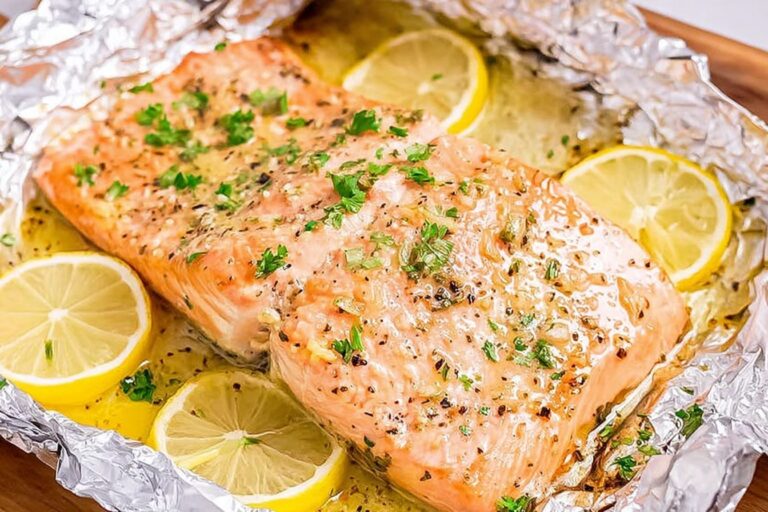
Baked Salmon In Foil Recipe
🐟 Enjoy moist, flaky baked salmon packed with omega-3s for a heart-healthy meal that’s quick and easy.
🍋 Simple foil packet method locks in flavors and juices, perfect for busy weeknights with effortless cleanup.
- Total Time: 30 minutes
- Yield: 6 servings
Ingredients
– 2-pound side of salmon, boneless, skin on or off
– 5 sprigs fresh rosemary or other fresh herbs (not dried)
– 2 small lemons, divided, plus extra for serving if desired
– 2 tablespoons olive oil
– 1 teaspoon salt
– 1/4 teaspoon black pepper
– 4 cloves garlic, peeled and roughly chopped
– additional chopped fresh herbs such as basil, thyme, parsley, dill, or green onion
Instructions
1-First Step: Let the salmon warm up a bit Let the salmon sit at room temperature for 10 minutes. This small step helps it cook more evenly, especially when your salmon is straight from the fridge. While it rests, you can prep your lemons, garlic, and herbs.
2-Second Step: Preheat and prep the foil packet setup Preheat your oven to 375°F. Line a large baking dish or rimmed baking sheet with aluminum foil and lightly coat with baking spray. This is where your salmon in foil starts to shine. The foil-lined pan prevents sticking and makes folding the packet easier and less messy.
3-Third Step: Build the flavor base on the foil Arrange 2 sprigs rosemary down the center of the foil. Thinly slice 1 lemon and place half of the slices over the rosemary. This creates a fragrant “nest” so the salmon stays juicy as it bakes.
4-Fourth Step: Add salmon, then season and coat Place the salmon on top of the rosemary and lemon slices. Drizzle with 2 tablespoons olive oil, sprinkle with 1 teaspoon salt and 1/4 teaspoon black pepper, and rub to coat. Then scatter 4 cloves garlic, peeled and roughly chopped, over the salmon. Garlic in foil bakes into something mellow and sweet, not sharp or raw.
5-Fifth Step: Top with the remaining herbs and lemon Top with the remaining rosemary sprigs and lemon slices. Juice the second lemon and pour the juice over the top. That lemon juice helps keep baked salmon in foil recipe results tender, especially if your salmon is thicker.
6-Sixth Step: Seal into a packet (but don’t suffocate it) Fold the foil sides over the salmon to seal into a packet, allowing some air circulation. If you need more room, use extra foil.
7-Seventh Step: Bake until just done Bake for 15 to 20 minutes, based on thickness. Since thickness matters most, start checking near the low end if your salmon is about 1 inch thick or less. Best doneness targets: internal temp should hit 145°F. Or, pull at 137°F to 140°F and let it rest to finish cooking. The salmon should flake easily when ready.
8-Final Step: Broil for color, then rest and serve Open the foil carefully, watching for steam. Broil uncovered for about 3 minutes to brown the top and garlic, and watch closely so it doesn’t go from golden to overdone. Rest tented with foil if needed. It’s done when it flakes easily. Once you’ve got that tender flake, serve right away with extra lemon if you want.
Last Step:
Please leave a rating and comment letting us know how you liked this recipe! This helps our business to thrive and continue providing free, high-quality recipes for you.Notes
🔥 Rest the salmon post-bake to finish cooking gently and keep it juicy.
📦 Using foil locks in moisture and enhances flavors beautifully.
⏲️ Use a food thermometer for precision and perfect doneness every time.
- Prep Time: 15 minutes
- Cook Time: 15-20 minutes
- Category: Seafood
- Method: Baking
- Cuisine: American
- Diet: Gluten-Free, Low-Carb, High-Protein
Nutrition
- Serving Size: 1 serving (about 5.3 oz)
- Calories: 180
- Sugar: <1g
- Sodium: 350mg
- Fat: 6g
- Saturated Fat: 1g
- Unsaturated Fat: 5g
- Trans Fat: 0g
- Carbohydrates: 4g
- Fiber: 1g
- Protein: 28g
- Cholesterol: 60mg