Why You’ll Love This Japanese Soba Noodles
If you want a satisfying meal that tastes like you tried a little harder than you did, Japanese Soba Noodles are a great choice. This recipe is designed for busy days, but it still delivers that signature nutty soba flavor and a savory sesame-miso sauce.
- Ease of preparation: Ready in about 15 minutes total, with simple steps and minimal cleanup.
- Health benefits: Vegetarian, vegan, and dairy-free, with buckwheat-based soba offering a nutty flavor and more fiber than typical wheat noodles.
- Versatility: Works for gluten-free needs (with the right soba), and you can add protein like tofu, eggs, or shrimp.
- Distinctive flavor: Toasted sesame oil plus miso and garlic creates a deep, savory sauce that clings to every bite.
Quick note: The real secret is rinsing the noodles in cool water right after cooking to prevent gumminess and keep them pleasantly springy.
Jump to:
- Why You’ll Love This Japanese Soba Noodles
- Essential Ingredients for Japanese Soba Noodles
- How to Prepare the Perfect Japanese Soba Noodles: Step-by-Step Guide
- Prep time and cook time overview
- Step-by-step directions
- A quick “don’t mess this up” checklist
- How to garnish like a pro
- Protein and Main Component Alternatives
- Easy protein add-ins
- Quick shrimp idea
- Vegetable, Sauce, and Seasoning Modifications
- Vegetable swaps
- Seasoning swaps
- Texture variations
- Mastering Japanese Soba Noodles: Advanced Tips and Variations
- Pro cooking techniques
- Flavor variations you can try
- Presentation tips
- Make-ahead options for busy schedules
- How to Store Japanese Soba Noodles: Best Practices
- Refrigeration
- Freezing
- Reheating
- Meal prep considerations
- FAQs: Frequently Asked Questions About Japanese Soba Noodles
- What are soba noodles made of?
- What’s the difference between soba noodles and regular pasta?
- Are soba noodles gluten-free?
- How do you cook soba noodles?
- Can you make soba noodle recipes ahead of time?
- Japanese Soba Noodles
- Ingredients
- Instructions
- Last Step:
- Notes
- Nutrition
- Did you make this recipe?
Essential Ingredients for Japanese Soba Noodles
Below are the exact ingredients you need for this Japanese soba noodles recipe, including ingredient options for different diets. If you’re shopping, this is your checklist.
- Main Ingredients:
- 8 ounces soba noodles – Traditional Japanese buckwheat noodles for that nutty, chewy bite.
- ¼ cup soy sauce (or tamari/coconut aminos) – Salty, savory base for the sauce. Tamari is often gluten-free; coconut aminos are naturally gluten-free.
- 3 tablespoons toasted sesame oil – Adds bold, aromatic sesame flavor.
- 2 tablespoons rice vinegar – Brightens the sauce so it tastes fresh, not heavy.
- 1 tablespoon honey (or maple syrup) – Balances salty and tangy flavors with a touch of sweetness.
- 1 tablespoon miso paste (white or yellow) – Deep umami flavor that makes the noodles taste restaurant-level.
- 1 teaspoon grated garlic – Sharp, savory punch that blends into the sauce.
- 4 green onions – Fresh crunch and a mild oniony finish.
- Sriracha to taste (optional) – Adds heat for people who like a kick.
- Sesame seeds for garnish – Makes the dish look and taste more authentic.
- Special Dietary Options:
- Vegan: This recipe is already vegetarian and can be vegan if your miso and honey swap are plant-based (use maple syrup instead of honey if needed).
- Gluten-free: Choose appropriate soba noodles (look for “100% buckwheat” or certified gluten-free). Also use tamari or coconut aminos instead of regular soy sauce.
- Low-calorie (lighter option): Use the same amounts for flavor impact, but consider adding more vegetables (see modification ideas below) and serving with a side salad.
Flavor tip: Use only toasted sesame oil in this sauce. It is the difference between “okay” and “wow” for soba.
How to Prepare the Perfect Japanese Soba Noodles: Step-by-Step Guide
This Japanese soba noodles recipe takes about 15 minutes total, including 10 minutes prep and about 5 minutes cook for the noodles. The sauce comes together while the noodles boil, so you stay ahead of the clock.
Prep time and cook time overview
| Stage | Time | What you do |
|---|---|---|
| Prep | 10 minutes | Boil water, measure sauce ingredients, slice green onions, grate garlic |
| Cook | 5 minutes | Cook soba, rinse under cool water, toss with sauce |
| Serve | 1 to 2 minutes | Garnish with sesame seeds and optional Sriracha |
Step-by-step directions
Follow these steps closely for that perfect slippery texture.
First Step: Cook 8 ounces soba noodles per package instructions (about 4 to 5 minutes). Keep an eye on the timing because soba can go from tender to mushy quickly.
Second Step: Rinse under cool running water while tossing to remove starch. Drain well and shake off excess water. Optionally, rinse briefly with warm water before serving if you want a slightly softer, warmer noodle feel.
Third Step: Whisk together your sauce: ¼ cup soy sauce (or tamari/coconut aminos), 3 tablespoons toasted sesame oil, 2 tablespoons rice vinegar, 1 tablespoon honey (or maple syrup), 1 tablespoon miso paste, and 1 teaspoon grated garlic. Stir until the miso dissolves and the sauce looks smooth.
Fourth Step: Thinly slice 4 green onions diagonally. This shape makes them prettier on top and helps them taste fresh in every bite.
Final Step: Toss noodles with sauce and green onions. Serve immediately, topped with sesame seeds and optional Sriracha. For the best texture, don’t wait too long after tossing.
A quick “don’t mess this up” checklist
- Rinse soba immediately: Cool water helps prevent gumminess.
- Toasting matters: Toast sesame seeds dry in a pan for about 3 minutes to boost aroma.
- Choose thicker soba: Thicker noodles hold their shape better.
- If you skip miso: Omit it and add extra salt to taste.
How to garnish like a pro
Even if you keep it simple, presentation makes a difference. Sprinkle sesame seeds right before serving so they stay fragrant and slightly crunchy. Add a small drizzle of toasted sesame oil for extra aroma if you want to impress your family without extra work.
If you like sesame-forward flavors, you may also enjoy this teriyaki salmon recipe, which pairs nicely with noodle dinners when you want a little more protein.
And for a great reference on sesame soba variations, check out sesame soba noodles ideas from Foodie Crush.
Protein and Main Component Alternatives
This recipe is vegetarian and can stay plant-based, but you can easily add protein if you want a heartier meal. The sauce works with many add-ins because it is well-balanced and flavorful.
Easy protein add-ins
Choose one option based on what you have at home. For best results, add warm protein right before serving so the noodles don’t cool too much.
- Tofu: Pan-sear or air-fry tofu cubes for a chewy, golden bite.
- Egg: Soft-boiled or jammy eggs add richness and protein.
- Shrimp: Quick sauté shrimp works great if you want a non-vegetarian option.
- Extra veggies: Edamame, shredded carrots, or mushrooms can boost nutrition without changing the sauce.
Quick shrimp idea
If shrimp is your go-to, pair it with these noodles for a fast weeknight meal. You can use a method similar to garlic lemon butter shrimp, then toss the shrimp in a little extra sauce or serve it on top for a restaurant-style plate.
Vegetable, Sauce, and Seasoning Modifications
One reason this Japanese soba noodles recipe is so popular is that it adapts well. Swap in vegetables based on season, adjust sweetness, and tweak heat until it tastes like your favorite version.
Vegetable swaps
- Crunchy: Shredded cucumber, bell pepper strips, or snap peas.
- Roasted or sautéed: Broccoli florets, mushrooms, zucchini, or bell peppers.
- Classic Asian: Bok choy, spinach, or shredded cabbage.
- Fresh finish: Add scallions, cilantro, or sesame oil right before serving.
Seasoning swaps
- Less sweet: Use only 2 teaspoons honey or maple syrup.
- More tang: Add an extra splash of rice vinegar.
- More umami: Increase miso slightly, but keep tasting so it stays balanced.
- More heat: Add Sriracha to taste, then adjust again after tasting.
Texture variations
If you like a thicker coating, toss noodles longer in the bowl. If you want a looser sauce, add 1 to 2 tablespoons warm water to the whisked sauce before tossing.
Simple rule: Taste your sauce before it hits the noodles. Once noodles go in, it’s harder to fix major flavor imbalances.
Mastering Japanese Soba Noodles: Advanced Tips and Variations
Once you nail the basics, you can level up in small ways that make a big difference. These tips focus on flavor, texture, and making the dish easy for different schedules.
Pro cooking techniques
- Rinse strategy: Rinse soba immediately in cool water while tossing to prevent starch buildup and gumminess.
- Sesame seed toasting: Toast sesame seeds dry in a pan for about 3 minutes. Stir often so they stay nutty and don’t burn.
- Choose the right soba: Thicker soba holds shape better, especially for warm tossing.
- Optional warm finish: If serving warm, rinse briefly with warm water before combining with sauce.
Flavor variations you can try
| Variation | What to change | Best for |
|---|---|---|
| Garlic-forward | Add a bit more grated garlic | Big flavor lovers |
| Extra savory | Increase miso by 1 teaspoon | Cold days and meal prep |
| Spicy sesame | Add Sriracha to taste | Kids who like mild heat or adults who want a kick |
| Salt-forward without miso | Omit miso and add extra salt if needed | When miso is unavailable |
Presentation tips
Serve in a shallow bowl so the sauce coats evenly. Add sesame seeds in a light scatter, then top with green onions. If you want restaurant energy, finish with one extra drizzle of toasted sesame oil.
Make-ahead options for busy schedules
- Make the sauce ahead: Whisk the sauce in advance and refrigerate. It often tastes even better after a few hours.
- Prep toppings: Slice green onions and toast sesame seeds ahead of time.
- Cook noodles last: Cook noodles fresh for best texture. Pre-cooked noodles can turn softer as they sit.
If you want a complete meal pairing idea, consider serving soba alongside something like spaghetti with sun-dried tomatoes and spinach when you’re feeding a group with different tastes.
How to Store Japanese Soba Noodles: Best Practices
Proper storage keeps Japanese soba noodles tasting fresh instead of soggy. This recipe is great for leftovers, especially when you store noodles and toppings thoughtfully.
Refrigeration
- Refrigerate leftovers up to 3 days.
- Store in an airtight container.
- Serve cold or room temperature for the best texture.
Freezing
Freezing cooked soba is possible, but texture may change. If you freeze, cool noodles completely first, then store in a freezer-safe container. Thaw in the refrigerator before serving and consider refreshing with a splash of warm water and extra sauce.
Reheating
- For warm noodles, reheat gently in hot broth instead of microwaving dry.
- Add a small splash of water to loosen the sauce.
- Reheat only until warmed through, then serve right away.
Meal prep considerations
- For best results, pack noodles separately from crunchy toppings.
- If you want that “just made” texture, cook and rinse noodles right before eating.

FAQs: Frequently Asked Questions About Japanese Soba Noodles
What are soba noodles made of?
What’s the difference between soba noodles and regular pasta?
Are soba noodles gluten-free?
How do you cook soba noodles?
Can you make soba noodle recipes ahead of time?
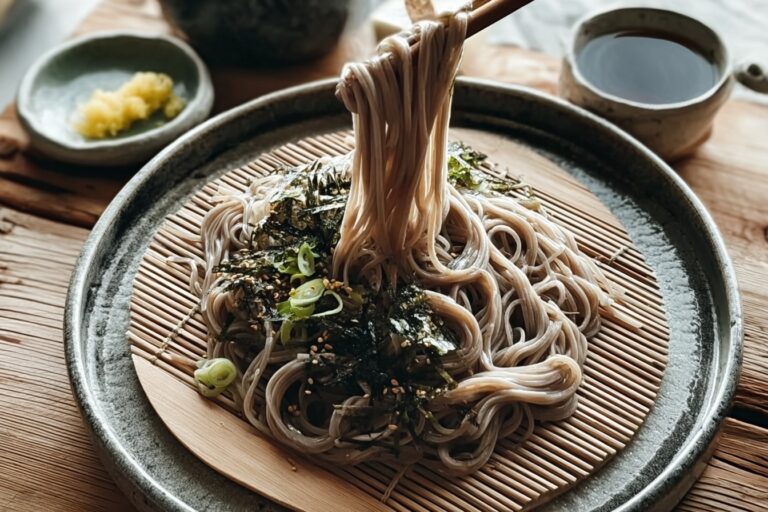
Japanese Soba Noodles
🍜 Whip up refreshing soba noodles in just 15 minutes with a nutty sesame-miso dressing for a healthy, gluten-free meal bursting with umami flavor.
🥢 Perfect for quick lunches, vegan sides, or hot summer days – customizable, no-cook sauce, and ideal for meal prep!
- Total Time: 15 minutes
- Yield: 4 servings
Ingredients
– 8 ounces soba noodles
– ¼ cup soy sauce (or tamari/coconut aminos)
– 3 tablespoons toasted sesame oil
– 2 tablespoons rice vinegar
– 1 tablespoon honey (or maple syrup)
– 1 tablespoon miso paste (white or yellow)
– 1 teaspoon grated garlic
– 4 green onions
– Sriracha to taste (optional)
– Sesame seeds for garnish
Instructions
1-First Step: Cook 8 ounces soba noodles per package instructions (about 4 to 5 minutes). Keep an eye on the timing because soba can go from tender to mushy quickly.
2-Second Step: Rinse under cool running water while tossing to remove starch. Drain well and shake off excess water. Optionally, rinse briefly with warm water before serving if you want a slightly softer, warmer noodle feel.
3-Third Step: Whisk together your sauce: ¼ cup soy sauce (or tamari/coconut aminos), 3 tablespoons toasted sesame oil, 2 tablespoons rice vinegar, 1 tablespoon honey (or maple syrup), 1 tablespoon miso paste, and 1 teaspoon grated garlic. Stir until the miso dissolves and the sauce looks smooth.
4-Fourth Step: Thinly slice 4 green onions diagonally. This shape makes them prettier on top and helps them taste fresh in every bite.
5-Final Step: Toss noodles with sauce and green onions. Serve immediately, topped with sesame seeds and optional Sriracha. For the best texture, don’t wait too long after tossing.
Last Step:
Please leave a rating and comment letting us know how you liked this recipe! This helps our business to thrive and continue providing free, high-quality recipes for you.Notes
🧊 Rinse soba noodles immediately in cool water to prevent them from becoming gummy.
🌰 Always use toasted sesame oil for its bold, authentic nutty flavor profile.
🔥 Lightly toast sesame seeds in a dry pan for 3 minutes to enhance crunch and aroma.
- Prep Time: 10 minutes
- Cook Time: 5 minutes
- Category: Noodles
- Method: Boiling
- Cuisine: Japanese
- Diet: Vegan
Nutrition
- Serving Size: 1 serving
- Calories: 320 kcal
- Sugar: 6 g
- Sodium: 1200 mg
- Fat: 10 g
- Saturated Fat: 1.5 g
- Unsaturated Fat: 8 g
- Trans Fat: 0 g
- Carbohydrates: 48 g
- Fiber: 3 g
- Protein: 10 g
- Cholesterol: 0 mg