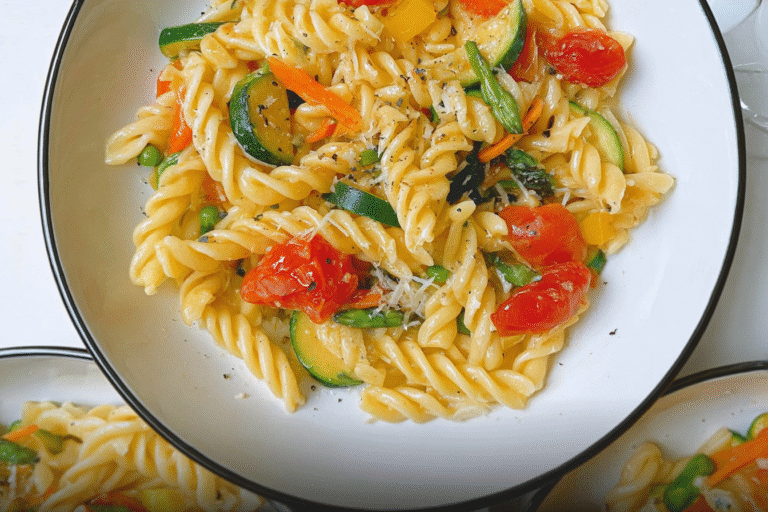
Ingredients
– 12 oz pasta (spaghetti, penne, or fettuccine work well) Provides the hearty base for the dish; choose high-quality durum wheat pasta for best texture
– 2 cups mixed spring vegetables (asparagus, snap peas, cherry tomatoes) Adds color, texture, and essential nutrients to the dish
– 1 cup heavy cream or broth Creates the silky sauce that binds all ingredients together
– 2 tbsp olive oil Used for sautéing vegetables and adding richness to the sauce
– 2 minced garlic cloves Provides aromatic flavor that enhances the overall taste of the dish
– ½ cup grated Parmesan cheese Adds umami flavor and helps thicken the sauce
– 1 tbsp lemon juice Brightens the flavors and cuts through the richness of the cream
– Fresh basil leaves Adds herbal freshness and vibrant color as a finishing touch
– Salt and pepper to taste Essential seasonings that bring out the natural flavors of all ingredients
– 1 cup pasta water (reserved from cooking pasta) Starchy water that helps create a silky sauce and emulsify the cream
Instructions
1-First Step: Preparation and Mise en Place Begin by gathering all your ingredients and preparing them for cooking. Wash all vegetables thoroughly, then trim the asparagus and cut it into 2-inch pieces. If using snap peas, remove any tough strings. Halve the cherry tomatoes, and slice zucchini into rounds or half-moons. Chop broccoli into bite-sized florets. Mince the garlic cloves and grate the Parmesan cheese. Measure out your cream, olive oil, lemon juice, and seasonings. Having everything ready before you start cooking will make the process smooth and stress-free.
2-Second Step: Cooking the Pasta Fill a large pot with water and bring it to a boil over high heat. Add a generous amount of salt (about 1 tablespoon) to season the pasta as it cooks. Add the pasta and cook according to package instructions until al dente tender but still slightly firm to the bite. Before draining, carefully reserve about 1 cup of the starchy pasta water this liquid gold will help create a silky sauce that clings perfectly to the pasta. Drain the pasta and set it aside. If you want to ensure your vegetables are perfectly cooked, consider blanching denser vegetables like asparagus and broccoli in the pasta water for 2-3 minutes before adding the pasta. For perfect pasta every time, check out this pasta cooking tip that many home cooks swear by.
3-Third Step: Sautéing the Vegetables While the pasta cooks, heat the olive oil in a large skillet over medium heat. Add the minced garlic and sauté for about 1 minute until fragrant but not browned. Add the prepared vegetables, starting with those that take longer to cook like asparagus and broccoli. After about 2 minutes, add the quicker-cooking vegetables like snap peas, zucchini, and cherry tomatoes. Cook the vegetables for 4-5 minutes total, stirring occasionally, until they’re tender-crisp cooked through but still retaining some crunch and vibrant color. This step is crucial for achieving the perfect texture in your pasta primavera. You want vegetables that are neither raw nor mushy.
4-Fourth Step: Creating the Sauce Reduce the heat to medium-low and pour in the heavy cream or broth, stirring gently to combine. Add the grated Parmesan cheese, salt, pepper, and lemon juice. Simmer the mixture for 2 minutes, allowing the cheese to melt and the sauce to thicken slightly. The cream should coat the back of a spoon. If the sauce seems too thick, gradually add some of the reserved pasta water until you reach the desired consistency. The starchy water helps emulsify the sauce, creating a velvety texture that clings beautifully to the pasta and vegetables. For a lighter version, you can use less cream and more pasta water, or substitute the cream with vegetable broth.
5-Final Step: Combining and Serving Add the cooked pasta to the skillet with the vegetables and sauce. Toss everything together gently, adding more pasta water if needed to ensure the sauce coats all the pasta evenly. Continue tossing for 1-2 minutes until the pasta is heated through and has absorbed some of the sauce. Remove from heat and stir in fresh basil leaves. Taste and adjust seasoning with more salt, pepper, or lemon juice as needed. Transfer to a serving platter or individual bowls. Top with additional grated Parmesan cheese, fresh basil, and a sprinkle of lemon zest for a bright finish. Serve immediately while the pasta is still hot and the vegetables are at their peak texture. This pasta primavera recipe serves 4 and pairs beautifully with a simple green salad and crusty bread.
Last Step:
Please leave a rating and comment letting us know how you liked this recipe! This helps our business to thrive and continue providing free, high-quality recipes for you.Notes
🥦 Select the freshest spring vegetables for maximum flavor and crunch.
🍋 Brighten the dish with extra lemon zest if you love citrus notes.
⏰ Reserve pasta water to adjust sauce consistency without diluting flavors.
- Prep Time: 15 minutes
- Cook Time: 15 minutes
- Category: Pasta
- Method: Stovetop
- Cuisine: Italian
- Diet: Vegetarian
Nutrition
- Serving Size: 1.5 cups
- Calories: 480 kcal
- Sugar: 8g
- Sodium: 650mg
- Fat: 22g
- Saturated Fat: 10g
- Unsaturated Fat: 10g
- Trans Fat: 0g
- Carbohydrates: 58g
- Fiber: 7g
- Protein: 16g
- Cholesterol: 45mg