Why You’ll Love This Red Curry Salmon
If you want a quick, cozy seafood dinner with big Thai-inspired flavor, this Red Curry Salmon recipe (also known as Thai Red Curry Salmon) hits the sweet spot. It cooks fast, tastes rich, and feels like something you would order at a restaurant, but it’s still simple enough for weeknights.
- Ease of preparation: You get a flavorful sauce in about 20 minutes of cooking, with simple steps like searing the salmon and simmering the curry. The whole dish comes together in approximately 35 minutes.
- Health benefits: Salmon brings protein and heart-friendly fats, and the vegetables add fiber and vitamin C. Nutrition per serving includes 27g protein and 458 calories, making this a satisfying choice for diet-conscious home cooks.
- Versatility: You can swap vegetables (peas, red bell peppers, or asparagus) and adjust seasoning to fit your preferences. Want it milder or spicier? You can easily fine-tune the red curry salmon flavor.
- Distinctive flavor: Creamy coconut milk, tangy lime juice, aromatic garlic, and bold Thai red curry paste create that signature red curry salmon taste that’s warm, savory, and bright.
As you cook, remember that the key to great Red Curry Salmon is balancing the creamy coconut sauce with a little sweetness and acidity at the end.
Quick win: Use full-fat coconut milk and pat the salmon dry. These two small steps help the sauce taste rich and the fish sear instead of sticking.
For an outside read on why salmon is so nutritious, you can review salmon benefits. And if you’d like another take on this theme, check this salmon coconut curry guide.
Jump to:
- Why You’ll Love This Red Curry Salmon
- Essential Ingredients for Red Curry Salmon
- Thai Red Curry Salmon Ingredients (with precise measurements)
- Simple swaps if you need them
- How to Prepare the Perfect Red Curry Salmon: Step-by-Step Guide
- Prep time and cooking time
- Step-by-step instructions
- How to nail tender salmon every time
- Dietary Substitutions to Customize Your Red Curry Salmon
- Protein and Main Component Alternatives
- Vegetable, Sauce, and Seasoning Modifications
- Mastering Red Curry Salmon: Advanced Tips and Variations
- Pro cooking techniques
- Flavor variations you can try
- Presentation and serving ideas
- Make-ahead options
- How to Store Red Curry Salmon: Best Practices
- Refrigeration
- Freezing
- Reheating
- FAQs: Frequently Asked Questions About Red Curry Salmon
- What type of coconut milk works best in red curry salmon?
- Can I add fish sauce to red curry salmon and what if I don’t have it?
- What vegetables go well in red curry salmon besides carrots and broccolini?
- How do I store and reheat red curry salmon leftovers?
- What should I serve with red curry salmon?
- Red Curry Salmon
- Ingredients
- Instructions
- Last Step:
- Notes
- Nutrition
- Did you make this recipe?
Essential Ingredients for Red Curry Salmon
Before you start cooking Thai Red Curry Salmon, gather your ingredients so the steps feel smooth and stress-free. Below is the exact ingredient list and what each one does in the dish.
Thai Red Curry Salmon Ingredients (with precise measurements)
- 1 pound fresh salmon, cut into 4 pieces – Forms the main protein and delivers tender, flaky bites.
- Salt and pepper to taste – Seasons the salmon and balances the curry.
- 1 tablespoon olive oil – Helps sear the salmon and prevents sticking.
- 1 tablespoon butter – Adds richness and supports browning.
- 1/2 medium onion, chopped – Builds aromatic sweetness as it cooks.
- 2 cloves garlic, minced – Adds savory depth and fragrance.
- 2 heaping tablespoons Thai red curry paste – Provides the signature heat, color, and Thai curry flavor.
- 1/2 teaspoon fish sauce (optional but recommended) – Adds umami and rounds out the curry paste and coconut milk.
- 1 can (13.5 ounce) full-fat coconut milk – Creates the creamy red curry salmon sauce.
- 1/2 teaspoon brown sugar – Balances spice with a subtle sweetness.
- 1/2 cup matchstick-cut carrots – Adds gentle sweetness and tender-crisp texture.
- 1 heaping cup chopped broccolini – Brings color, fiber, and a fresh, slightly peppery bite.
- 1 teaspoon lime juice – Adds brightness and keeps the sauce tasting lively.
- 2 tablespoons torn or chopped fresh basil – Adds fresh herbal aroma right before serving.
- 2 tablespoons chopped fresh cilantro – Complements the lime and curry with a clean, herb-forward finish.
Simple swaps if you need them
If you’re missing something, you can still make a delicious red curry salmon dinner. Here are a few friendly substitutions that keep the flavors close.
- Cilantro: Omit it or swap for scallions to keep the fresh finish.
- Fish sauce: Use soy sauce if you prefer, but add with care and taste as you go.
- Vegetables: Replace carrots and broccolini with peas, red bell peppers, or asparagus. Cut into small pieces for quick cooking.
| Ingredient | Role in the Curry | Best Swap |
|---|---|---|
| Full-fat coconut milk | Creamy red curry salmon base | Half full-fat + half light (for a slightly lighter sauce) |
| Thai red curry paste | Heat and red curry flavor | Use any Thai red curry paste, but start with less if it’s very spicy |
| Lime juice | Bright finish that balances richness | Lemon juice if needed, though lime is best |
Dietary notes: This specific recipe is not vegan because it uses salmon and fish sauce. However, it can be adapted for preferences when paired with the substitution ideas in later sections.
How to Prepare the Perfect Red Curry Salmon: Step-by-Step Guide
Let’s walk through Thai Red Curry Salmon step by step. The goal is a creamy sauce, tender salmon, and vegetables that stay tender-crisp.
Prep time and cooking time
- Prep: 15 minutes
- Cook: 20 minutes
- Total: approximately 35 minutes
Step-by-step instructions
First Step: Cut the salmon into pieces and pat dry. Season with salt and pepper on both sides so the fish tastes great and cooks evenly.
Second Step: Heat olive oil and butter in a skillet over medium-high heat. Make sure the pan is hot before adding salmon to reduce sticking.
Third Step: Cook salmon skin-side down for about 5 minutes, then flip and cook for 2 to 3 more minutes until almost done. Let the salmon release naturally before flipping; do not force it.
Fourth Step: Remove the salmon and place it on a plate. Optionally remove the skin if you prefer. Keep the salmon warm while you build the red curry sauce.
Fifth Step: Spoon out excess oil from the skillet, leaving about one tablespoon. This helps the curry paste and coconut milk build a thick, flavorful sauce without greasiness.
Sixth Step: Sauté the onion until lightly browned, about 3 minutes. Stir as it cooks so you don’t burn the onion or the garlic later.
Seventh Step: Add the minced garlic and Thai red curry paste, then cook for 1 minute. This brief step wakes up the aromatics and intensifies the red curry salmon flavor.
Eighth Step: Add fish sauce (optional but recommended), coconut milk, brown sugar, carrots, and broccolini. Simmer for about 5 minutes until the veggies are tender-crisp. If you like extra spice, you can add fresh Thai chilis or red pepper flakes during this simmer.
Ninth Step: Stir in the lime juice, then return the salmon to the skillet. Warm through for a couple of minutes so the fish finishes cooking and absorbs some sauce.
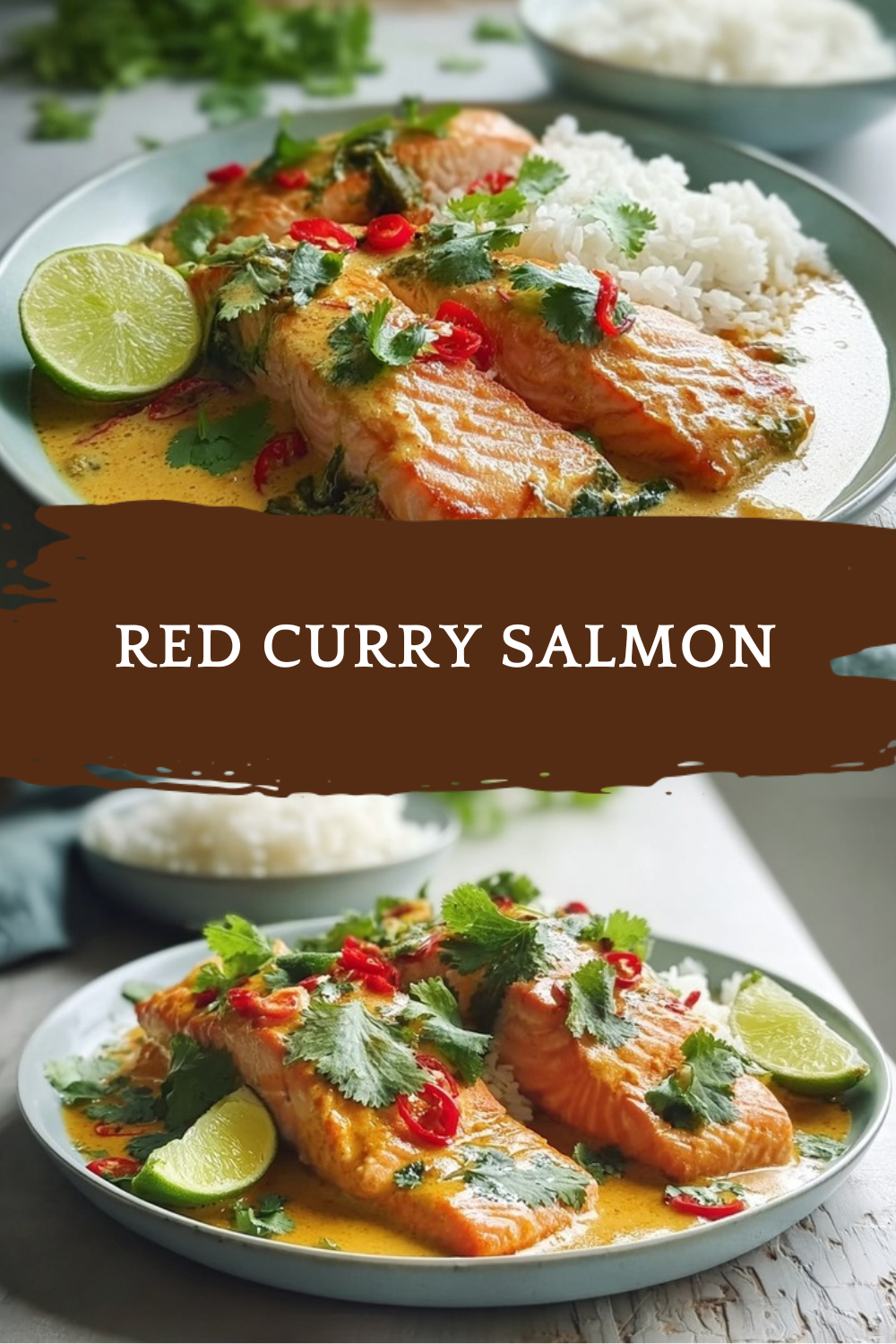
Final Step: Taste and adjust with salt and pepper as needed. Garnish with basil and cilantro before serving, then enjoy your Red Curry Salmon while the sauce is creamy and hot.
Flavor timing tip: Add lime juice at the end so it stays bright. If you simmer it too long, the flavor can fade.
How to nail tender salmon every time
Salmon can go from perfectly cooked to dry if you overdo the heat. In this Thai Red Curry Salmon method, you sear until it’s almost done, then finish it gently in the simmering curry. That small approach helps keep the center juicy while the sauce stays thick.

Dietary Substitutions to Customize Your Red Curry Salmon
Everyone cooks with what they have, and sometimes dietary needs mean you need a smart swap. Below are options to help you modify red curry salmon while keeping it tasty and comforting.
Protein and Main Component Alternatives
- Swap salmon: Use shrimp or scallops for a faster cook. Adjust the simmer time so the seafood doesn’t overcook.
- Vegetarian option: Replace salmon with firm tofu or chickpeas. Sear tofu briefly, then simmer in the coconut curry for a few minutes until heated through.
- Different fish: Try cod, halibut, or another flaky white fish. Because thickness varies, check for doneness rather than relying on the exact timing.
Vegetable, Sauce, and Seasoning Modifications
- Vegetables: Peas, red bell peppers, asparagus, zucchini, or green beans work well. Cut into small pieces so they cook quickly in the simmering sauce.
- Spice control: Start with less Thai red curry paste if you want it milder. Add fresh Thai chilis or red pepper flakes if you want more heat.
- Fish sauce swap: If you don’t have fish sauce, use low-sodium soy sauce or tamari. For a brighter finish, add a splash of extra lime juice after simmering.
- Herb swaps: Omit cilantro or replace it with scallions if that’s your preference.
If you’re cooking for a mixed group, consider keeping the base sauce mild and setting out optional chili toppings.
Mastering Red Curry Salmon: Advanced Tips and Variations
Once you know the basics, small upgrades can make your Thai Red Curry Salmon taste even more impressive. These ideas help you build restaurant-style flavor with minimal extra work.
Pro cooking techniques
- Use full-fat coconut milk: It creates the rich, creamy sauce that clings to the salmon.
- Pat salmon dry: Dry fish sears better and helps form a light crust.
- Don’t force the flip: Let the salmon release naturally so it stays intact.
- Simmer until tender-crisp: Overcooking vegetables makes the curry taste dull instead of fresh.
Flavor variations you can try
- Spicier Thai Red Curry Salmon: Add fresh Thai chilis or a pinch of red pepper flakes along with the curry paste.
- More aromatic finish: Use extra basil, cilantro, or even a few sliced green onions at the end.
- Different veggie mix: Try cauliflower florets or snap peas, keeping in mind that sturdier vegetables may need 2 to 3 extra minutes.
Presentation and serving ideas
For a beautiful plate, spoon curry sauce over the salmon and place vegetables on top. Garnish with basil and cilantro for a bright contrast against the red curry color.
If you love pairing meals, you may also enjoy trying a cozy dessert like banana bundt cake after dinner for a balanced home-cooked menu.
Make-ahead options
- Prep ahead: Chop onion, garlic, and vegetables up to a day in advance.
- Cook in stages: You can sear salmon and refrigerate it briefly, then rewarm gently in the sauce right before serving.
- Don’t over-sit: For best texture, serve soon after warming the salmon in the curry.
How to Store Red Curry Salmon: Best Practices
Got leftovers? That’s great, because red curry salmon reheats well when you store it properly. Follow these steps to keep it safe and tasty.
Refrigeration
- Cool the dish completely before storing.
- Store in an airtight container in the fridge for up to 3 days.
- Portion into single servings so reheating is quicker and more even.
Freezing
Freezing is not recommended for this red curry salmon because salmon texture can turn mushy when thawed. If you do freeze anyway, expect softer fish after reheating.
Reheating
- Reheat gently in a saucepan over low heat.
- Add a splash of water or coconut milk to revive creaminess.
- Stir and heat until warmed through, targeting 165°F internal temperature.
For meal prep, keep sauce and rice separate if you like the best texture. When ready to eat, warm the curry and spoon it over freshly reheated rice.
FAQs: Frequently Asked Questions About Red Curry Salmon
What type of coconut milk works best in red curry salmon?
Can I add fish sauce to red curry salmon and what if I don’t have it?
What vegetables go well in red curry salmon besides carrots and broccolini?
How do I store and reheat red curry salmon leftovers?
What should I serve with red curry salmon?
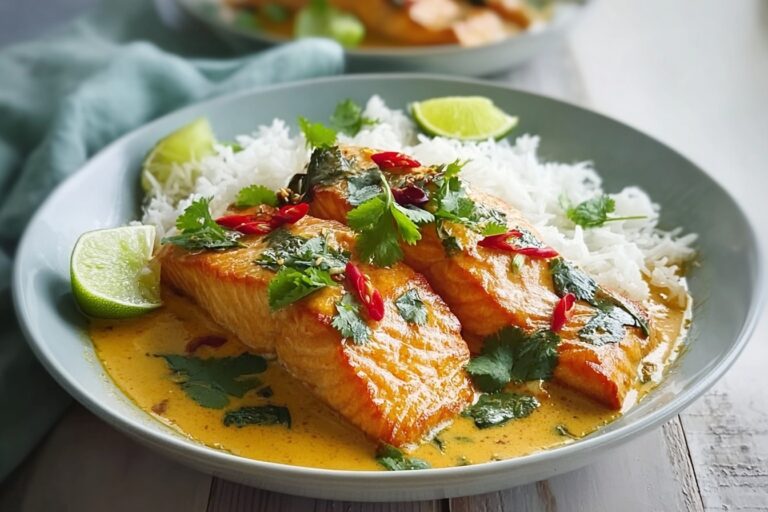
Red Curry Salmon
🐟 Dive into creamy Thai red coconut curry hugging tender salmon fillets with crisp veggies – omega-3 packed, flavorful protein boost in under 35 minutes!
🥥 Rich, aromatic sauce from pantry staples, low-carb comfort perfect for weeknights, garnished with fresh herbs for restaurant-quality ease at home!
- Total Time: 35 minutes
- Yield: 4 servings
Ingredients
– 1 pound fresh salmon, cut into 4 pieces for main protein
– Salt and pepper to taste for seasoning the salmon and balancing the curry
– 1 tablespoon olive oil for searing the salmon and preventing sticking
– 1 tablespoon butter for richness and browning
– 1/2 medium onion, chopped for aromatic sweetness
– 2 cloves garlic, minced for savory depth and fragrance
– 2 heaping tablespoons Thai red curry paste for heat, color, and Thai curry flavor
– 1/2 teaspoon fish sauce (optional but recommended) for umami
– 1 can (13.5 ounce) full-fat coconut milk for creamy sauce
– 1/2 teaspoon brown sugar for balancing spice
– 1/2 cup matchstick-cut carrots for sweetness and texture
– 1 heaping cup chopped broccolini for color, fiber, and bite
– 1 teaspoon lime juice for brightness
– 2 tablespoons torn or chopped fresh basil for herbal aroma
– 2 tablespoons chopped fresh cilantro for fresh finish
Instructions
1-First Step: Cut the salmon into pieces and pat dry. Season with salt and pepper on both sides so the fish tastes great and cooks evenly.
2-Second Step: Heat olive oil and butter in a skillet over medium-high heat. Make sure the pan is hot before adding salmon to reduce sticking.
3-Third Step: Cook salmon skin-side down for about 5 minutes, then flip and cook for 2 to 3 more minutes until almost done. Let the salmon release naturally before flipping; do not force it.
4-Fourth Step: Remove the salmon and place it on a plate. Optionally remove the skin if you prefer. Keep the salmon warm while you build the red curry sauce.
5-Fifth Step: Spoon out excess oil from the skillet, leaving about one tablespoon. This helps the curry paste and coconut milk build a thick, flavorful sauce without greasiness.
6-Sixth Step: Sauté the onion until lightly browned, about 3 minutes. Stir as it cooks so you don’t burn the onion or the garlic later.
7-Seventh Step: Add the minced garlic and Thai red curry paste, then cook for 1 minute. This brief step wakes up the aromatics and intensifies the red curry salmon flavor.
8-Eighth Step: Add fish sauce (optional but recommended), coconut milk, brown sugar, carrots, and broccolini. Simmer for about 5 minutes until the veggies are tender-crisp. If you like extra spice, you can add fresh Thai chilis or red pepper flakes during this simmer.
9-Ninth Step: Stir in the lime juice, then return the salmon to the skillet. Warm through for a couple of minutes so the fish finishes cooking and absorbs some sauce.
10-Final Step: Taste and adjust with salt and pepper as needed. Garnish with basil and cilantro before serving, then enjoy your Red Curry Salmon while the sauce is creamy and hot.
Last Step:
Please leave a rating and comment letting us know how you liked this recipe! This helps our business to thrive and continue providing free, high-quality recipes for you.Notes
🥥 Always use full-fat coconut milk for a luxurious, velvety sauce that clings beautifully to the salmon.
🐟 Pat salmon very dry and ensure pan is hot to achieve crispy sear without sticking.
🌶️ Swap broccolini for peas, bell peppers, or asparagus – keep pieces small for quick, even cooking.
- Prep Time: 15 minutes
- Cook Time: 20 minutes
- Category: Main Dishes
- Method: Stovetop
- Cuisine: Thai
- Diet: Gluten-free
Nutrition
- Serving Size: 1 salmon piece with sauce
- Calories: 458 kcal
- Sugar: 4g
- Sodium: 176mg
- Fat: 35g
- Saturated Fat: 22g
- Unsaturated Fat: 13g
- Trans Fat: 0g
- Carbohydrates: 12g
- Fiber: 2g
- Protein: 27g
- Cholesterol: 70mg